
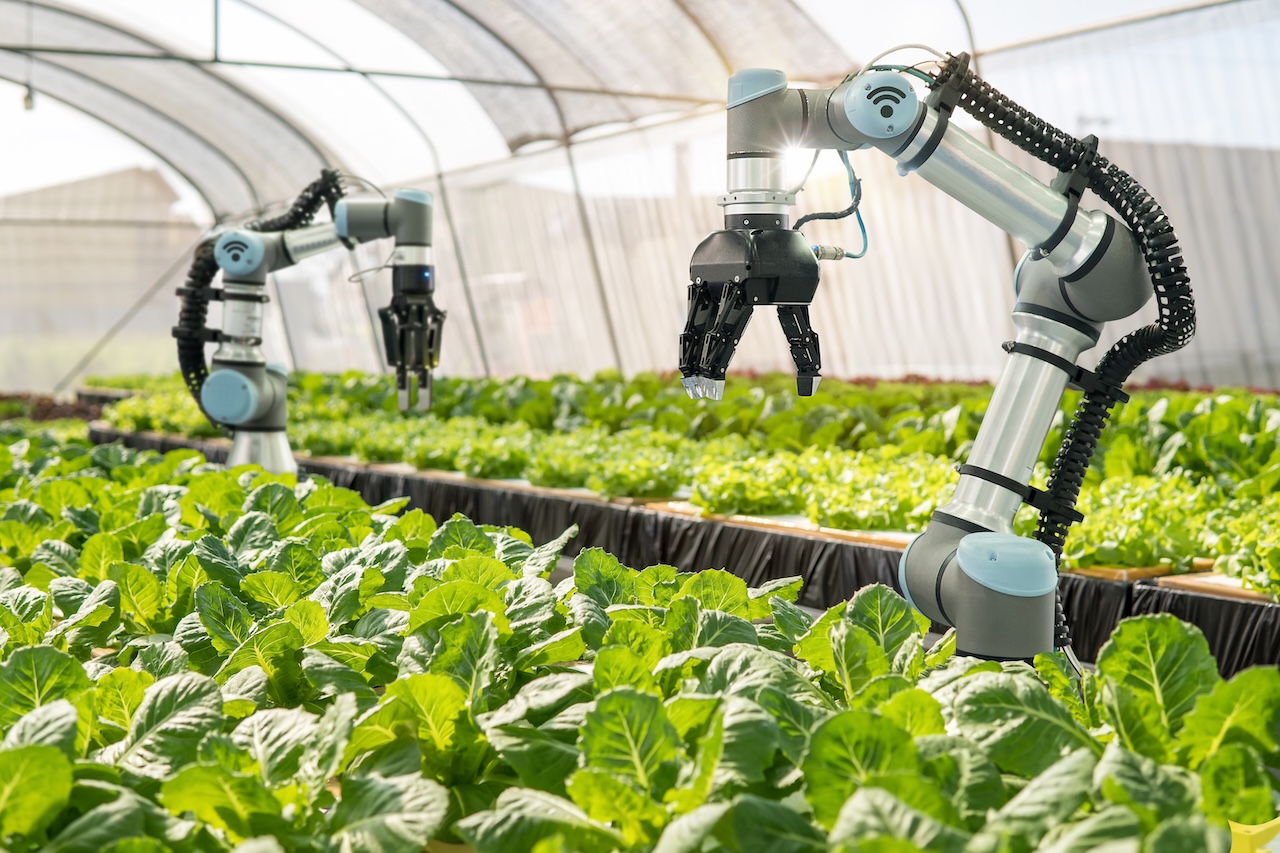
I’ve spent most of my career rooted in the fertile ground between science and the farm field, working in cutting-edge labs, launching startups, and driving innovation across global agribusiness. I see the entire ecosystem every day, from soil and seed to shelf and sustainability. The future of the supply chain is not just coming, it is already here. And it is being shaped by the convergence of AI, automation, sustainability, and transparency in ways that will redefine how food is grown, moved, and delivered.
-
The Rise of AI and Automation
Labor is one of the biggest challenges growers face. Every conversation comes back to fewer workers, higher costs, and the need for precision under pressure. This is where automation and artificial intelligence (AI) step in. From robotic harvesters that can pick produce without damage to AI systems that schedule labor during peak harvest windows, these technologies are helping solve problems that can no longer be addressed with human labor alone. The goal is not to replace people but to enable them to focus on higher-value tasks while machines handle repetitive, physically demanding and potentially dangerous work.
Retailers face similar pressures. AI-driven inventory systems and automated fulfillment centers are already cutting waste, improving forecasting, and streamlining operations. Together, these advances are turning efficiency into a competitive advantage rather than a cost-cutting exercise.
-
Smarter Supply Chains With Real-Time Intelligence
AI is also rewriting the playbook for decision-making. Predictive tools now flag potential crop infestations before they spread, optimize cold-chain logistics to reduce spoilage, and balance supply and demand in real time. The days of making decisions based on last week’s data are ending. In the next few years, every step from planting to retail display will be informed by analytics that help reduce risk, improve timing, and maximize both yield and quality.
-
Sustainable Packaging: From Novelty to Necessity
Reduction in single-use plastics is no longer nice to have; it is table stakes. With regulations tightening in the EU, Canada, India, and elsewhere, we’ve got rising non-tariff trade barriers. Packaging is not just a container, it is a guardian of food safety, a marketer, and a quality protector all at once. At our Fresh Field Catalyst Accelerator, we’ve supported a wide spectrum of innovations: compostable hanging tags with embedded traceability, algae-based coatings that can replace plastic wraps, edible coatings from startups across the globe, and plant-based trays tailored to the challenging science of leafy green transpiration. That last one took five years to perfect for a single lettuce mix. That is the level of complexity and opportunity we’re talking about.
-
The Transparency Consumers Demand
Traceability is no longer optional. Shoppers want to know where their food comes from, how it was grown, and how it reached the shelf. Digital tools now make it possible to track every step of the journey and share that information instantly. Beyond building trust, this level of transparency strengthens food safety and helps companies comply with an increasingly complex regulatory environment.
Soon, the ability to provide this information will not be a marketing perk. It will be the baseline expectation for doing business. Growers and retailers should watch several areas closely. AI and automation can help address labor shortages through robotic harvesters, labor-planning tools, and warehouse systems.
Packaging has become a policy tool, making it vital to anticipate regulatory shifts and invest in safe, sustainable, and scalable alternatives. Traceability and transparency are fast becoming baseline expectations, requiring smart tagging and digital data platforms. AI is also advancing in disease detection and supply chain optimization with predictive analytics and field sensors ready for pilots.
If you had asked me a decade ago where the produce industry was headed, I might have focused on yield and incremental efficiencies. Today, the conversation is about AI, automation, transparency, sustainability, and how all these forces intersect to transform the entire food system. It is an extraordinary time to be part of this industry, and I am honored to help push the boundaries of what is possible alongside growers, scientists, retailers, and policymakers.
- Vonnie Estes is the Vice President of Innovation at the International Fresh Produce Association