
A new Agrarian Law, enacted in September, is set to reshape Peru’s farming sector. Published on September 10, 2025, the legislation lowers the corporate income tax rate for large exporters from 29.5% to 15% starting in 2026, while offering incentives for smaller producers to register and expand their
operations. The government hopes the reform will attract new investment, modernize production, and trigger a fresh wave of export growth.
The initiative revives an approach first tried in 2000, which granted tax breaks that helped transform Peru into a global produce supplier. Exports surged, creating a huge number of jobs and lifting rural incomes. But critics argued that the benefits were uneven, and the law was eventually repealed in 2020 amid protests and calls for greater inclusion.
Supporters say the new framework builds on that success while addressing earlier shortcomings. Agriculture today represents around 12% of Peru’s GDP and employs roughly a quarter of its workforce, making it one of the country’s most important engines of growth.
During Expoalimentaria — Peru’s largest food and agribusiness trade fair — much of the discussion centered on how quickly the law’s promised benefits would materialize.
Exporters’ associations such as ADEX have championed the reform as a strategic move to secure a second wave of agro-export growth. Its president, César Tello, calls the law a key instrument to unleash a new “export boom,” arguing that Peru needs “stability, predictability and adequate infrastructure” to compete globally.
The earlier law from 2000 created a special regime with major tax benefits for export-oriented agriculture — notably a 15% corporate rate — designed to attract investment and scale up production.
The results, however, depend on who you ask. Supporters credit it with propelling Peru into the ranks of the world’s top fresh produce exporters, while many critics say the benefits were shared by too small a group. Analysts at the Peruvian Center for Social Studies (CEPES) argue that the 2000 law disproportionately favored large agro-exporters, driving export growth — which reached over $12.7 billion in 2024 — but leaving smallholder farmers behind and failing to improve working conditions across the sector.
A Question of Balance
The new law has once again divided opinion. The bill, introduced by Congresswoman Cruz María Zeta Chunga, a former chair of the Agriculture Committee, has also drawn scrutiny from analysts concerned about whether benefits will reach smaller producers. Critics warn the tax cuts could narrow public revenues, though industry leaders say stronger investment and job creation will offset any loss.
This law will undoubtedly have a positive impact, says Percy Muente Kunigami, general manager of Agrícola Cerro Prieto, one of Peru’s leading export growers.
“Profit margins in this industry are thin,” he says.
“The best companies have net margins of about 10%, but most are at 5% or 6%. When you consider the fiscal impact in terms of growth — new projects, more hectares, better crops — the added output will more than compensate for the reduced tax take.”
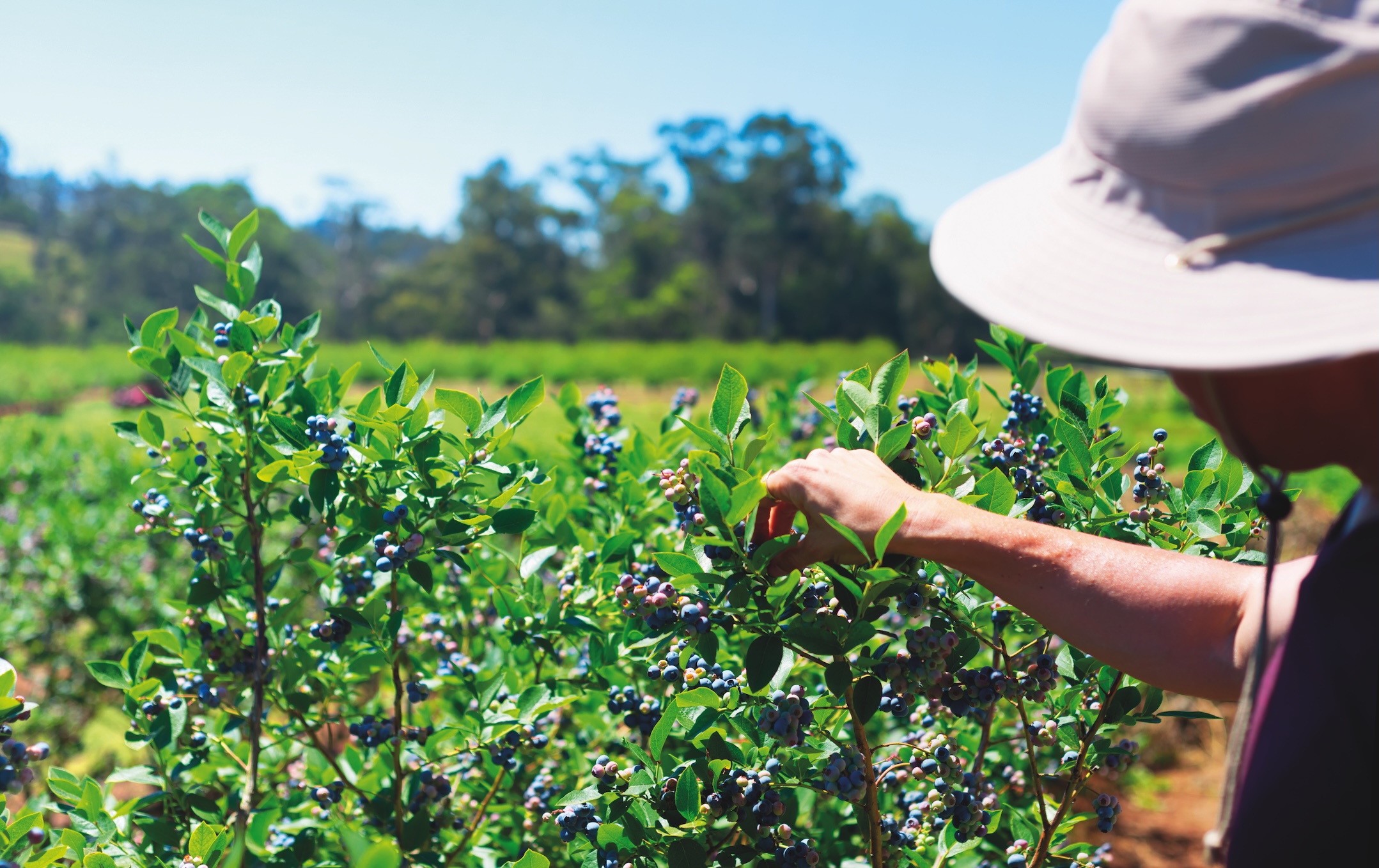
Muente adds that one of the least-discussed aspects of the reform is its incentive for genetic and varietal innovation. “Specifically in blueberries, there is ongoing development of new genetics that allows us to have more productive plants that are better able to withstand extreme weather, and to produce higher-quality fruit with greater resilience during long journeys. These are significant investments and involve high risk.”
Muente insists the law strengthens competitiveness in a sector where success depends on variables no company can fully control, such as the weather. “If I were the State and needed to promote a sector, I would choose one that generates a large amount of employment,” he says. “And second, I would promote one in which Peru truly has competitive advantages. Agriculture meets both conditions, so it should be supported, especially given that the Government has already announced several large-scale projects it intends to push forward. If that were not the case and you were an investor, what incentives would you have to put money into a sector with such high risk?”
That sentiment is echoed by José Antonio Gómez Bazán, a director of several international agribusiness firms. “Reducing the income tax rate to 15% provides predictability and frees up capital for reinvestment,” he says.
“It will allow us to accelerate varietal renewal, upgrade irrigation, boost mechanization and postharvest capacity, and invest more in R&D. It’s not just about improving margins — it’s about boosting productivity and global competitiveness.
“Over a 10-year horizon, the tax benefit will translate into greater efficiency, more long-term programs, and more resilience against international competition.”
Smallholder Farmers, Big Questions
Asked about those who may feel that the new law will not benefit them — such as smallholder farmers who remain in the informal economy — Gómez Bazán noted that the new Agrarian Law pushes larger companies to strengthen their work with family farms.
“We do this through formal contracts, input financing, field technical assistance, and pricing schemes that reward quality and compliance. We also integrate smallholder farmers’ fruit into our logistics chains to reduce waste and improve access to export markets. This not only formalizes and injects liquidity into small-scale farming, it also multiplies the social impact of agro-exports in Peru.”
He agrees that compliance with the law — especially regarding the inclusion of small and medium-sized producers and sustainable supply chains — is “essential,” but also acknowledges that “fiscal risk exists.” “The State will collect less in the short term,” Gómez Bazán concedes.
“That’s why the sector must demonstrate tangible results in investment, formal employment, and regional development. If those outcomes are achieved, lower tax revenues will be offset by stronger growth and foreign-exchange inflows.
“But there must be clear metrics and stable rules. Without them, the incentive risks being seen as a privilege rather than a driver of sustainable growth. Regulatory stability and transparency will be decisive.”
Gómez Bazán recalls that he personally defended the original law during earlier repeal efforts. “If you look at the miracle of Peruvian agro-exports — the engine that created nearly two million jobs, directly and indirectly, and lifted countless people out of poverty — that’s the result of the law,” he says. “It wasn’t perfect, but it created the incentives for large-scale investment and competitiveness.”
Today’s debate over the new Agrarian Law comes at a more mature stage of Peru’s agricultural evolution — and of its world-famous culinary scene, which depends on the sector’s diversity and productivity.
Peruvian cuisine has become a symbol of national pride and cultural identity. In that sense, what’s being debated is not merely fiscal or commercial policy, but the future of Peruvian agriculture itself: whether or not it remains a source of prosperity, inclusion and growth.
“If you look at Peruvian history before the Law, agricultural growth was not significant,” Gómez Bazán says. “I have always said: there has always been water, there has always been land, there have always been people … the only thing that changed was the framework created by this law, which allowed safe investment, protection of private property, and tax incentives. It was not perfect but, at the end of the day, I believe there are millions of people in Peru who are now benefiting from the progress it made possible.”
Diverging Perspectives
In the central region of Junín, engineer Pedro Antezana works with Kemito Ene, a cooperative of Asháninka Indigenous communities producing cocoa and chocolate along the Ene River. The cooperative represents more than 450 families.
“The new Agrarian Law has good and bad sides,” Antezana says. “The good part is that cooperatives do not pay taxes, but on the other hand there is a great deal of bureaucracy imposed by the State under the concept of ‘cooperative.’
“Each grower has to be registered,” he adds. That is fine, but in some ways the State always forces you to adapt to whatever it orders. That is where some producers stop feeling free in what they do.”
Antezana claims, “This law was made for large-scale agribusiness,” adding, “Here this is agriculture on a very small scale — most growers have half a hectare, one hectare, maybe three. These laws were not written with smallholder farmers in mind.”
Others disagree. César Cárdenas, general manager of Vancard Peru, which grows and exports ginger, turmeric, oranges, pineapples, bananas, and avocados, rejects that interpretation. “We’ve studied this law carefully, and it’s designed for everyone — small and large producers alike, from smallholder family farmers to big entrepreneurs,” he says.
According to Cárdenas, “It is well designed because, first, it will encourage the formalization of land. In addition, there will be a major reduction in taxes. Funds will be returned to businesses so they can strengthen themselves, offer better jobs, more people will work, and more people will contribute to the system.”
A similar view comes from Germán Caballero, agronomist and co-founder of Epic Farms, a model pitahaya (dragon fruit) project.
“This law is much better,” he says. “It benefits small farmers because they no longer pay income tax. It also eliminates the Bono Beta [a 30% wage bonus], which was a mistake and unnecessarily raised production costs. The new law is well designed: it improves conditions for small producers and keeps in place mechanisms like VAT reimbursement and export drawback, which are vital for new agricultural ventures.”
The debate over the new Agrarian Law highlights persistent tensions between inclusion and competitiveness. Few dispute the sector’s central place in Peru’s economy or its capacity to deliver jobs, foreign-exchange earnings and innovation.
If the reform succeeds in broadening participation while preserving productivity, it could usher in a second agro-export boom — one that not only bolsters Peru’s global standing but also spreads growth more widely across the country.