


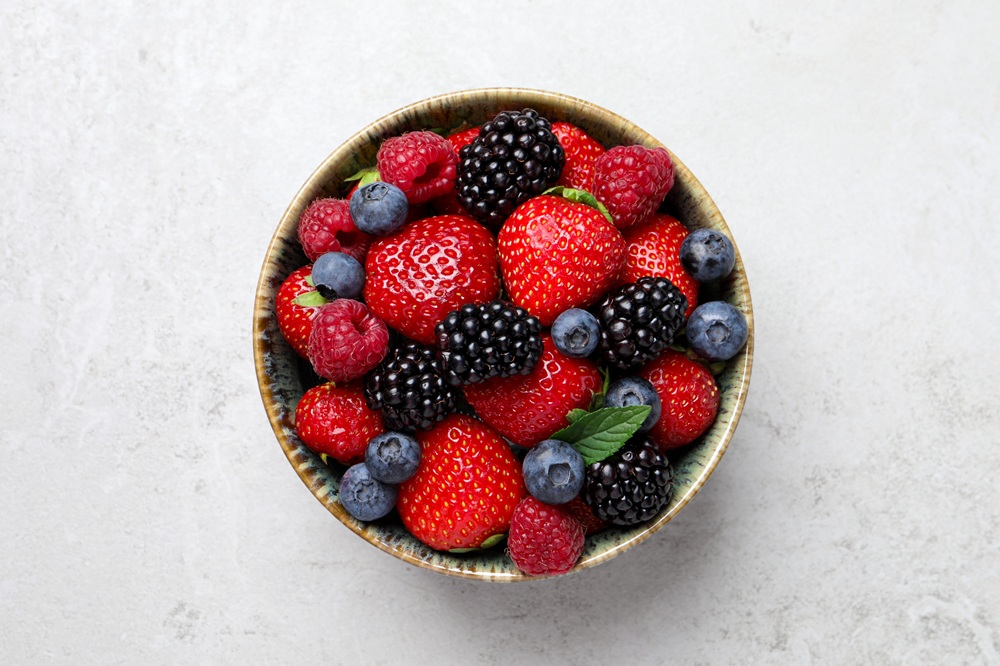


Berries today are a far cry from 20 or 30 years ago, when seasonality still determined availability, and strawberries ruled the roost. Today, the U.S. berry market is worth an estimated $9 billion annually, with this market having grown by 40% during the past five years, according to NielsenIQ. But what is the reason behind the phenomenal growth of the category and where is it headed?
For Joe Barsi, president of Watsonville, CA-based California Giant Berry Farms, berries are a “powerhouse for the produce department,” leading the way in total dollar sales and growth. In Barsi’s opinion, berries offer far more than just health benefits, with vibrant colors and aromas naturally drawing the eye, making them a top contender for impulse purchases.
“Consumers see berries as both a healthy staple and a delicious treat, bridging the gap between nutritious eating and indulgent cravings,” he says. “This widespread appeal is a strong value for retailers, coupled with carts containing berries consistently showing double the average total value. Plus, their incredible versatility means they fit into any meal, from sweet to savory, morning to night, making them the perfect go-to for cooking or snacking.”
Founded in 1983 by Bill Moncovich, California Giant has evolved from small beginnings to today offering a full line of organic and conventional strawberries, blueberries, blackberries and raspberries. The company also partners with growers across the U.S., Canada, Mexico, Chile, and Peru to provide year-round supplies of quality fruit.
Based in Plant City, FL, Wish Farms has been in the berry business since 1922, evolving from its roots as a strawberry grower to becoming a year-round grower-shipper of all the major berries, sourced from its own operations and grower partners in the U.S., Chile, Peru, Mexico, and Canada.
Wish Farms’ public relations director, Nick Wishnatzki, says berries hold a unique position in produce with their vibrant appearance, a taste “that people crave,” and versatility across meals and occasions.
“They are universally appealing, enjoyed by consumers of all ages, whether as part of a breakfast parfait, a dessert, or a convenient snack on the go,” he says.
“However, what really puts berries over the top is their array of health benefits. This is increasingly resonating with wellness-focused consumers. This combination of visual appeal, taste, and nutritional value has solidified their dominance of the produce department, consistently driving demand and robust year-over-year growth.”
Celebrating its 20th anniversary in 2025, Long Beach, CA-based Berry Fresh, which began life as a blueberry importer, now operates production fields in the U.S., Mexico, Chile, Peru, and, most recently, Morocco.
The company’s marketing director, Laudan Chaffin, describes berries as the “shining gems” of the produce department. “Consumer data consistently demonstrates that berries are a key driver of produce sales, ranking as the top category by dollar value,” she says. “They are vibrant, flavorful, and visually appealing, making them both enjoyable to eat and attractive on display.
“Moreover, berries are often perceived as a healthy indulgence, with many consumers opting for them as a natural alternative to sugary snacks or candy.”
While strawberries initially led the category, the 2000’s saw blueberries experiencing a surge in popularity, driven by emerging health research and their recognition as a superfood, says Chaffin. Raspberries followed suit, benefiting from positioning as a delicate and premium treat within the category. Now, Chaffin says it’s blackberries’ moment to shine.
“Genetic innovation has played a significant role in the success of all four berry types, but it is especially crucial for blackberries,” she continues. “The primary challenge with blackberries is their natural tendency toward tartness.
“At Berry Fresh, we have dedicated substantial efforts to genetic development aimed at producing blackberries with outstanding flavor. This commitment has contributed to the popularity of our Sweet Karoline blackberries, renowned for their exceptional taste.”
Wishnatzki at Wish Farms notes, “Introducing new varieties is becoming crucial in our industry.” He explains that the company is investing in breeding programs to discover what he describes as “the next great berry variety.”
He also says, “These new varieties will improve grower efficiency and sustainability with high yields and disease/pest resistance,” adding, “Better-tasting berries can also enhance value-added products and specialty packs, expanding market reach.”
An Evolving Category
Headquartered in Salinas, CA, Naturipe Farms has been growing berries for more than one hundred years, and today has production which covers all berry categories and ranges across New Jersey, Georgia, North Carolina, Michigan, California, Oregon, Washington, Wisconsin, Indiana, and Florida, as well as in British Columbia and Mexico. The company also grows throughout South America, including Chile, Peru, Argentina, and Colombia.
Traditionally viewed as a seasonal product, berries’ expansion into a year-round category has made them a special product in the produce category, according to Naturipe Farms’ president Jim Roberts. This factor has combined with quality, flavor and the positive health impacts to make it the largest category in the fresh produce department, he says.
With many companies now leaning on proprietary varieties, Roberts says a big shift has taken place in the category in recent years. Scientific and technological advancements are taking berry breeding mainstream, and he says this shift will go even further.


“Berries are now being specially grown to meet customer preferences — things like taste, reduced seeds, texture, and even color — and they’re flying off the shelves,” he says.
Organic strawberries, blueberries, blackberries, and raspberries are also showing impressive double-digit growth, according to Roberts, and all signs point to continued acceleration through late 2025 and well into 2026.
Barsi at California Giant notes the category’s growth in recent years has been largely driven by consumers’ increasing focus on health and the superfood allure of berries. This expansion, he says, is also fueled by their year-round availability, thanks to significant improvements in supply chains, and the incredible versatility of berries in various food applications.
“A major part of this growth stems from how berries are now grown and distributed,” explains Barsi. “Supply chains are far more efficient, cutting down on waste and speeding up delivery from farm to market. Crucially, better cold chain management ensures berries stay fresh all the way to the consumer’s fridge, maintaining quality and extending their shelf life.”
Genetic advancements have also played a part, he continues, with improved varieties leading to enhanced flavors, creating a superior eating experience for consumers.
Breeding programs, Barsi says, have also made berry plants more resilient or tolerant to diseases, pests, and even droughts, resulting in healthier plants, more consistent yields, and a more sustainable growing process overall.
Berry Trends
One of the biggest hitters in the berry business, Driscoll’s history in the category can be traced as far back as 1904, when Richard “Dick” Driscoll and brother-in-law Joseph “Ed” Reiter began growing ‘Sweet Briar’ strawberries in California’s Pajaro Valley. Today, the company, which has its global headquarters in Watsonville, CA, is a global leader in fresh strawberries, blueberries, raspberries, and blackberries, drawing its production from more than 900 independent growers in over 20 countries.
According to Driscoll’s chief communications officer, Frances Dillard, the company is “hyper focused on disrupting” the category with “incredible tasting” raspberries and blackberries, many of them proprietary.
“Driscoll’s is keenly tracking the next generation consumer — Gen Z: the most diverse, tech-savvy, and socially conscious cohort in history,” she reveals. “Born into a world of smartphones and social media, they prioritize wellness, sustainability, and racial equity. With a whopping $360 billion in purchasing power, they are reshaping consumer habits and driving food trends.”
Dillard says Gen Z’s values and behaviors will impact shopper behaviors going forward. While flavor is likely to remain the core purchase driver in berries, she predicts other factors — from product innovation through to sustainable packaging and locally grown — will influence purchasing habits, and further act as brand differentiators.
According to Chaffin at Berry Fresh, while health benefits remain important, it’s exceptional flavor that now fuels the berry category and encourages repeat purchases. She also says category growth is boosted by the ability to connect berries with diverse eating occasions, supported by innovative packaging tailored for snacking, sustainability messaging, special events, and more.
For Barsi at California Giant, one of the most important trends to have emerged over the past two years has been a “democratization” of berry varieties. Growers, he says, now have more options on what to grow than they did five years ago, which he says has created a win-win situation for both producers and consumers.
Genetic improvements combined with technology, Barsi continues, have also helped improve the time it takes to develop new and improved cultivars. In the case of California Giant, the company has invested in multiple breeding programs that offer “superior varieties that prioritize flavor, disease resistance, ensuring a consistently better eating experience.”
Beyond health and flavor, Barsi says sustainability has become a key priority, with the grower having recently become the first company to achieve Fair Trade USA certification in the U.S. for a large-scale, outdoor strawberry operation.
For Roberts at Naturipe, flavor, convenience, sustainability, and traceability have all become big topics in the berry category over recent years, with shoppers appearing to care more about what they are putting in their baskets than ever before.
“We’re expecting these topics to stay present in the future, making it all the more important for produce growers to understand what their differentiators are in terms of flavor, convenience, sustainability, and where their products are grown,” he says.
One berry type, however, stands out in terms of sustained growth, market segmentation, and global reach.
Blueberries’ Stand Out Success
Among all berries, blueberries have undergone perhaps the most sustained transformation since the turn of the millennium. Cort Brazelton, president & CEO of Lowell, Oregon-based Fall Creek Farm & Nursery, which owns the B2B platform Sekoya, says the past couple of decades have been a “spectacular, gravity-defying” period for the category.
He attributes this growth in part to the convergence of health messaging and technological advancement. “These advances allowed the crop to scale in both current and new regions, ultimately resulting — especially in the last five years — in a consistent year-round supply of ever better quality,” he notes.
Yet the story is no longer just about availability. Brazelton says the blueberry category is entering a new phase marked by segmentation and consistent high quality at scale. “From 2015 to 2020, that quality was scaling, and the market was starting to notice it,” he recalls. “But now that it’s scaled enough many times of the year, quality itself doesn’t just generate a premium — we’re starting to see category segmentation within blueberries.”
This segmentation is showing up even in more conservative U.S. retail, where shoppers can now find “multiple SKUs of blueberries with very different pricing structures and very different product types. Supermarkets in Asia and Europe are often further ahead in this.”
He adds, “As ever-better quality becomes ever more available at scale, it puts pressure on other products in the fresh market. But it also brings in new consumers and builds fidelity with current consumers.”
Looking ahead, he’s optimistic about the category’s future — especially as quality continues to improve and consumption occasions expand together with new consumers around the world discovering blueberries. “We’ve only just started delivering to consumers what they really want. We’ve only just started to scale this new type of product. And we haven’t even really begun to create category segmentation around occasions for consumption — like, for example, these amazing things that have happened in tomatoes over the last 20 years.”
For Brazelton and others in the industry, the potential remains enormous. “It’s very hard to get our arms around how big the potential is of this category. I think the sky might be the limit.”

The Branding Factor
Although freshness and appearance are paramount, Barsi says branding is increasingly vital in the berry category, offering differentiation and a quality or sustainability seal to discerning consumers.
“Branding builds trust and confidence, especially for shoppers who rely on a reputation for reliability,” he notes. “Ultimately, effective branding elevates berries beyond a commodity, reinforcing their status as a delicious, healthy, and trustworthy choice.”
In the opinion of Dillard at Driscoll’s, the value of a brand lies in its ability to create loyal consumers who drive repeat purchases and deliver a price premium over the competition because they think a company’s berries deliver on flavor and quality on a consistent basis.
“The consumer decides if you have a brand based on their purchase behavior,” she argues. “It all starts with proprietary varieties that deliver upon exceptional flavor and then all the elements to bring it to market from growers, protecting the cold chain, commercial strategy – all are value drivers.”
Chaffin at Berry Fresh notes that although consumers historically paid little attention to produce brands, the advent of social media combined with increased access to information, and advancements in packaging have made branding an essential tool for building consumer trust in fresh produce.
One example is Berry Fresh’s own Sweet Karoline blackberry label. Without strong branding, Chaffin says the brand would not enjoy the same level of consumer trust and loyalty it is now experiencing.
Branding is also a key area of focus for Wish Farms, according to Wishnatzki, who says the company has made significant investments over the years.
“Branding within the heavily perishable berry category is crucial because it creates trust and loyalty among both consumers and customers, giving people confidence to choose your brand,” he says.
Adding Innovations
Over the past few years, California Giant’s business investments in a breeding company has directly helped commercialize eight new strawberry varieties that boast improved yield, flavor, and disease resistance. California Giant’s business partnerships have also developed a proprietary modified atmosphere automated system that, according to Barsi, is proven to reduce mold, spoilage pathogens and improve shelf life. In addition, he says it uses 60% less plastic than other solutions currently available.
Barsi also says we have only seen the beginning of value-added products in the berry category, noting that consumers are willing to pay for flavor and a consistent eating experience.
Packaging innovations play a key part in Driscoll’s business model, with this approach being exemplified by launches of products such as the ‘Driscoll’s Rainbow Pack,’ which features blueberries, blackberries and raspberries in a single pack, and heart-shaped packaging for strawberries marketed around Valentine’s Day and Mother’s Day.
At the same time Dillard says Driscoll’s has made a commitment to reducing the amount of plastic it uses in packaging, while balancing what she describes as “functionality priorities.”
“The benefit of being a global brand is that innovation can happen anywhere around the world, and we can take regional lessons learned to scale on a global level,” she says.
“Our European business offers an alternative pack that consists of a paper-based, recyclable punnet sealed with a thin recyclable film. For every tray of fresh berries, this new packaging reduces the amount of plastic by 94%. We also have several paper packaging pilots in the U.S.”
Navigating the Challenges
The berry industry faces several important challenges ahead, according to Barsi at California Giant. One of the biggest: uncertainty surrounding labor; a crucial factor for crops such as strawberries which rely on harvesting by hand.
“Labor accounts for approximately 70% of a grower’s costs,” he says. “Labor and immigration laws greatly affect labor availability and costs.”
At the same time, Barsi says regulatory pressures are increasing, especially for pesticide use in California. “Preplant soil fumigation for fruit production with methyl bromide was banned in 2016 and the remaining fumigants are under increased regulation,” explains Barsi.
“As a result of this regulation, an increase in soilborne pathogens such as Macrophomina root rot and Fusarium wilt are on the rise, decreasing yields and increasing costs for growers.”
Regulations governing irrigation water use and ground water quality are also expanding, Barsi continues, despite the advent of drip irrigation increasing the efficiency of water usage in the industry. A further difficulty is growing urbanization, a factor which Barsi thinks has essentially “eliminated” the strawberry industry in Southern California.
Roberts at Naturipe says that tariffs, increased labor costs and shortages, as well as the increase in the number of extreme weather events, are all concerns across the berry category.
“Rising prices don’t just negatively impact the end consumer — everyone involved in the berry growing and selling process, from growers to retailers, is negatively impacted,” he says. “Similarly, labor shortages put the industry at risk, as we all rely on our hardworking pickers and harvesters to get berries from our fields to your table.”
One positive is the weather during the year to date, which Roberts says has been excellent in key growing areas.
Chaffin at Berry Fresh agrees that the berry industry’s biggest challenges are centered on key resources, namely labor, water, and input costs.
“Berries are delicate crops that rely heavily on hand harvesting and are highly sensitive to environmental conditions and weather patterns,” she says. “Many of the regions where berries are grown are coastal areas, making them especially vulnerable to the impacts of climate change. These challenges have driven companies to invest in new varieties designed to better withstand evolving conditions and ensure a more resilient supply.”
But while companies continue to invest in adapting to ever-evolving, and more challenging conditions, there is the question of where the category goes next.
With consumers now having unprecedented access to information, Chaffin says that going forward brands must embody substance beyond a label. “Shoppers want to engage with companies committed to sustainability, organic practices, and social responsibility,” she says. “The era of brands existing solely to sell products, without a deeper purpose, is behind us.”