


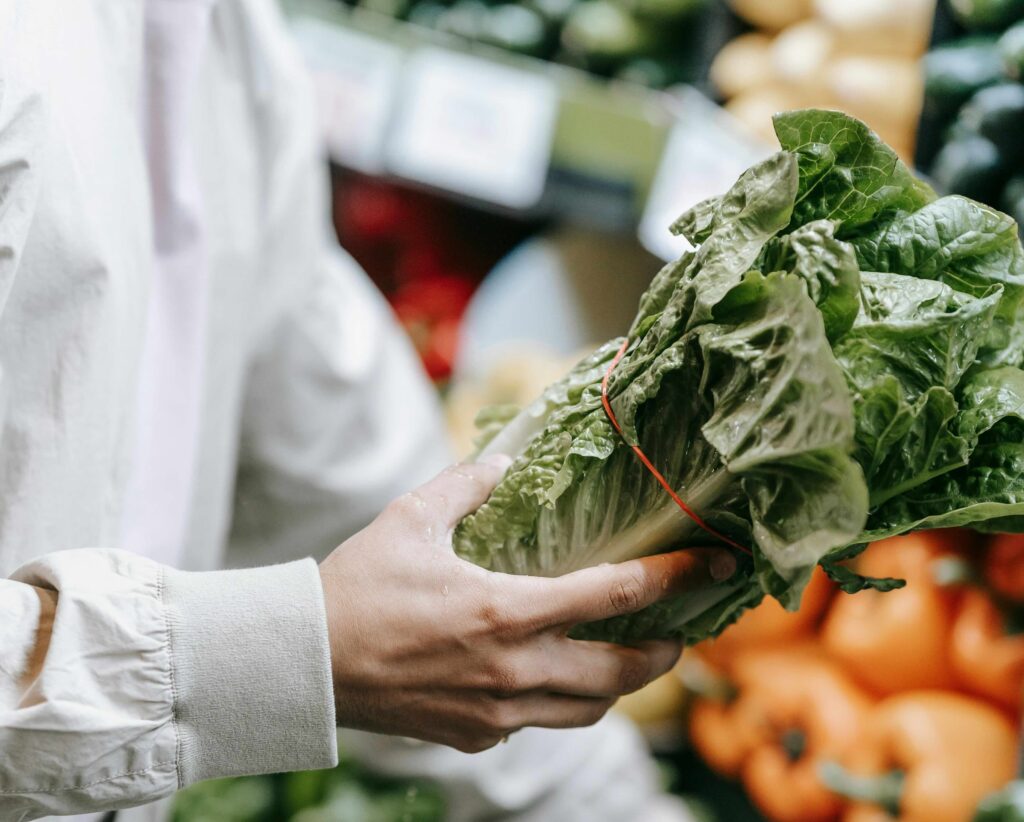


Fresh fruit and vegetable sales have historically benefited from impulse purchasing driven by in-store merchandising and visual abundance. The continued growth of online grocery shopping has weakened these impulse dynamics, contributing to flat or declining per capita consumption despite recent growth in retail dollar sales.
Evidence suggests that sales gains in 2022–2024 were driven primarily by inflation rather than increased consumption. As the industry enters 2026, fresh produce faces a structural challenge: how to stimulate consumption in a digital, task-based grocery environment where impulse buying is limited.
- Impulse Buying: A Historical Advantage for Produce
In the 1980s, produce department merchandising strategies were built around a clear behavioral insight: shoppers spent less than two minutes in the produce department. To compensate, retailers used high-impact displays — waterfalls, extended sets, secondary placements, and loss leaders — to slow traffic and trigger unplanned purchases. These tactics were effective because produce relies on visual appeal, seasonality, and abundance rather than brand loyalty. Impulse buying was not incidental; it was key to produce sales growth.
- Online Grocery Changes the Purchase Model
Online grocery shopping remains elevated post-pandemic and continues to grow. Many U.S. adults now purchase groceries online at least occasionally, and adoption is highest among households with children. Online grocery differs from in-store shopping in one critical way: it is task-driven rather than discovery-driven. Shoppers search, reorder, and confirm lists. Visual exposure is limited, browsing is minimal, and seasonal discovery is reduced. For fresh produce, this represents a fundamental disadvantage.
- The Loss of Impulse in Digital Produce Shopping
Online grocery removes many of the mechanisms that historically drove impulse produce purchases. Sensory cues and visual abundance are largely absent, exposure to unfamiliar items is reduced, and algorithmic reordering reinforces habitual buying over discovery. Produce is increasingly treated as a functional checklist item rather than a source of inspiration or trial. This shift disproportionately impacts fresh produce compared to branded center-store categories.
- Consumption Trends Masked by Inflation
While retail dollar sales for fresh produce showed growth between 2022 and 2024, this growth appears largely price driven. Inflation, FOB increases, and supply disruptions raised average prices without corresponding increases in volume. USDA Economic Research Service data confirms that per capita fruit consumption has declined nearly 20% since the early 2000s and remains well below Dietary Guidelines recommendations. Similar trends exist across broader fruit and vegetable intake. These patterns indicate a structural consumption issue rather than a temporary market cycle.
- A Long-Standing Industry Marketing Gap
Since the “5 A Day” campaign of the 1990s, the produce industry has not executed a sustained, collective effort to promote consumption. Instead, it has relied on the assumed health benefits of produce, retail execution and promotions, and fragmented commodity-level marketing. This approach has not kept pace with changes in consumer behavior, media, or shopping platforms.
- Strategic Questions for 2026 and Beyond
The industry must now address several questions: How can fresh fruit and vegetable consumption be increased at a category level? How can impulse, discovery, and trial be recreated in digital grocery environments? What collective role should retailers, suppliers, and trade organizations play in consumption-driven marketing? And how should success be measured beyond short-term dollar sales?
Conclusion
Fresh produce once benefited from being the most visually compelling department in the store. In an increasingly digital grocery ecosystem, that advantage no longer exists by default.
Without coordinated, consumption-focused strategies that address the realities of online shopping, fresh fruit and vegetable intake is unlikely to rebound. The challenge ahead is not incremental merchandising improvement, but redefining how produce is marketed, discovered, and valued in a digital-first world.
- Bill Weyland is the Principal Consultant of BW Intl Produce Advisors