


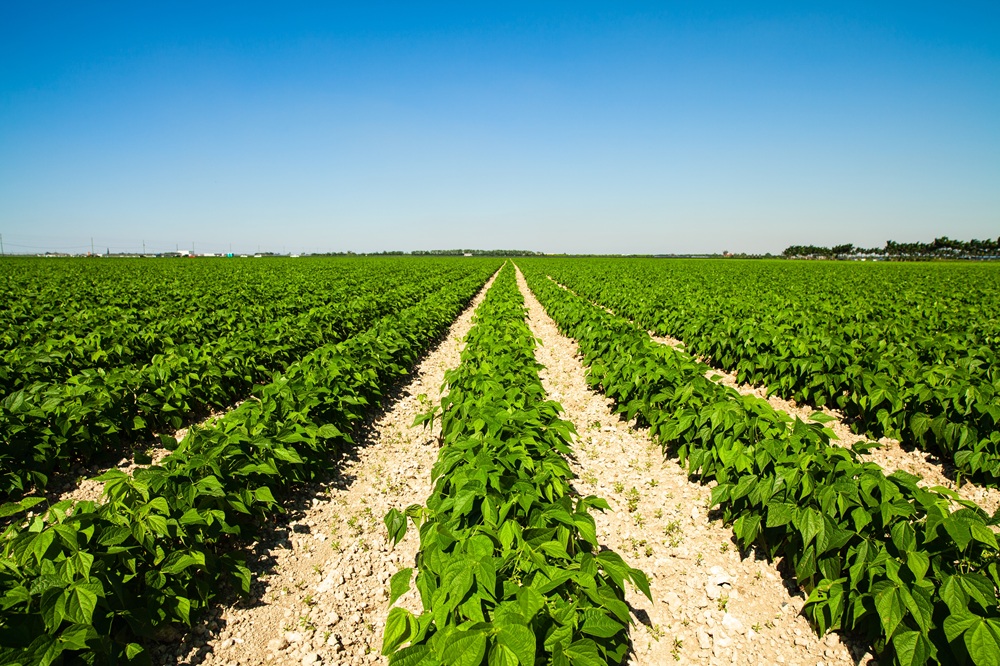


Touting warm days, mild winters, a subtropical climate, sandy soils, and cool nights — the Southeast possesses a bounty of assets making it one of the most dynamic agricultural regions in the U.S.
Spanning from the Ozarks to the Atlantic, the region includes Missouri, Kentucky, Virginia, West Virginia, Arkansas, Louisiana, Tennessee, Mississippi, Alabama, Georgia, the Carolinas, and Florida. Its lengthy growing seasons, abundant rainfall, and diverse topography have fostered everything from tropical fruit and peanuts to cotton and cattle.
The Southeast’s agricultural output is as varied as its terrain. Georgia leads the country in peanut production, Arkansas in rice, and North Carolina in sweet potatoes and tobacco. Alabama, Tennessee, and Kentucky play a central role in poultry and beef production.
Across these states, row crops and specialty produce alike benefit from research-driven advances in sustainable farming, with university-backed extension programs — from land-grant institutions such as the University of Florida and North Carolina State University — boosting yields, disease resistance, and resource conservation.
While Florida may be the crown jewel for exotic fruits, throughout the entire Southeast, subtropical microclimates allow for the cultivation of high-value and otherwise climate-sensitive crops. In states like Louisiana and South Carolina, humid conditions support leafy greens and brassicas for long periods of the year.
Meanwhile, the Appalachian foothills foster apple orchards and vineyard expansion, while Arkansas and Mississippi are increasingly experimenting with greenhouse-grown cucumbers, as well as tomatoes and strawberries to feed regional demand.
Agriculture is deeply rooted in the Southeast. Just four states — Alabama, Florida, Georgia, and South Carolina — are home to around 144,000 farming operations, according to the USDA, and offer a climate diverse enough to support crops suited only to tropical conditions. This has allowed the exotic fruit category to thrive.
Jose Roggiero, president and CEO of Miami-based Freshway Produce, a packer, importer and distributor, works with several growers in Florida. Dragon fruit is sourced from the southern part of the state during the summer months, while other exotic fruits — such as passion fruit and star fruit — have a longer production window.
In 2021, Freshway narrowed its product offerings shortly after the COVID-19 pandemic, from 25 products to a focused range of exclusively exotic produce.
“Products like dragon fruit, lychee, rambutan, and guava have been growing every year consistently in the United States,” emphasizes Roggiero. “Particularly dragon fruit — over the past five years, it has grown by double digits every year. The consumption of the fruit, just this year, is projected to grow between 18% to 20% in the U.S.”
In 2024, the global exotic fruit market size was valued at nearly $20 billion, according to Credence Research, and is anticipated to reach over $30 billion by 2032, with a CAGR of 6.2%. The surge in demand is being fueled by rising consumer awareness of the health benefits of exotic fruits, increased interest in vegan diets, and expansion of international trade.
While the Asia-Pacific region holds the largest market share of exotic fruits, North America has been expanding steadily, largely driven by consumer demand.
Florida not only offers ideal weather for exotic fruits; its leafy greens market also plays a significant role in both the state and overall U.S. produce supply. The U.S. fresh vegetable market is large and growing, with projected revenues of $66.23 billion in 2025, according to market projections. Florida helps fill seasonal gaps during the winter and spring months, particularly for the regional supply of leafy greens.
Anna Klawitter, marketing manager at Fellsmere, FL-based B&W Quality Growers — a major producer of distinctive leafy greens including watercress, arugula, spinach, and kale — says the company has more than 150 years of experience and serves the entire nation, “with Florida playing a major role in both growing and shipping.”
B&W Quality’s leafy greens are available year-round from seasonal farms that span eight states.
“The Southeast offers mild winters, long growing seasons, and rich soil — ideal for baby leaves. Florida’s climate supports consistent quality and year-round availability, which is critical for our crops,” notes Klawitter.


She also notes there is strong demand for the product, and that chefs and foodservice operators increasingly embrace a wide variety of greens, not just the well-known and widely loved lettuce.
“We’ve seen strong interest in Power 4 (a leafy green blend that combines watercress, baby kale, baby spinach, and baby arugula) and baby green kale specifically, both in foodservice and prepared foods,” she explains.
“The Southeast has the climate and infrastructure to support year-round production. That’s a huge differentiator for leafy greens, where consistency and freshness are everything.”
This year, both Klawitter and Roggiero are expecting high yields due to the predicted favorable weather.
“We’re seeing strong yields and excellent crop quality across our farms,” says Klawitter. “Our growing strategy continues to ensure a steady supply and exceptional quality all year long.”
As for exotic fruits, Roggiero says he is optimistic about the 2025-26 Florida dragon fruit crop.
“We haven’t had any drastic weather situations at the beginning of the year,” he explains. “We’ve been visiting some farms, and so far everything looks quite good. Now, the rainy season is starting in the next few weeks, and that will help the plants with growth and production.”
According to David Sherrod, president and CEO of the Southeast Produce Council (SEPC), the region’s climate is not the only factor contributing to its strength — its agriculture is also extremely heterogeneous.
The sector, he says, includes a wide assortment of crops, mostly “sweet corn, bell pepper, zucchini squash, yellow squash, peaches, Vidalia onions, leafy cooking greens, tomatoes, peanuts, apples, sweet potatoes, cucumbers, and strawberries.”
The SEPC is an organization dedicated to supporting the Southeastern United States. It was established in 1999 by a collective of 100 professionals representing agriculture, retail, and foodservice. Since then, it has evolved into a dynamic, forward-thinking group comprising thousands of industry members.
The nonprofit represents any item sold in the Southeastern U.S. produce department or, as Sherrod says, “any product on any Southeastern menu in a restaurant.”
“Our focused marketing area includes: Florida, Georgia, South Carolina, North Carolina, Tennessee, Alabama, Mississippi, Louisiana, Virginia, West Virginia, and we have adopted Arkansas,” he notes.
SEPC members benefit from a community built to enhance the value of their participation, with offerings that include an experience-rich membership and an industry thoughtfully cultivated to thrive for generations.
“Out of our membership, about 70% are growers, shippers, and packers,” he says, adding, “We are now over 6,000 members and growing. We have more than 625 grower/shippers in our membership from all over the country.”
Sherrod notes the SEPC continues to grow steadily, strengthened by the diverse backgrounds and expertise of its members, and the Southeastern produce industry at large. And clearly, Southeastern production is on the rise. Over the past year, the USDA awarded just under $6 million across 10 states to support the development of relationships between local and regional food businesses and institutions. Among those highlighted were Southeast-based groups such as the Regional Cooperative in Georgia.
“We have seen a huge increase in local products over the past three years due to higher freight costs,” says Sherrod. “We have also seen more items grown in our area that typically haven’t been grown before due to the urban farming movement.
“Also, the Southeast has been adding vertical farming operations at a very rapid pace over the past few years. We are adding more leafy greens, greenhouse tomatoes and cucumbers. Even greenhouse strawberries are now available.”
When asked about challenges for the vast area, Sherrod notes that uncertainty is inherent in agriculture. “I truly think that ‘produce people’ seem to deal with these pressures better than most because they operate in such a fast-paced environment,” he says.
“Whether it is a farmer having to get a crop in before the heavy rains or a retailer having to cover a holiday ad, or a banquet chef preparing a meal for 2,000 people, our industry seems to be more resilient than most. We are not selling widgets, and everything we do sell is dying once it is out of the ground.”
Despite the myriad of challenges, Sherrod’s passion for the region is palpable. “Although every area of the United States is unique in its own right, the Southeast seems to have the wonderful gift of Southern hospitality.
“It’s that feeling that we are all part of a huge family, and we understand there will be problems, but we can work through them — and we will try to make the best of every situation that comes our way,” he says.