
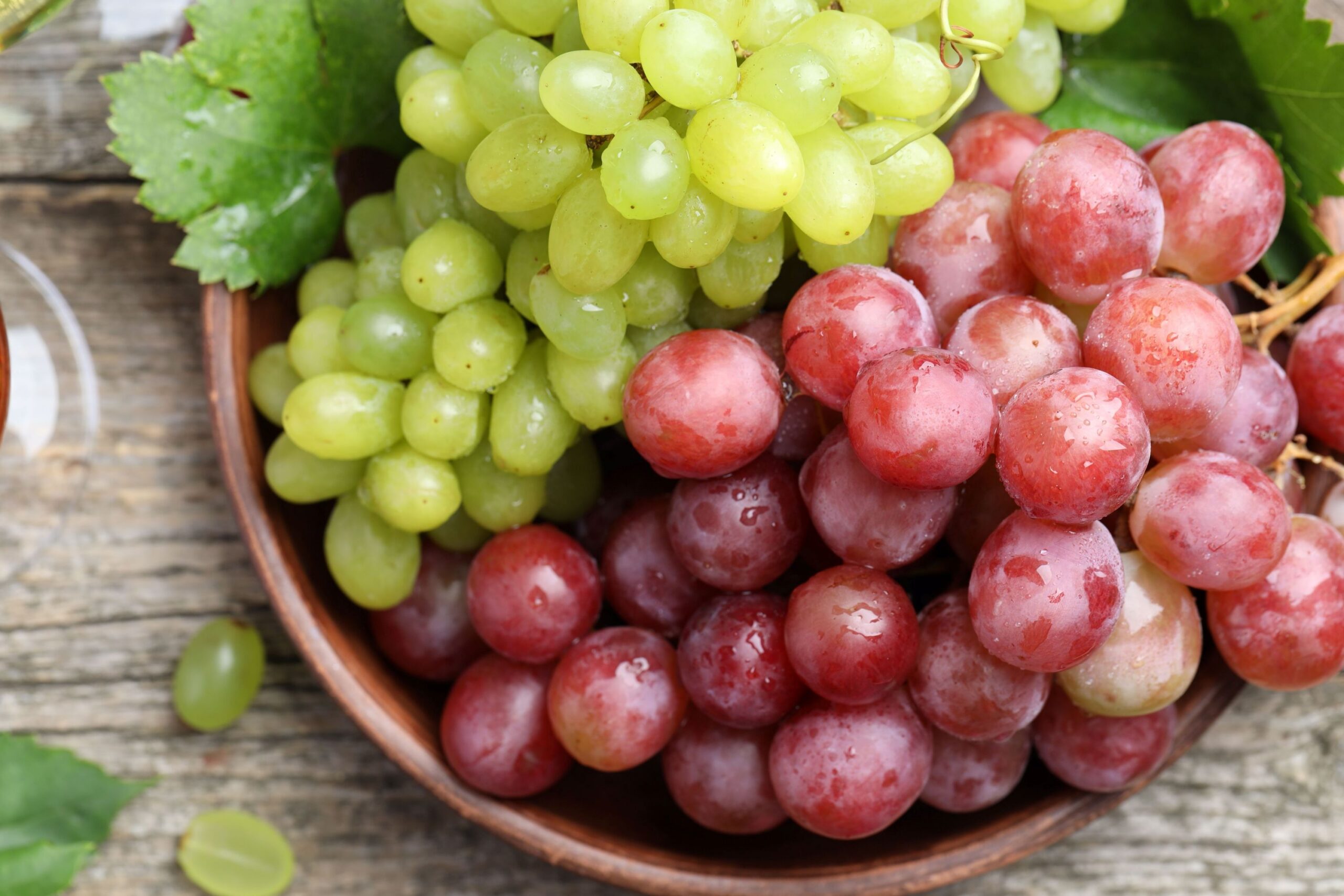
The produce department has long been anchored by stalwart categories like apples, bananas, and citrus. But in recent years, another fruit has been making its mark: table grapes. Driven by a combination of expanded global supply, innovative flavor profiles, and growing consumer demand for healthy, convenient snacks, the grape category is experiencing a resurgence that is reshaping the produce aisle.
“Table grape suppliers continue to introduce a wide range of proprietary genetics cultivated around the globe,” says Gary Caloroso, regional business development director at the Los Angeles-based Giumarra Companies. “We are confident that these new selections provide outstanding flavor and eating experience for consumers, keeping the grape category competitive.”
Juan Pablo Molina, general manager of Sonora, Mexico-based Fresh Farms, says, “Grapes are one of the true sugars of the produce aisle, delivering natural sweetness, convenience, and immediate snack appeal. They are one of the few fruits that truly cross generations, my one-year-old can enjoy them just as much as grandma and grandpa.
“What makes the category distinctive today is how traditional, non-GMO breeding has elevated that sweetness into defined eating experiences, with improved crunch, texture, and flavor balance that consumers can trust.”
Diverse Origins, Reliable Supply
Speaking in February about the 2025-26 import season, John Pandol, special projects director at Pandol Bros., said the grape category’s start to the season had been “interesting.”
He notes that both Peru and Chile faced new tariffs this year that were not in place the year prior, while their currencies also shifted significantly. “Peru was about 9% unfavorable and Chile about 12% unfavorable versus last year. Mexico was around 18% less favorable,” says Pandol. “That’s a big swing in a single year.”
These currency fluctuations should, in theory, influence supply dynamics, as producers may decide to send less fruit to the U.S. market in search of better returns in other markets. But Pandol says that through February, the actual activity in the market had been “fairly similar to previous seasons.”
“Part of the issue is that global grape supply has become much more diversified,” he explains. “The U.S. market used to depend heavily on certain origins at specific times of the year. Now you have Peru, Chile, Mexico, Brazil, and California all playing roles, and that spreads risk across the supply chain.”
Salvador Hirales, Giumarra’s West Coast sales manager at Giumarra Long Beach, says that the North American grape market has remained steady. “We work with key grower partners to supply high-quality, promotion-ready grape volumes throughout the year,” he says. “By sourcing from diverse growing regions, we can meet the strong, ongoing demand from consumers across the U.S. and Canada.”
The growing importance of the Peruvian grape season, which runs from November through March, has been a critical factor in sustaining that reliable supply. As Bill Poulos, executive director of grapes and stone fruit at Vancouver, British Columbia-based Oppy, explains, “The Peruvian season has become increasingly important. Global supply has expanded, particularly from Peru, which has helped support a true 365-day grape category of premium varieties.”
This diversity of supply origins has helped the grape category avoid the types of disruptions that have impacted other produce items. Retailers can now count on a steady stream of high-quality grapes to stock their shelves, even during the traditional off-season.
“Retail demand remains steady because grapes are a habitual, family-oriented purchase that fits multiple consumption occasions, from lunchboxes to entertaining,” says Molina. “Retailers are more selective than ever, favoring programs that consistently deliver proper maturity, strong condition, and fresher grapes that give a reliable eating experience. The market rewards disciplined production and quickly penalizes inconsistency.”
Alongside the category’s supply-side evolution, grapes have also benefited from a wave of flavor innovation that is capturing consumer attention.
“The biggest driver is varieties,” says Poulos. “We’re delivering a much better piece of fruit than we were even a few years ago, and that really helps grapes stand out in the produce department.”
Caloroso notes, “Table grape consumption in North America continues to be strong, driven by several key factors, including enhanced sweetness, a broader range of color options, greater availability of proprietary genetics, and growing consumer demand for nutritious snack choices.”
Pandol notes that this shift toward proprietary varieties reflects that there are no more worldwide public varieties. “Even ‘public’ programs like the USDA or INIA are using licensing models of the private breeders,” Pandol says. “Retailers buy by variety but sell by commodity. So genetics is playing a major and overly important role in the B2B portion of the category.”
The introduction of novel grape varieties has also drawn attention from consumers looking for more distinctive flavor experiences. These flavor-forward selections are helping grapes stand out on the shelf and appeal to shoppers seeking a unique sensory experience.
“We’re also seeing strong interest in candy-flavored varieties and continued growth in organic grapes,” notes Marc Serpa, director of domestic grapes and sales manager at Oppy. “The supply of organic grapes has become much more consistent, which has helped the segment keep expanding.”
Structural Shifts
Looking ahead, industry experts see several structural shifts and growth opportunities for the grape category.
One area of focus is the continued evolution of grape genetics. As Caloroso explains, “We anticipate that certain grape varieties will be phased out and replaced with higher-performing alternatives.
“We continue to prioritize planting premium varieties that are better able to withstand extreme weather, have longer shelf lives, and offer other improvements that benefit consumers.”
Poulos agrees, noting that the ongoing innovation in grape genetics will be a critical driver of the category’s long-term success. “The level of quality and variety has really elevated grapes in the produce department,” he says.
Pandol emphasizes that this shift in grape varieties is changing the entire approach to production and marketing. “Growers need to think about which varieties will perform well in their regions, and marketers need to ensure that the fruit delivered to retailers meets the quality expectations consumers have developed,” he explains.
“Data will also play an important role,” says Poulos. “For many years the grape category was relatively flat, but now we’re seeing significant growth. Sharing that data with retailers helps demonstrate that grapes are a reliable option for year-round promotion and can drive consistent performance in the produce department.”
When it comes to in-store merchandising, industry experts emphasize the importance of a flexible, responsive approach that mirrors successful strategies in the berry category.
Pandol says that at retail, the grape industry should be like the berry category and not like the apple category. In his view, retailers should take a more nimble approach to grape merchandising, focusing on offering the best available grapes at any given time rather than locking into specific varieties.
“With apples, shoppers often choose based on variety,” he explains. “But apples can be stored for an entire year after harvest, and retailers ultimately decide which varieties appear on the shelf.
“In the berry category there are also many varieties, but consumers and even retailers rarely choose among them — shoppers usually buy whatever the berry shipper decides is best to offer that retailer that day.”
By partnering with suppliers that can provide a consistent, high-quality grape supply and leveraging best-in-class merchandising strategies, retailers can position the grape category for continued growth and success. “The grape category continues to evolve,” says Pandol. “As long as the industry keeps focusing on delivering quality to consumers, grapes should remain a strong category in produce.”
Molina adds, “The opportunity moving forward is to expand flavor and visual diversity while continuing to deliver the reliable, high-quality eating experience that keeps families coming back.”