
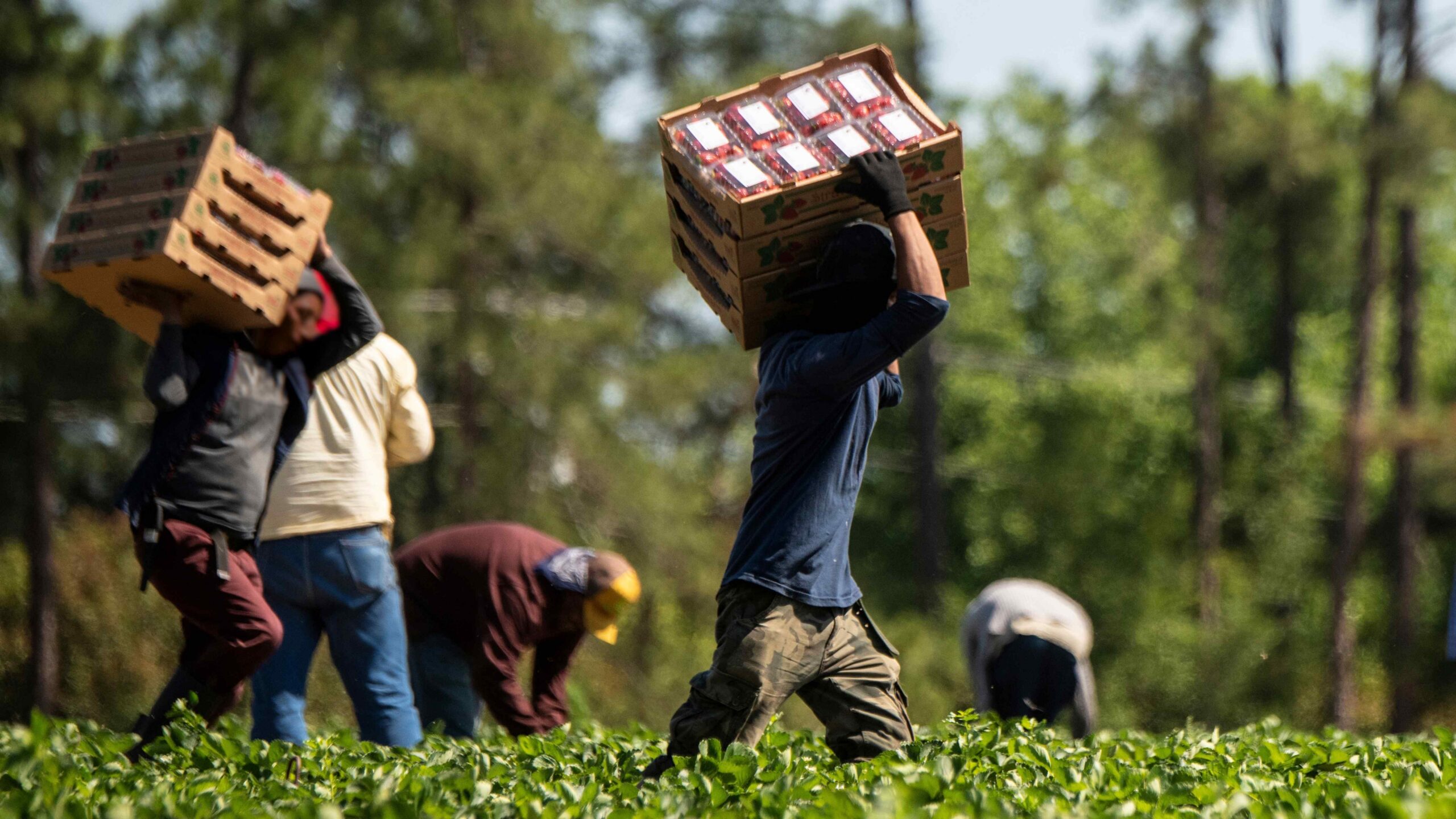
Walk through a Washington apple orchard at harvest. The people on the ladders will mostly be men who arrived from Mexico a few weeks earlier, on a federal visa that almost no one outside agriculture has ever heard of. The visa is called H-2A, and the program behind it has quietly become one of the more important pieces of American food infrastructure. A generation ago, it was a footnote in immigration policy. Today, it brings in over 300,000 workers a year, and in parts of the country, it has become essential to getting crops picked.
The program grew because the alternatives shrank. For most of the past 40 years, American farms ran on a domestic workforce that was mostly Mexican-born, mostly settled in the U.S., and very often undocumented. Nowadays, that workforce is aging, and the flow of new migrants who once replaced retiring or departing workers has slowed sharply. Mexico is wealthier and better educated than it was, and the border is harder to cross than it used to be.
Hence, farms that need a hundred pickers in August and none in February have turned to a guest-worker program that, until recently, looked too expensive and too bureaucratic to scale. Yet more and more farmers turned to the H-2A program because they had few other sources of hand labor. Wages in American fields have risen faster than wages almost anywhere else in the economy, and in some years faster than the price of the fruit being picked.
The reason the wages have risen is not only supply and demand. It is also a federal formula, the Adverse Effect Wage Rate (AEWR), which sets the legal minimum an H-2A employer must pay. The rate exists to keep guest workers from undercutting domestic ones, a fair goal that the formula, in the view of many growers and a number of economists, never quite achieved. What it did instead, they argue, was push wages up year after year regardless of what the underlying market was doing.
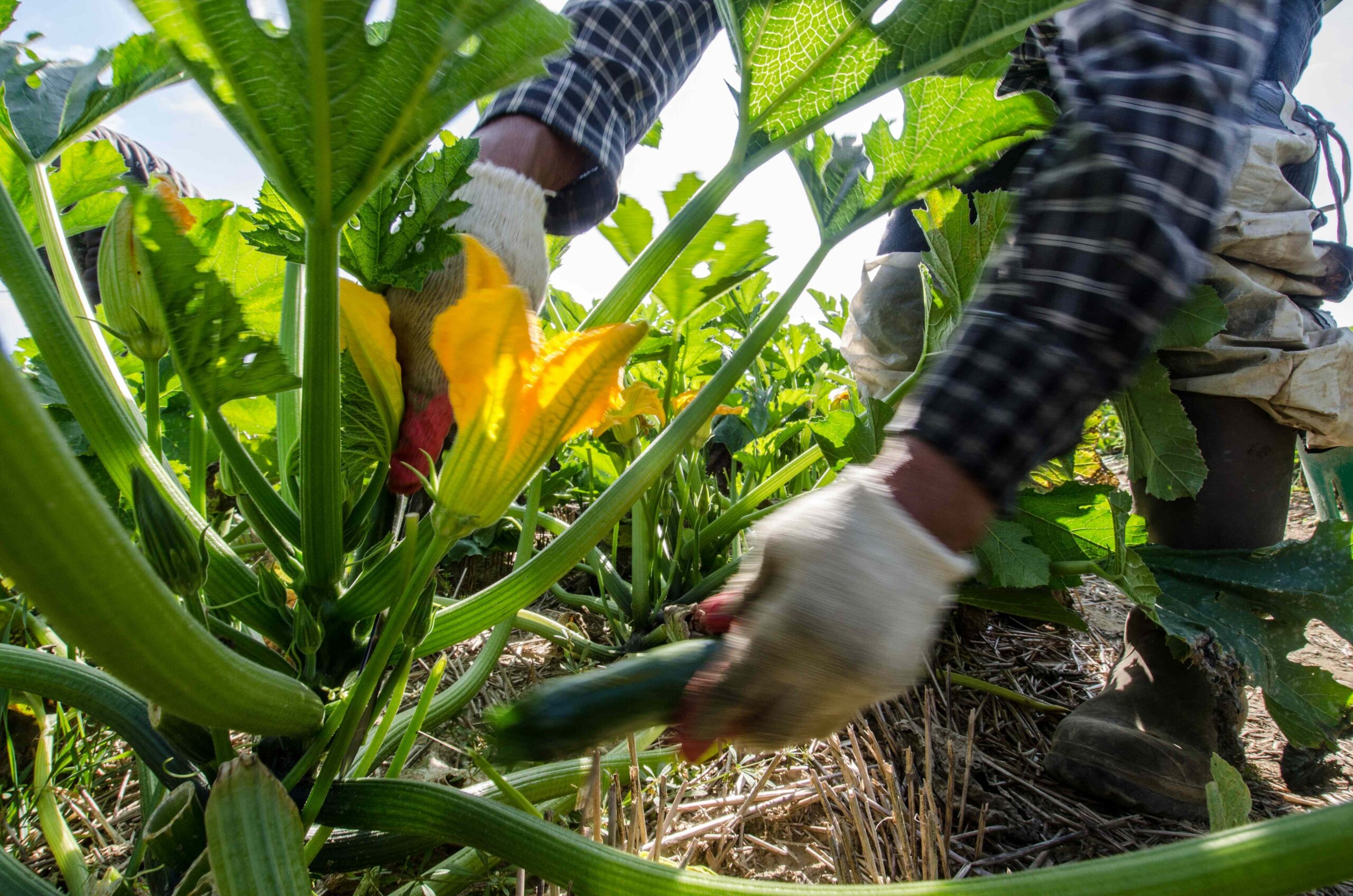
In October 2025, the Department of Labor (DoL) rewrote the formula, which, depending on who you ask, is an overdue correction or a mistake. But no matter which side of the fence you’re on, the interim final rule is a window into something larger: a quiet reset in the cost structure of growing fresh produce in the United States, one that the political fight over the wage rate has so far obscured more than it has explained.
The Pre-Rule Pressure
For a sense of how strained the math had become, the Northwest Horticultural Council’s grower survey is a good starting point. In crop year 2023, labor consumed 108% of what Washington’s tree-fruit growers received from the sale of their apples, pears, and cherries. The 2024 figure was on track for 97%. “That is not sustainable in any stretch of the imagination,” says Kate Tynan, the council’s senior vice president.
While the Northwest data is acute, however, it’s not anomalous. John Hollay, who became president and CEO of the National Council of Agricultural Employers on Jan. 1, estimates that 30% to 50% of the operating budget goes to labor “right off the bat” across most labor-intensive specialty crops, depending on commodity and region.
Having said that, the pressure is not solely a function of regulation. Zachariah Rutledge, an assistant professor of agricultural economics at Michigan State University, traces it to a structural shift more than a decade in the making.
“The domestic supply of farm labor has been declining for a decade or more,” he says. Improving wages and educational attainment in Mexico have drawn workers out of agriculture there, and in the United States, settled farmworkers have largely stopped migrating between regions. Border enforcement and competition from other low-wage sectors have also played a part in shrinking the available pool, while wages have responded as basic price theory would predict: rising faster than inflation and faster than the average wage in the rest of the economy. In some cases, Rutledge notes, by 10% to 13% in a single year.
The H-2A program has absorbed much of the resulting demand. According to Tynan, in Washington State, H-2A admissions grew from 18,800 in 2017 to 38,700 in 2025, a 105% increase in eight years. Over a comparable window, Washington lost 15% of its tree-fruit farms. Oregon lost 28% of its sweet cherry orchards and 27% of its pear orchards. Heading into 2025, Washington’s AEWR was running more than $3 above the state minimum wage. Oregon’s was almost $5 higher, or 31% above its state floor.
What the Rule Actually Changes
The methodology being replaced was widely criticized from both sides of the labor market. Hollay describes the prior Farm Labor Survey as creating “an unnatural floor” and a “natural inflator year over year.” Even the federal government, he notes, has acknowledged that “this instrument was never meant to determine wages.” Tynan adds technical objections. The survey treated every agricultural worker identically, regardless of skill, sampled only fixed-site employers, excluded farm labor contractors, and folded bonus pay and overtime into the base wage that set the following year’s floor.
The new framework draws from the Bureau of Labor Statistics’ Occupational Employment and Wage Statistics survey and splits the AEWR into two skill tiers. The Department of Labor assumed in its rulemaking that 92% of H-2A workers would fall into the lower tier, and projected aggregate employer savings of $2.5 billion a year.
The aggregate figure is smaller in practice. Rutledge’s research group, which factored in state minimum-wage floors that the original DOL analysis overlooked, estimates real employer relief at roughly $1.5 billion, about a billion dollars less than the agency claimed.
Philip Martin, professor emeritus at the University of California, Davis, adds context by framing the shift in unit terms. “The average H-2A contract is for 1,000 hours,” he says. “Last year, the national average AEWR was around $17.50 an hour. So the average contract value is $17,500.” For 2026, he expects the average AEWR to drop by $2 to $3 an hour — a significant amount of money on a 1,000-hour contract, but not the wholesale rewrite some headlines have implied.
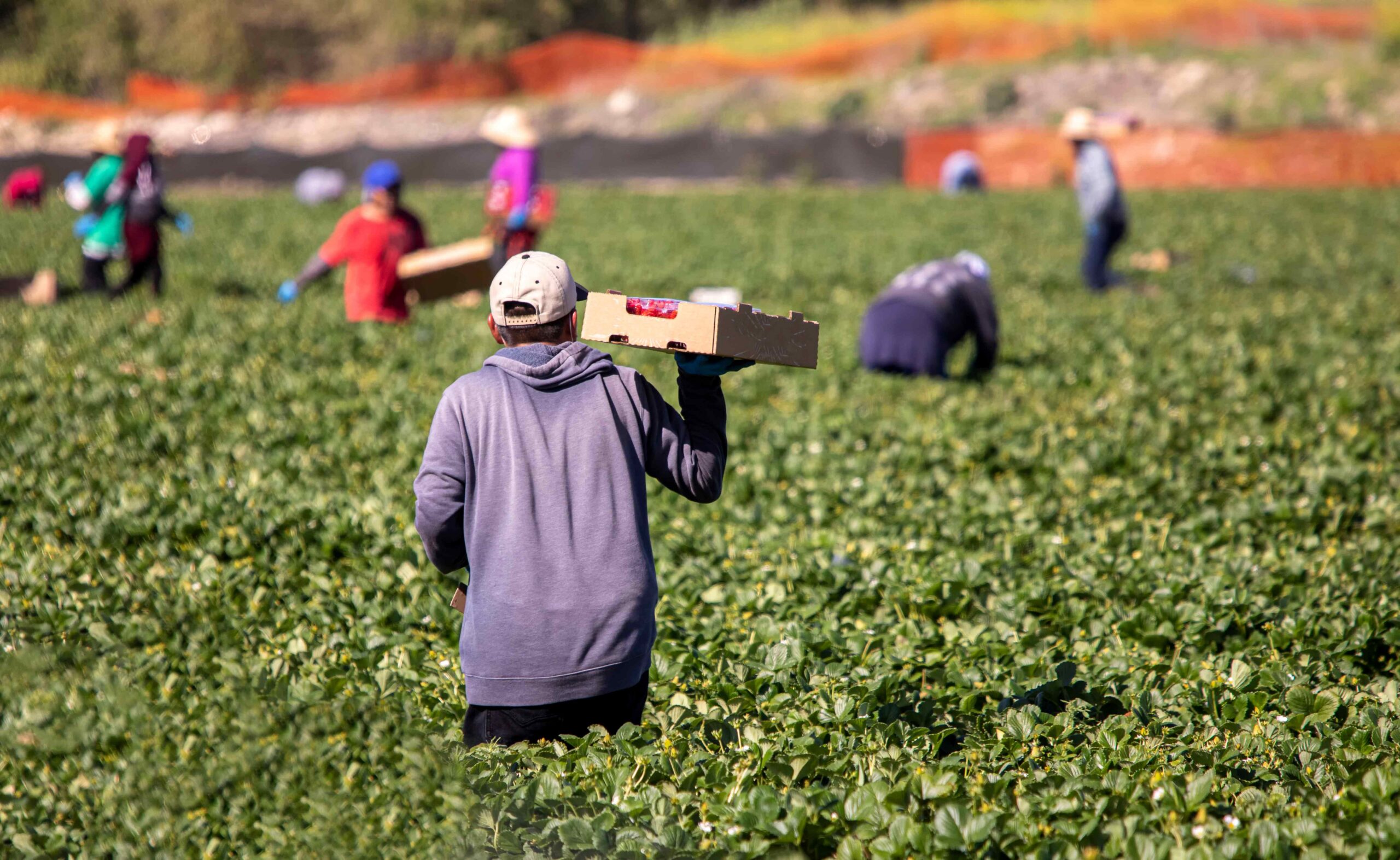
The Washington numbers are illustrative. The new skill-level-two wage is $19, against last year’s blended figure of $19.82. Tynan’s framing is that the rule “provides growers with some flexibility to actually set their wages based on market conditions and orchard conditions, which they have not had when the AEWR has been so far above what the market could support.” It is a floor reset, in her telling, rather than a wage cut. The practical effect for many H-2A workers will nonetheless be a smaller paycheck.
The Counterclaim
Analysis of the rule by The Economic Policy Institute, a think tank, published shortly after its release, takes a less generous view. Roughly 300,000 H-2A farmworkers stand to see annual wage losses of $2 billion or more, between 26% and 32% of their pay. Spillover effects on domestic farmworkers, EPI estimates, will subtract another $3 billion, or as much as 9% of their wages. Combined: $4.4 to $5.4 billion a year, or 10% to 12% of total farmworker pay.
Daniel Costa, EPI’s director of immigration law and policy research, has characterized the rule’s intent more bluntly than most observers. “I think that’s the strategy overall,” he told Bloomberg via Farm Progress: “deport the undocumented and replace them with H-2A low-wage workers.”
Some of the friction is felt by employers who otherwise welcome the change. Diane Charlton, an associate professor at Montana State University, describes the awkward conversations underway across grower communities. “I see growers wrestling with, how do I explain this to my workers? You might have been working here for many years, and now we’re looking at a decrease in wages.” Charlton emphasizes that the H-2A program was originally designed to ensure that “guest workers don’t take the jobs of domestic workers or keep wages artificially low.”
Whatever methodology replaces the old one, that design intent has to hold for the program to retain political legitimacy.
The United Farm Workers has filed suit in California to overturn the rule, but a U.S. District Court judge denied its request for a preliminary injunction on May 14. The interim final rule will remain in place while the underlying legal challenge proceeds.
Hollay, whose organization filed an amicus brief in support of the government’s position, describes the stakes plainly: Reverting to the prior methodology would amount to “a death sentence for the industry.”
Where the Numbers Move Most
The headline figures conceal considerable regional variance. For businesses planning around the rule, the variance is the story.
In the Northwest, the relief is most direct. Tynan calls the rule “the first good news growers had seen in a number of years.” The skill-level-two reduction of roughly $0.80 an hour is modest in isolation, but compounds against a workforce that has more than doubled in eight years and gives growers what she calls “legal room” to set wages closer to market conditions.
The Delmarva (Delaware, Maryland, Virginia) region tells a different story. Nathaniel Bruce, a farm business management specialist with the University of Delaware Extension, points out that Maryland’s skill-level-one AEWR comes in at $13.04, well below the state’s $15 minimum wage, which therefore governs.
Compared with the 2025 AEWR of roughly $17.94, the relief is meaningful but capped. Bruce’s larger concern is forward-looking. Maryland legislators are debating a $25-an-hour state minimum wage, which, absent an explicit agricultural carve-out, would override the federal floor entirely.
The Southeast benefits asymmetrically. State minimum wages in the Carolinas, Georgia, and Mississippi sit at the federal floor of $7.25 an hour, meaning Southern growers capture the full benefit of the lower AEWR with no state-level offset. Bruce sees competitive consequences. “You think about the Baltimore terminal market, the Philly terminal market,” he says, naming the venues where Delmarva growers compete directly with Southeastern produce. “They end up getting a much larger cost savings of labor through the new AEWRs. I can see, maybe long term, some producers from down South kind of gaining a competitive advantage in those terminal markets.”
California remains the single largest market and the most politically charged. The state’s minimum wage of more than $16 absorbs most of the federal change, and the UFW litigation is being heard there.
One closing point from Bruce is worth flagging. The H-2A program is no longer a fruit-and-vegetable phenomenon. He cites a Delmarva grain operation that employs a South African worker on an H-2A visa, and notes similar arrangements are spreading across the Midwest. The political coalition behind the program is broadening, with implications for any future attempt to roll the rule back.
Mechanization Is Not the Escape Valve
A standard pundit reflex holds that lower H-2A wages will slow investment in labor-saving technology. The practitioners’ framing is more measured. Mechanization in tree fruit, fresh vegetables, and small fruit has been pursued for decades, and the easy gains have already been realized.
“We’ve already mechanized the easiest tasks to mechanize,” Charlton says. “Firms have been working on robotic strawberry pickers for more than 15 years, and these still aren’t commercially available.” Tynan notes that Northwest growers have invested through the Washington Tree Fruit Research Commission for decades, pursuing a mechanized harvester for apples. “We’ve gotten close, but we haven’t quite gotten there.” Even success would not displace hand labor entirely, she says. “It will supplement, it will enhance, but it is never going to replace all the workers that we need.”
Hollay rejects the binary outright. Robotics is well-suited to processing tomatoes destined for cans. It is poorly suited to fresh tomatoes destined for a kitchen counter. “It’s not an either-or situation,” he says. Investment continues regardless of the wage rule.
Bruce illustrates the capital constraint at the small grower level. Blueberry harvesters are common in New Jersey, where acreage justifies the equipment. In Delaware, no operation grows enough blueberries to support the purchase. For watermelons, peppers, and pumpkins, the technology simply does not yet exist at a commercial scale.
Martin offers the framing that best captures the industry’s strategic position. “There’s going to be a race between machines, migrant H-2A workers and imports,” he says. Anyone trying to think about risk, he adds, has to do all three at once: invest in machines, in housing for H-2A workers, and in production partners abroad. Mechanization is one of three vectors, not the answer to the question.
The State Wildcard
Martin’s framework, though, leaves out a fourth player that may be as important as the others: the states. If federal wage methodology has been the dominant policy story of the past decade, he argues, the next decade’s story is likely to play out at the state level. He thinks the angle is being underweighted in current coverage.
His most telling example concerns California sheepherders. State-level overtime legislation has driven their wages from roughly $2,000 a month in 2019 to $5,000 a month today, a 2.5-fold increase imposed entirely outside the federal AEWR framework. The affected population is small, between 300 and 400 H-2A sheepherders, but the precedent is structural. “If you’re going to participate in the program and hire sheepherders, you have to pay for it,” says Martin. Other state and municipal action is in motion. Santa Barbara is considering a $26-an-hour farmworker minimum wage. Maryland, as Bruce notes, is debating $25. The federal floor is meaningful only where state and local frameworks allow it to be. “Not enough people are paying attention to this,” Martin says.
A Correction, Not a Cure
The rule has reset the immediate cost calculation of labor-intensive American agriculture. Employer-side savings of $1.5 to $2.5 billion are real, concentrated in regions where the prior AEWR ran well above state minimum wages and where H-2A penetration is highest. The Pacific Northwest is the clearest beneficiary. For the workers receiving smaller paychecks, EPI’s $4.4 to $5.4 billion estimate is also real, and the political and legal contest around it remains unresolved.
The rule does nothing about the pressure that produced the wage spiral in the first place, though. The domestic farm labor supply continues to decline. The settled workforce continues to age. Demographic and economic improvement in rural Mexico continues to draw labor away from emigration northward. None of that is moved by a change in methodology. The new floor reduces a symptom.
Two contests will determine how much of the new methodology survives. One is judicial: although a federal court denied the UFW’s request for a preliminary injunction, the underlying legal challenge continues, and any final regulation may differ from the interim version now in force. The other, more consequential one is the state-level escalation Martin describes. A patchwork of overtime laws, sector-specific minimum wages, and municipal ordinances is now the more probable battleground, and federal floors matter only as much as state frameworks let them.
Whether the economics of labor-intensive fresh produce are being reset or merely paused depends on how far past this season one is willing to look.