
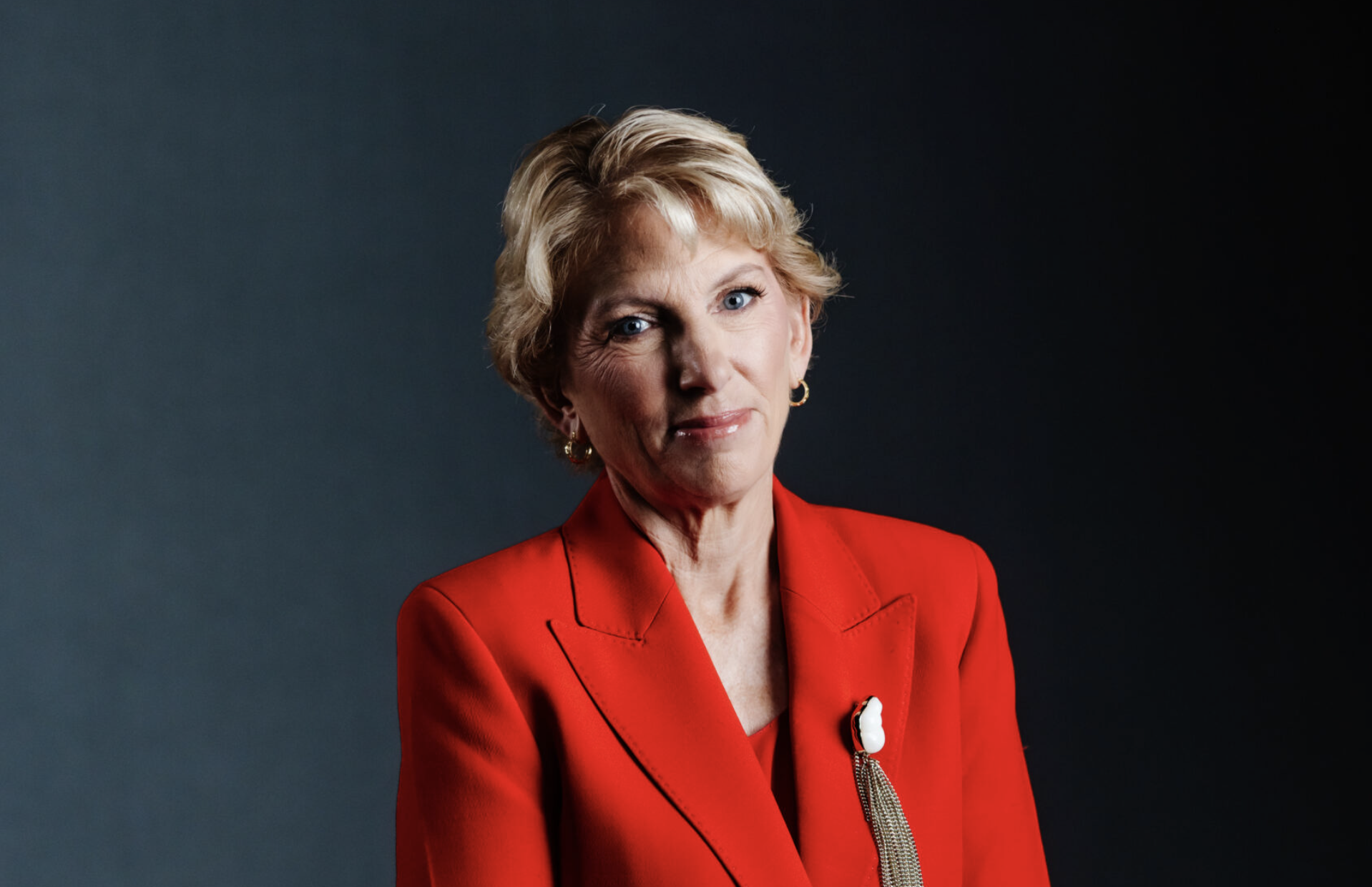
Cathy Burns never planned on making a career out of groceries.
Growing up in Bangor, Maine, she took a part-time job bagging groceries at a local supermarket to “make some money, put gas in the car and go out on the weekends.” Today, she sits at the helm of the International Fresh Produce Association (IFPA), the largest trade organization representing the global fresh produce and floral supply chain.
Burns’ path from the supermarket floor to the C-suite was built on operational grit. After spending two decades climbing the ranks at Hannaford, she moved to its parent company, Delhaize America, ultimately taking the reins as president of Food Lion. In 2013, after 30 years in grocery retail, she crossed the aisle to industry advocacy, joining the Produce Marketing Association. She later helped lead the historic merger between PMA and United Fresh that created IFPA in 2022.
Along the way, Burns has been recognized as one of the most influential executives in food retail. Yet, her attachment to the business goes deeper than corporate strategy.
Once she entered grocery, Burns says, “the industry just kind of gets in your blood.” Produce, in particular, captured her attention because it sits “at the center of the bullseye” of a retailer’s go-to-market strategy, shaping how shoppers perceive the entire store.
Today, that deep retail background gives Burns a unique vantage point on the tensions running through the global produce business — from labor shortages and volatile tariffs to sustainability mandates and lagging consumption. Despite the friction, she sees an industry whose members, as she puts it, are “betting the farm every single day.”
Vision Magazine spoke with Burns about the economic pressures facing fresh produce, what suppliers consistently misunderstand about retail buyers, and where she believes the industry must adapt to survive.
How would you say your own leadership style has changed over the course of your career?
I’m a self-confessed lifelong learner, so I try to learn new things all the time, and that goes for leadership as well.
In grocery retail, I learned how important it is to really understand the consumer, because the consumer is at the center of everything a retailer does. I also learned how to address conflict constructively. There’s a way to address conflict and have people leave bigger, not smaller, when you care enough about the individual to give them feedback for their own growth and development.
Personally, I’m anchored in unleashing the best in others. What really gets me jazzed is helping people accomplish things they don’t think are possible for themselves.
One area where my leadership has changed is around conviction and boldness. There are so many headwinds coming at our industry, and being the voice of the fruit, vegetable and floral industry around the world takes a certain level of conviction. If not me, then who? If not us, then who?
I’ve also become much more conscious of balance. Earlier in my career, I thought that if I worked more, I would simply deliver more. You may do more things, but I would argue that you’re not hitting your peak performance if you don’t have some level of balance in your life.
I should have learned that earlier in my career, rather than judging myself on how many hours I worked at the end of the day. That’s not the game. It’s the difference that you make.
Having spent much of your career on the retail side, what do you think produce suppliers most often misunderstand about how retailers make decisions?
Retailers are balancing hundreds of competing priorities every day, just as suppliers are. They’re weighing decisions against labor, logistics, consumer demand, inventory management and the shopper experience.
I believe suppliers sometimes assume decisions are made just on price. While price matters, for sure, retailers are looking for partners who can help them solve problems, reduce risk and create long-term value for their shoppers.
The strongest supplier-retail relationships are built on transparency and shared understanding. When retailers and suppliers understand the realities of each other’s businesses, from production challenges to retail operating pressures, they typically find mutually beneficial solutions.
At the end of the day, retailers want to know how something will help them serve their customers better. If suppliers can frame their solutions around category growth, business outcomes, innovation and shopper value, those tend to be the most successful partnerships.
For suppliers, it’s really about understanding the retailer’s strategy and language in a way that allows them to be heard. When they can do that, that’s where the magic happens.
Since IFPA’s creation in 2022, where has the unified model delivered the clearest results?
I believe the clearest result has been our ability to speak with a stronger, more credible voice on behalf of the entire fresh produce and floral industry.
Bringing together growers, shippers, retailers, foodservice operators, wholesalers and floral businesses has given us a broader perspective and greater influence on the issues our industry cares most about.
Think about the challenges facing the industry right now: labor, food safety, sustainability, nutrition and supply chain resilience. None of those stops at any one segment. A unified association allows us to tackle them in a way that reflects how the industry actually operates.
Of course, with such a diverse membership, priorities aren’t always perfectly aligned. Retailers, suppliers, importers, exporters and growers can approach sustainability requirements, trade policy or compliance obligations from very different perspectives.
Our role isn’t to eliminate those differences. It’s to create a forum where they can be surfaced, understood and worked through toward a shared outcome.
What I’ve learned is that when you bring the full supply chain to the table, the conversations may become more challenging, but the solutions become much stronger. That is exactly what the unified IFPA model was designed to achieve.
What key lessons do you think the fresh produce industry could learn from the floral industry, and vice versa?
Produce and floral have long complemented each other in-store, greeting shoppers as they enter with flavors and fragrances.
There’s a lot of opportunity for shared learning, particularly around innovations in production, such as regenerative agriculture, and packaging.
Both categories also share many of the same challenges. In our advocacy on tariffs and trade, for example, we’ve been very intentional about seeking relief for produce and floral because both can get swept up in broader agricultural policymaking.
And for both, growing consumption is a top priority. Understanding consumer expectations and behaviors, whether through sales data or tools such as our Global Intelligence Engine, is an essential part of changing that trajectory.
When you speak candidly with members today, which concerns come up most consistently? Where does the industry most need a concrete policy win?
At any point in time, labor, sustainability, trade or rising costs could be the No. 1 issue, although labor is pretty consistent.
But I would say the overarching concern is lagging consumption of produce and lagging demand for floral.
Our members are facing continuous pressure from rising costs, global conflicts, trade policies, regulation and workforce shortages. Advocacy threads through everything we do because our role is to reduce and remove barriers and help the industry accomplish things that no single company can do on its own.
That said, labor is key. Labor is tough.
Labor costs and access to workers continue to threaten the viability of many U.S. produce operations. What reform is realistically achievable?
For specialty crop growers in the U.S., the No. 1 structural challenge is access to a workforce that is both affordable and reliable.
The produce industry has been advocating on this issue for decades. Recently, IFPA members have been in Washington, D.C., three of the last six weeks, making the case directly to lawmakers. We also bring government officials out to members’ operations so they can see the impact firsthand.
It’s one thing to share your story inside the Beltway. It’s another to have policymakers come out, kick the dirt or walk through a processing plant and see what these labor challenges actually mean.
We have seen some regulatory reform to the H-2A program, and making it more usable for producers has been important. We’ve also seen progress around the Adverse Effect Wage Rate. But what we really need is long-term certainty from Congress. It’s the uncertainty that creates havoc.
IFPA is an original supporter of Chairman GT Thompson’s Securing Agriculture’s Workforce Act.
There is a glimmer of hope, but it needs to get across the finish line.
The reality is that there simply aren’t enough U.S. workers who want to do this work. Spend a day in a field and you understand why. It’s hard, backbreaking work. We need a system that allows people to come into the country and do these jobs while giving growers the certainty they need to remain viable.
Tariffs and changing trade rules can quickly disrupt perishable supply chains. How serious is the threat to year-round supply and affordability?
Our supply chains are largely perishable, so decisions are being made every day, sometimes every hour, to move product from growers through to the consumer.
Agriculture comes with inherent uncertainty, and trade policy can add another layer on top of that. American growers are also seeing rising input costs, so it isn’t only about tariffs on the product itself. There are tariffs on inputs coming into their operations, while producers also need access to export markets in order to keep investing in their businesses.
One of IFPA’s core beliefs is that trade should be rules-based and fair, and that trade actions should take into account the impact on produce availability and affordability.
We advocate for tariff-free access for necessary inputs for American produce and floral growers. We’re also continuing to advocate for exemptions for products we don’t produce at scale, or at all, in the United States. I don’t remember ever seeing bananas grown here at scale.
We would love to see the whole produce and floral category exempted, but at a minimum we need to protect existing exemptions and expand access through tariff reductions and greater harmonization of standards.
All of this ties directly back to consumption. If we need people to eat more fruits and vegetables, anything that increases costs and ultimately gets passed on to consumers works against that goal.
Many growers and suppliers are facing rapidly rising costs without enough pricing power. Does the sector spend too much time talking about consumption instead of how value and risk are shared across the supply chain?
I don’t see those as competing conversations.
We absolutely need to address how value is created and how risk is managed across the supply chain, but we also can’t lose sight of the long-term goal of growing demand and consumption.
The reality is that growers, suppliers, retailers and foodservice operators are all facing cost pressures and uncertainty. No single segment is protected from labor challenges, trade disruptions or the other headwinds affecting the industry.
The most productive conversations start with recognizing that we are interdependent. When one part of the supply chain is strained, it eventually affects everyone else’s ability to succeed.
At the same time, I would caution against treating consumption growth as secondary. If we’re serious about creating a more prosperous future for the industry, we have to expand the size of the prize.
We can’t cut our way to prosperity. We have to grow our way to prosperity.
So we need better conversations about risk, value and economics across the supply chain, while at the same time working together to grow consumer demand.
Why has the produce sector struggled to change consumer behavior at scale, and what needs to be done differently?
I wish there were a silver bullet. If there were, you or I probably wouldn’t be doing what we’re doing today.
This is the No. 1 priority for IFPA, and through the Foundation for Fresh Produce we’ve identified six levers that can help change the trajectory of consumption.
The first is cultural shift. We need to normalize eating the recommended amounts of fruits and vegetables and make the healthy choice the easy choice.
Then there’s availability and access, especially early in life through childcare and schools, but also through retail and foodservice. Affordability is another major barrier, and we need to reduce costs while also doing a better job of showing people how affordable fruits and vegetables can be when they know how to use them.
Healthcare integration is also critical. You hear a lot about “food is medicine,” and we are at the center of the bullseye of that conversation. If we’re not at the table, we need to bring up a folding chair.
The final pieces are policy and infrastructure, and the broader business ecosystem, including investment in cold chain, distribution, packaging and innovation.
All of these are interconnected. There isn’t one intervention that will change the trajectory on its own.
The encouraging thing is that we’re clearer than we’ve ever been on the levers we need to pull.
What would it take for sustainability to become a source of value rather than simply another layer of compliance?
Sustainability is most successful when it is embedded in business strategy rather than treated as a separate initiative.
When environmental improvements also drive efficiency, reduce waste or meet evolving consumer expectations, they create value rather than simply adding cost.
We need greater alignment across the supply chain around what outcomes we’re trying to achieve and how success is measured. Reducing duplicative requirements and creating consistency can help companies focus resources on meaningful impact rather than administrative burden.
I also believe sustainability becomes more valuable when it is connected to innovation, whether that’s packaging, water use, logistics or technology. Some of the most promising solutions improve environmental performance and operational performance at the same time.
You can label it sustainability, but at the end of the day, it’s just good business management.
The opportunity is to make sure consumers, policymakers, regulators and supply chain partners recognize and reward those efforts in ways that support long-term business viability.
Ultimately, the future lies in finding solutions where sustainability, profitability and resiliency reinforce one another.
IFPA has positioned its Global Intelligence Engine (GIE) as a major member benefit. What has the response been so far, and how do you distinguish AI tools that genuinely add value?
The response has reinforced something we hear consistently from members: they’re operating in an increasingly complex environment and want better intelligence to help them anticipate change rather than simply react to it.
There’s a lot of excitement around AI and emerging technologies, but I think most industry leaders have moved beyond being impressed by the technology itself. What matters is whether it helps them make better business decisions.
For me, the test is simple: Does the tool provide actionable insights? Does it help someone identify risk earlier, spot opportunities sooner, make better investment decisions or save time? If the answer is yes, then it has value.
We’ve also developed an AI tool around food safety using publicly available data. It can help identify where there could potentially be a food safety issue, and members regularly come together to review that information and act on the indicators it is seeing.
That’s what excites me most about these tools: helping the industry become more proactive. Whether we’re talking about policy shifts, supply chain disruptions, labor challenges, sustainability trends or consumer behavior, the ability to see around the corner is a critical business advantage.
I had another example with a mushroom grower. We were brainstorming how to grow mushroom sales with Gen Z. Later, after we launched GIE, I asked it the same question and it essentially produced a plan.
That’s when you know you can use AI for good. At the very least, you’re not starting with a blank sheet of paper.
How do you decide which messages the industry most needs to hear in your State of the Industry address?
The State of the Industry is the culmination of a year’s worth of trends, challenges, emerging opportunities and innovations, and it is very much informed by what our members tell us.
There are things the industry would like to hear, and there are things the industry needs to hear.
It’s a real team effort across communications, marketing, meetings, creative design and our subject-matter experts. I have the privilege of delivering it, but it really is IFPA’s State of the Industry. I just happen to be the person standing on stage.
I’m very intentional about the call to action I want to leave with the industry. Sometimes I know what that will be months in advance, and sometimes it’s almost a game-day decision depending on what is happening.
The good news is there are plenty of topics to talk about. The bad news is there are plenty of topics to talk about.
When you’re trying to address the full supply chain and a global audience, you have to pick your spots. One of the bars we set is that everybody should leave the room having heard at least one thing they’ve never heard before.
People expect us to canvass the world and bring the world to them. We need to do that in a way that inspires them, leaves them with some level of responsibility and gives them something genuinely new to think about.
What is your vision for the produce industry 10 or 20 years from now?
I envision a world where consumption rises to meet, and ultimately exceeds, the recommended amounts of fruits and vegetables, and where floral is an essential part of consumers’ everyday lives rather than something reserved for special occasions.
I envision a world where foodborne illness outbreaks linked to fresh produce fall dramatically.
I envision consistent access to funding that drives innovation, sustainable production and crop protection practices.
I envision a world where our industry is part of the solution to global food challenges, and where we are the industry of choice when young talent enters the workforce.
And ultimately, I envision a world where people live longer, healthier lives because they are eating our products throughout the day and tending to their mental well-being because they are surrounded by floral products.
We have so much runway and so many opportunities. Regardless of what country you’re in, health is at the center of the conversation right now, and we need to take advantage of this moment.
People want to live longer, but they also want vitality associated with that. We are part of the answer. You cannot be healthy without eating fruits and vegetables.