
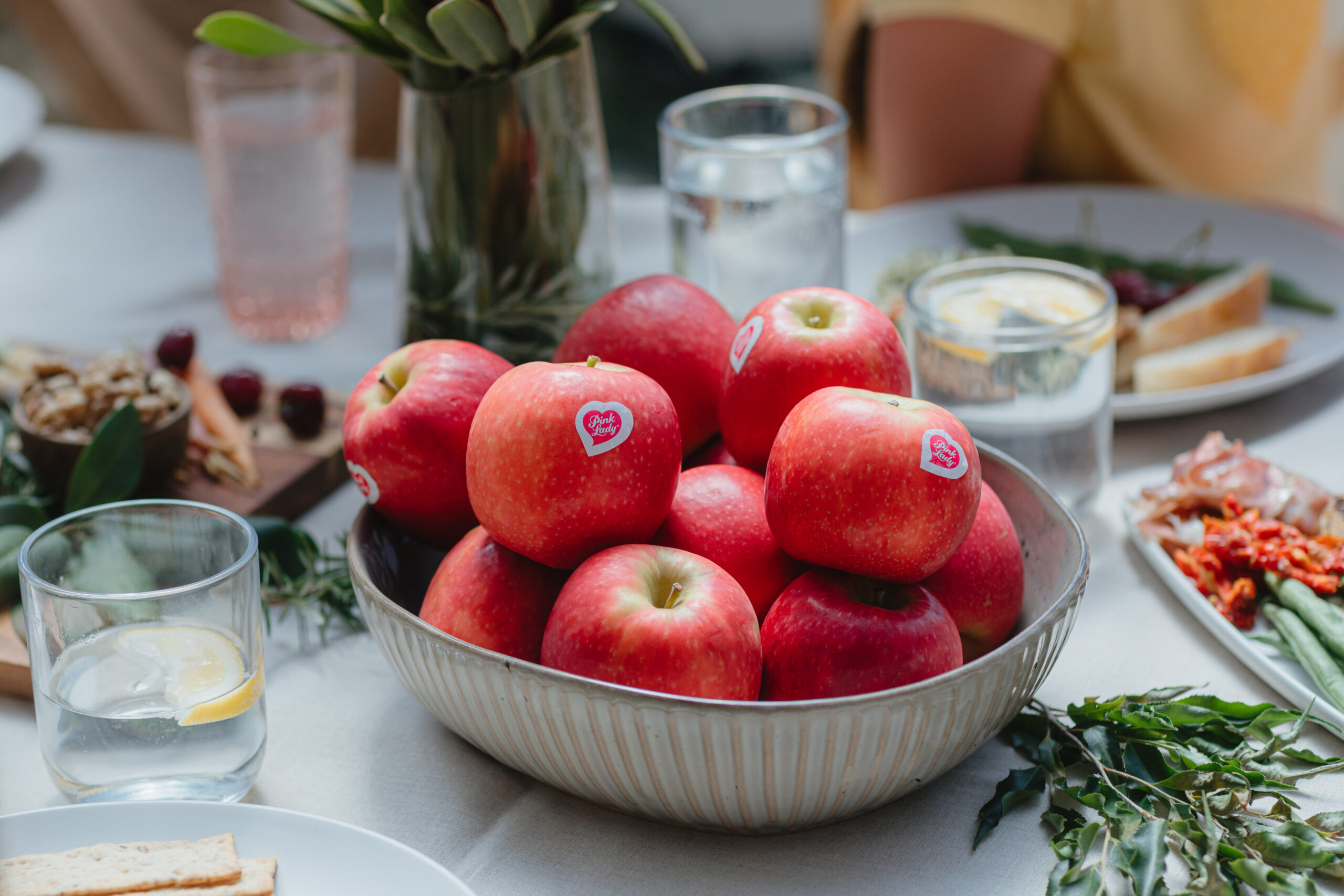
In 1973, in a breeding orchard in Western Australia, a scientist named John Cripps crossed a Golden Delicious apple with a Lady Williams. He wasn’t thinking about trademarks. He was breeding for a better-tasting, better-textured apple, and he got one.
What nobody in that orchard could have predicted was that his seedling, eventually named Cripps Pink, would be sold to the world under a different name entirely, one designed by marketers rather than breeders: Pink Lady.
That decision, to separate the plant from the brand, quietly rewired the produce business.
Today, walking down the apple aisle means choosing not just a fruit but a piece of intellectual property, one governed by a patent, a trademark, a licensing contract or, often, all three. The same model has since spread from apples into table grapes, berries, citrus and stone fruit, turning what used to be a commodity business into something that looks more like the pharmaceutical or consumer technology industries, complete with royalties, exclusivity clauses and enforcement lawyers.
The Apple That Started It
Pink Lady is widely credited as the brand that made branding standard practice for new fruit. The trademark was registered in the early 1990s, and by 1998 Western Australia’s agriculture department had transferred the heart-shaped Pink Lady logo to what is now Apple and Pear Australia Limited, which built an international network of licensed partners to manage quality and marketing. Growers still plant Cripps Pink trees. What they are actually licensing, and paying royalties to use, is the Pink Lady name.
Kate Evans, who leads the tree fruit breeding program at Washington State University and has spent 35 years breeding apples in the U.K. and Washington State, says the timing of her career tracked the industry’s shift. “I started in 1992, which almost coincided with club varieties in apples,” she says.
The appeal of a managed or “club” variety comes down to a basic economic problem: Getting a new apple noticed is expensive, and nobody does it for free, she notes. “Apples are sold by name, and to get a new variety to the marketplace is a pretty expensive thing to do, a major undertaking compared to a new blueberry or strawberry,” says Evans. “You need somebody championing that variety to get shelf space. It just doesn’t happen by itself.”
Honeycrisp offers a counterexample. Bred at the University of Minnesota from a tree nearly discarded in 1982, it was officially patented in 1990 and released without club restrictions. When its U.S. patent expired in November 2008, any grower could plant it freely, and Honeycrisp remains one of the most planted apples in North America.
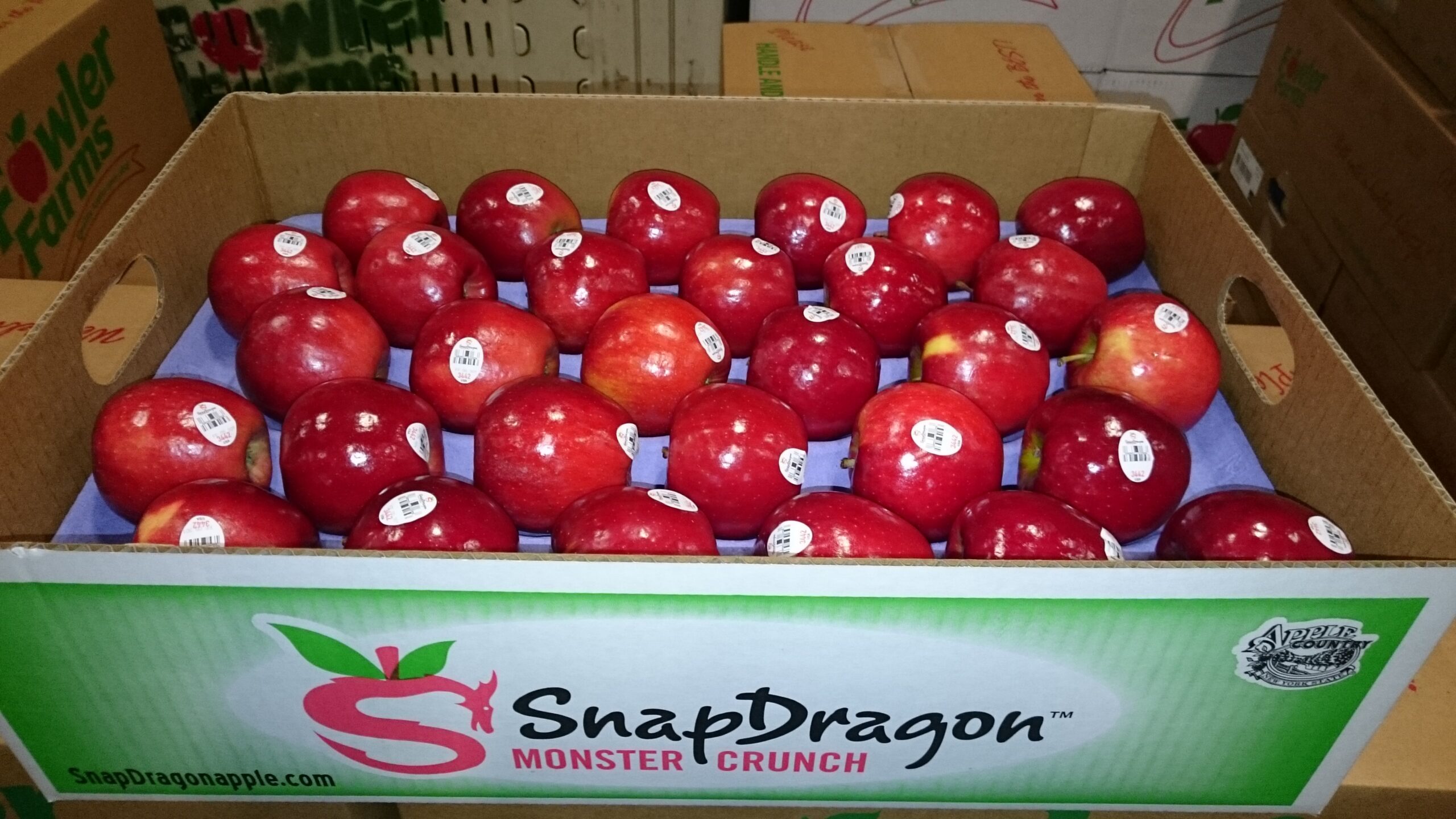
In New York, Susan Brown leads Cornell University’s apple breeding program, one of the largest fruit breeding programs in the world, and she helped develop SnapDragon (NY1) and RubyFrost (NY2) apples. While Cornell has open releases and managed releases, the open route has real costs. “Without a critical mass of growers and fruit, there isn’t enough fruit to satisfy one supermarket, let alone chains,” she says.
Cornell’s two managed varieties, grown and marketed exclusively in the U.S. through Crunch Time Apple Growers, gave all New York growers a limited window to opt in, an arrangement Brown says was meant to offer the state’s growers an exclusive at a time when many new varieties were controlled elsewhere. “The reason many of us pursue managed releases is that without a dollar commitment to marketing, varieties can stagnate and fail to take off,” says Brown.
New Zealand took the model further still. Jazz, developed from a 1985 cross of Royal Gala and Braeburn by what is now Plant & Food Research, was licensed exclusively to the export company now known as T&G Global, which controls every grower who plants it worldwide. It is a tighter structure than Pink Lady’s multi-licensee model, but the underlying logic is identical: restrict access, control quality, protect the brand.
Patent Now, Trademark Forever
The mechanics behind these programs rest on two different legal tools that do different jobs, notes Evans. A U.S. plant patent lasts 20 years and stops anyone else from propagating the variety while the breeder builds a market for it. A trademark, by contrast, can be renewed indefinitely as long as it’s still in commercial use. “Because a patent has a finish, we want control of the variety in the longer term,” says Evans. “A trademark, a brand name, that’s how it’s sold to consumers, and that’s the part that has the value for consumers. If we’ve trademarked that, we can continue that trademark.” The patent buys the breeding program time; the trademark is what keeps paying after the patent lapses, provided the brand built consumer recognition while it had exclusivity.
Jennifer Petersen, who is Sun World International’s chief science officer, described the same split at work in table grapes, where Autumncrisp is the trademarked brand and Sugrathirtyfive is the actual patented variety name growers must reference in technical and legal contexts. Developing a new grape variety can take nearly a decade of research, collaboration, testing and feedback before commercial release, says Petersen.
“In many ways, breeding is about accelerating what nature would otherwise take tens or hundreds of years to accomplish,” she says. Sun World now holds more than 450 plant patents and has varieties planted on more than 70,000 acres across 17 countries. “Autumncrisp, the world’s first billion-dollar grape, demonstrates that a grape can be more than a commodity,” says Petersen.
What Licensing Actually Requires
For growers, a license is not a formality. Brianna Shales, marketing director at Stemilt Growers, which grows SweeTango and Rave apples, says managed varieties operate differently than open ones. Stemilt is based in Wenatchee, Washington. “The biggest difference is that managed varieties come with defined rules and responsibilities,” explains Shales. “Growers typically need approval to plant, may pay royalties or license fees, and often must follow established production, quality, packing and marketing standards.”
The payoff for retailers has diminished somewhat, though, as the club category has become crowded, says Shales. “Retailers today are much more cautious about adding another new apple,” she says. “Shelf space is limited, and every new variety must justify its place.”
Edgar Krieger, secretary general of CIOPORA, the Hamburg, Germany-based international association representing plant breeders, agrees with Shales that managed varieties come with strict requirements. Breeders give licenses only to a selected group of growers who sign a contract covering quality management, packing and marketing channels.
“This is the way the industry is growing,” he says. “It’s a real advantage.” Growers who plant a protected variety without a license can face penalties ranging from fines to court-ordered removal of the trees. “In Spain, one guy went to prison,” says Krieger about a repeat offender. “It doesn’t happen often, but it does.” The structure also protects the growers who are already in it. “It’s good for the growers who have the license so they don’t suffer from unfair competition,” he says.
The international legal architecture behind all this is more fragmented than most shoppers would guess. The United States, Krieger notes, is the only country offering three separate paths to protect a variety: utility patents, plant patents and plant breeders’ rights under the international UPOV convention (the International Union for the Protection of New Varieties of Plants).
For plant variety protection, the European Union relies primarily on plant breeders’ rights. And within the UPOV system itself, countries are split between an older 1978 framework and a stronger 1991 version that extends protection to harvested fruit, not just propagating material. Several South American countries, says Krieger, still operate under the weaker 1978 standard, which complicates enforcement for breeders selling into those markets.
Innovation Engine or Bottleneck
Does this system reward innovation or simply concentrate power? Shales says these two possibilities aren’t in tension so much as in balance. “Without intellectual property protection and return on investment, it becomes difficult to continue breeding or variety development programs,” she says. “On the other hand, club systems inevitably create some level of exclusivity,” she says. Petersen framed Sun World’s role differently. “We like to refer to Sun World as the grower’s breeder,” she says, arguing that its licensing model has pushed decades of reinvestment into breeding that wouldn’t otherwise exist.
Krieger made the case that the system is more open than it looks, thanks to a provision called the breeder’s exemption, which lets any breeder use a protected variety as parent material for new breeding without permission. “It’s an open source, and everyone can breed any variety,” explains Krieger. “That prevents too much concentration, and even small breeders can breed more varieties.”
However, Krieger notes that authorization from the original breeder is still required to commercialize a new variety if it is not distinct from its parent or qualifies as an essentially derived variety.
He made a related point about scale. Fruit breeders, he says, are mostly small and midsize companies, nothing like the handful of firms that dominate commodity seed crops such as corn and soybeans.
That distinction is worth contemplating. Philip Howard, a Michigan State University researcher who has spent two decades mapping ownership in the global seed industry, has documented a starkly different picture in commodity crops such as corn and soybeans, where a handful of multinational firms now account for the large majority of proprietary seed sales, according to his 2015 paper in the journal Crop Science.
Fruit tree genetics have not consolidated to the same extent, and Krieger is right that breeders’ exemptions help keep the field open to smaller players. But Howard’s research offers a warning: as once-commoditized categories such as table grapes and citrus evolve into brands, control over the genetics behind those brands could become concentrated in fewer hands.
For now, the industry’s own read is that differentiation, not consolidation, is driving the next phase. Shales pointed to a crowded club-apple market. “We’re likely entering a period where the industry becomes more selective rather than simply creating more clubs,” she says. “The market has demonstrated that consumers will support new varieties only when they deliver a meaningfully better or differentiated eating experience,” she says.
Krieger predicts the model will keep expanding well beyond apples and grapes simply because it has worked. “It’s the main model for the future,” he says. “It guarantees better quality, stable prices and innovation. If a breeder gets a return on investment, he can innovate.”
Yet this increasingly sophisticated global business grew from a remarkably simple experiment.
John Cripps could not have anticipated any of this when he crossed those two apple trees more than 50 years ago. But the business model he helped create, one in which a fruit’s name can be as valuable as the fruit itself, has become the default way new produce reaches the market, one license at a time.