

In 2016, French farmers were shocked. A Chinese company had quietly acquired control of a huge swath of prime farmland by exploiting a loophole in rules designed to give authorities oversight of farmland transactions. Hongyang had structured the purchases through company shareholdings, allowing them to fall outside the usual right-of-first-refusal powers of SAFER, the French bodies that monitor farmland sales and can intervene in agricultural land transactions.
For a country that prides itself on its food and its farms, the scandal was a wake-up call, triggering a nationwide debate about the future of farming and its relationship with business. It is one that is set to grow as corporate and financial investors play an expanding role in farming and food production, with consequences that reach far beyond France.
Farming and finance have long been intertwined. Farmers borrow to buy land, machinery, and seed while futures markets allow growers and buyers to shield themselves from swings in commodity prices. From rural credit to wheat contracts, money has always followed agriculture.
But the ties are growing stronger.
As the global population grows and climate change threatens existing food chains, there is little doubt that agriculture needs investment. The UN Food and Agriculture Organization (FAO) estimates that transforming agrifood systems in low- and middle-income countries will require more than $4 trillion through 2030. Reducing the impact of farming on climate change will cost even more.
Governments and multilateral lenders alone cannot meet the bill, so big finance – including banks, pension funds, wealth managers, and private equity — is stepping into the gap.
Whether or not this is good news for food supplies depends on what those investors want.
The Land Rush
Modern investor interest in farming really took off during the 2007-2008 food crisis when poor harvests, low grain stocks and subsidies for biofuels sent the price of basic foodstuffs spiraling upwards. As rising prices for flour, rice and other staples triggered protests around the world, investors tasted an opportunity.
Companies and investment funds began to scour the world to acquire cultivable land or invest directly in food production. By converting forest or scrubland into fields — or replacing existing crops with more lucrative ones — developers believed they could make huge returns.
These plans sometimes rode roughshod over niceties such as environmental concerns, the wellbeing of local communities and basic standards of governance. Some of the plans seemed harebrained.
In 2008, Daewoo Logistics, a subsidiary of the South Korean industrial conglomerate, negotiated a 99-year lease on approximately half of Madagascar’s cultivable land to produce corn and palm oil for export back to South Korea. The deal became a potent symbol of public anger during the political crisis that culminated in President Marc Ravalomanana’s removal in 2009, after which the project was canceled.
Other schemes collapsed in the face of volatile food prices, corruption scandals, or public outcry.
“These guys were cowboys,” says Ward Anseeuw, an FAO senior land tenure officer based in Rome.
Well-educated cowboys. Major investors included Harvard University, whose endowment funds spent $1 billion acquiring farmland across Brazil, South Africa, New Zealand, Russia, and elsewhere. Princeton, Stanford, and Yale also added agricultural funds to their portfolios.
Harvard University and other top universities subsequently reduced much of their exposure after investments came under criticism over their financial performance and alleged environmental and social impacts.
In for the Long Haul
Despite these early setbacks, financial interest in agriculture and food production has only grown. The Land Matrix, an independent initiative monitoring large-scale land acquisitions, has documented thousands of deals across almost 100 countries since the start of the century.
Valoral Advisors estimated in 2025 that more than 1,000 dedicated food and agriculture investment funds were operating globally, managed by nearly 700 investment teams with more than $150 billion in commitments. They include banks, pension funds, education endowments, venture capital firms and sovereign wealth funds, each pursuing their own strategies and goals.
Sovereign wealth funds and other state-backed firms from the Persian Gulf have become major players in global farming and food over the last decade.
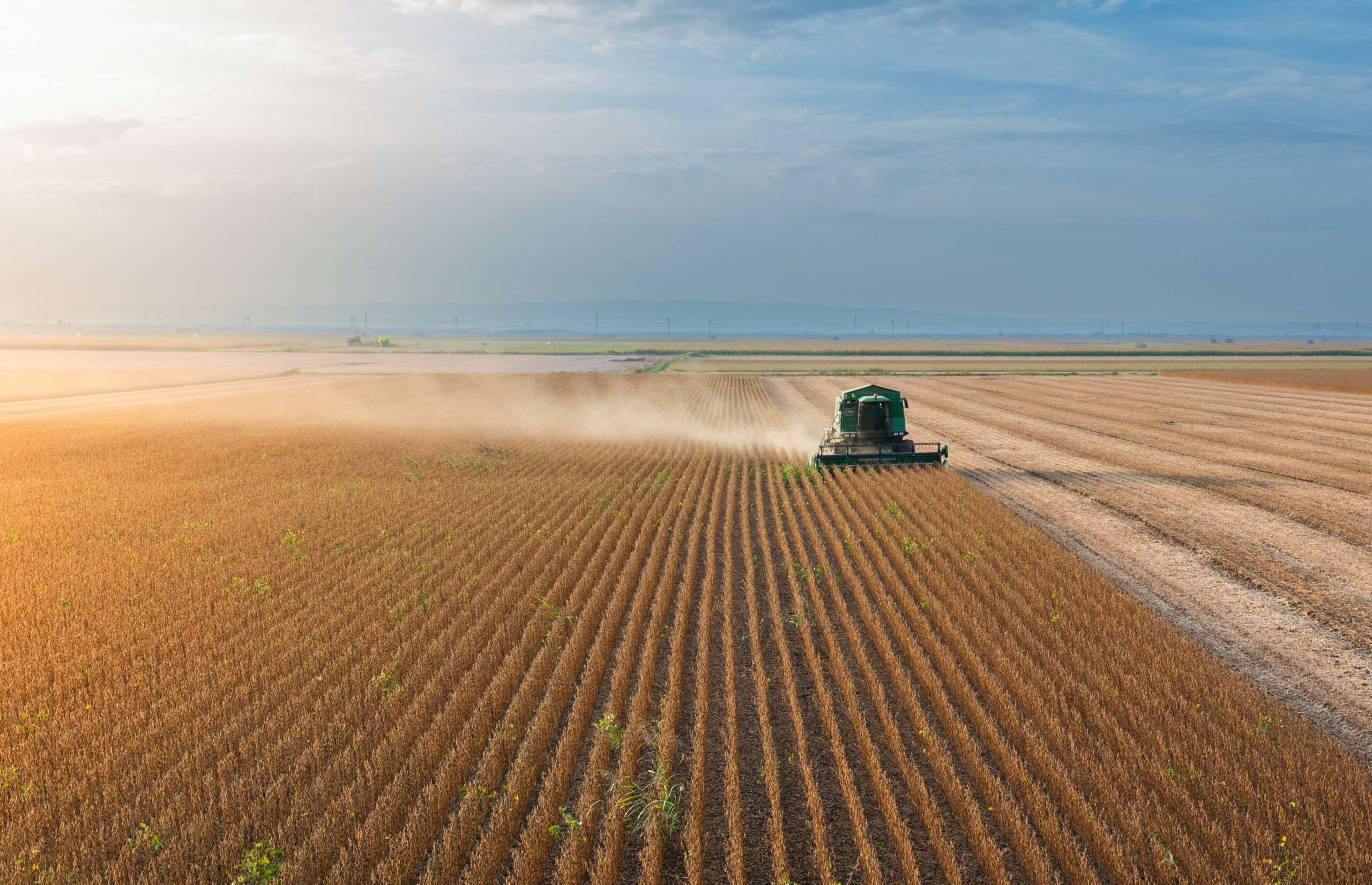
With limited freshwater resources and very little arable land, Gulf countries are investing in the agribusiness sector around the world as a strategic hedge against food insecurity, price volatility, and geopolitical risks.
“They view food security from a global perspective because they produce only a small fraction of the food they consume,” says Daniel Melhem, managing partner at Knightsbridge Partners, which advises Middle Eastern firms on investment opportunities in South America. “As a result, they’re investing across the agricultural value chain — from farmland and dairy to food processing and logistics — to secure long-term supply while diversifying their investments beyond the Gulf region.”
One of the biggest is Saudi Agricultural and Livestock Investment Company (SALIC), which has made huge investments around the world. It is a major shareholder in Minerva Foods, Brazil’s second largest beef producer, and owns, through its wider agrifood platform, Continental Farmers Group, one of Ukraine’s largest agricultural businesses, with a land bank of around 190,000 hectares in the country.
Abu Dhabi investment group ADQ is the majority owner of fresh-fruit group Unifrutti, which in 2024 acquired Chilean-Peruvian producer Verfrut.
While regional instability could temporarily slow dealmaking, it has not altered the Gulf’s long-term investment strategy, says Melhem. Gulf investors, particularly from Qatar, Saudi Arabia and the United Arab Emirates continue to expand internationally in strategic sectors. One example is Qatari dairy company Baladna’s $3.5 billion investment in Algeria to develop one of the world’s largest dairy complexes, part of a broader push into Africa.
Land as an Asset
However, the biggest flow of money into farming is coming from major financial institutions, including pension funds, investment houses and private equity, whose primary aim is profit.
Farmland, once viewed as a difficult and illiquid asset, is now seen as offering a useful hedge against inflation and rising demand for food.
“Many more investors have grown an appreciation for the value of the land as a store of wealth,” explains Wendong Zhang, an economist at the SC Johnson School of Business at Cornell University. They include major institutional investors and asset managers such as Macquarie, alongside wealthy private landowners such as Bill Gates.
As well as rising food demand, they also gain exposure to growing competition for land use, whether from urban sprawl, renewable energy projects, and more recently AI-related infrastructure such as data centers.
Rather than a quick buck, financial investors see agriculture as a source of reliable return when other markets turn choppy.
“Institutional investors want stability…they are prepared to accept lower returns for less risk,” says Jose Miguel Fernandez, managing partner at Chile’s Sembrador Capital, a pioneer in connecting financial institutions with farming. Launched two decades ago, the company now manages more than 14,000 hectares of agricultural projects, growing grapes, pomegranates, and walnuts.
While a family farm might hedge its risks by diversifying between grain, livestock and produce, Fernandez says institutional investors often favor large-scale, single-crop operations, which can be easier to manage and eventually sell. Investors’ portfolios might include stocks, bonds, commodities as well as land.
“It’s very hard to sell a plot with three crops because a buyer might be interested in table grapes but not pomegranates,” Fernandez explains.
But what does this mean for farmers or food supplies?
By exploiting economies of scale, professionalizing farm management, and investing in more efficient technologies, financial investment in large-scale agriculture has helped to drive a significant expansion of global food production.
Huge investment in Russia and Ukraine during the 1990s and 2000s turned both countries into global food superpowers. As modern management techniques were applied to former Soviet-era collective farms and huge agro-holdings, Ukraine’s production of corn, wheat, and sunflower seeds more than doubled between 2008 and 2021 to over 90 million tons annually, says Alfons Balmann, an economist at Germany’s Leibniz Institute of Agricultural Development in Transition Economies.
Similar gains in productivity have been seen across South America and Central Asia as farming has been consolidated and modernized.
But there are concerns about the environmental and social impact of these large-scale agricultural combines.
In developing economies, the creation of industrial-scale farms can mean displacing smallholders, who remain especially important to food production and rural livelihoods in lower-income countries. With modern technologies allowing just a handful of technicians to farm thousands of hectares, farm consolidation threatens to hollow out communities which have depended on farmwork for centuries.
“The idea that these processes are just simple land transactions is a bit of a myth — often it entails violence, displacement and destruction of the social fabric…this is not happening in a vacuum,” says Philip Seufert at FIAN International, an NGO which defends the rights of small-scale farmers in developing countries.
Supporters argue that large institutional investors and listed companies are generally subject to greater scrutiny from regulators, shareholders and civil society than smaller private operators.
“They are under pressure to follow these rules,” argues Balmann.
But others are skeptical of how far these commitments translate into meaningful change on the ground.
“I don’t see whether you can describe these huge monoculture farms as sustainable,” says Anseeuw at FAO.
Critics argue that increasing concentration of farming in a smaller number of hands, whose focus is on profit rather than food production, could bring other risks. Rather than war or drought, a change in financial conditions or investment policies could trigger moves that threaten the food supplies for millions of people.
“When farms are increasingly concentrated in fewer countries, fewer companies, especially when they don’t traditionally have this long attachment to farming, there is definitely a danger of much more volatility and big shifts which can be disruptive,” says Oane Visser, an anthropologist at Erasmus University Rotterdam.
In wealthier economies, the concern focuses on the impact of financial investment in farmland on land prices and farmers.
In the U.S., farmers regularly blame outside money for putting upward pressure on land prices, says farm economist Michael Langemeier of Purdue University, Indiana. With land values rising sharply over the last two decades, it is becoming harder for new farmers to get a foothold in the industry. But higher land prices also give existing farmers more financial leverage to resist downturns, he notes.
However, concerns that financial investors are buying up farmland are overblown. In the U.S., farmers remain by far the principal owners and buyers (although increasingly through corporate structures for tax and other reasons) — financial investors and corporations still only account for 10% of the total, estimates Cornell’s Zhang. Where a farmer does not own the land they work, it is much more likely to be owned by a retired farmer or his widow, often through a trust or LLC, than an investment fund, he says.
Pushing Back
However, concerned by the perceived concentration of landownership, governments are pushing back.
The HongYang controversy helped intensify pressure for tighter controls. France has since introduced a system requiring prior authorization for certain transactions that transfer control of companies holding significant agricultural land. At the EU level, the European Commission is preparing a European Observatory on Farmland to improve transparency around land transactions, ownership, prices and land use.
In the U.S., several states have introduced laws to limit foreign landownership to varying degrees. Federal legislation introduced in 2025 would restrict agricultural land purchases or leases by persons associated with certain foreign governments.
As buying farmland in some jurisdictions becomes harder, some investors are trying other ways to gain exposure to the agriculture space. This could mean investing in food distribution, logistics, or new technologies such as gene editing and vertical farms.
New York-based food-and-agriculture-focused private equity firm Paine Schwartz Partners has become a key investor in Spanish agribusiness AMFRESH Group, helping it to expand, develop new fruit varieties and strengthen its international distribution network.
Recent deals in the fresh produce sector include the acquisition of fruit genetics firm Sun World International by private equity group Bridgepoint and RRG Management’s investment in Frutura, a growing and marketing business with operations throughout the Americas.
Other firms are seeking to ensure that their investments benefit farmers as well as their own shareholders.
A new generation of investment managers is approaching agriculture by partnering with farmers rather than replacing them, providing the capital they need to expand, modernize, and allow nature to thrive at the same time. That can mean capital to help growers convert to organic or regenerative practices, enable young farmers to buy or lease land or fund investments in irrigation, renewable energy, and more sustainable production methods.
“Our clients recognize that conventional agriculture is one of the top contributors to climate change and the more we can adapt our food system to build soil and replenish diversity it can be an important lever for creating positive change,” explains Malaika Maphalala, a financial advisor with Natural Investments, which connects investors with sustainable farming projects.
Whether this more collaborative model can attract investment at the scale agriculture requires remains uncertain. But the growing union of financiers and farmers looks set to stay and expand over the coming decades.