
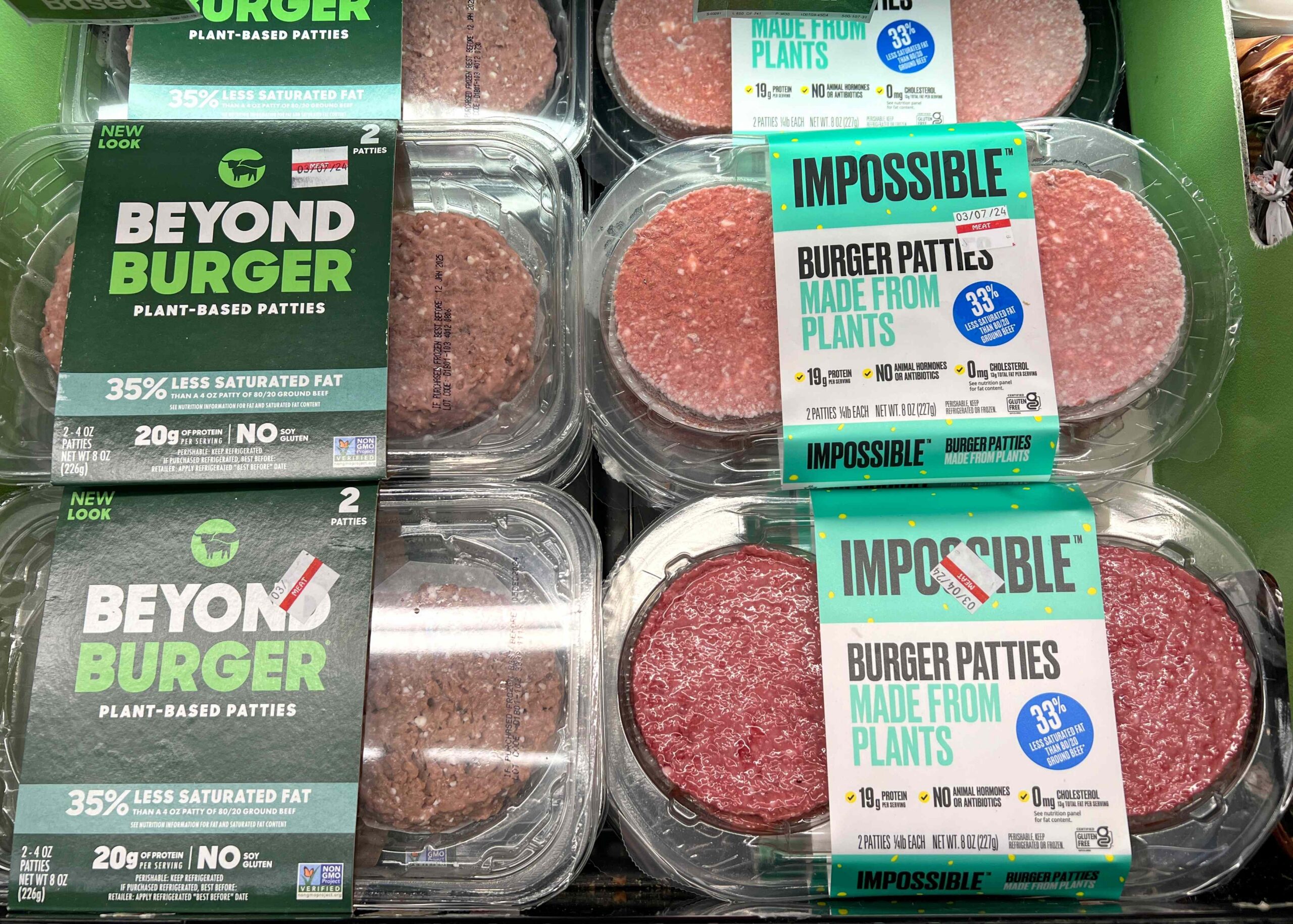
In the spring of 2019, shoppers walking into supermarkets across the United States started finding something unfamiliar tucked among the ground chuck and the pork chops. They discovered a patty that looked like beef, cooked like beef, and, when you sliced into it, appeared to bleed like beef.
It was made primarily from peas.
The Beyond Burger had been sitting quietly in the natural foods aisle for a few years by then, a curiosity for vegetarians and the occasional adventurous omnivore. But in May 2019, its maker, Beyond Meat, went public on Nasdaq, and something shifted. The stock jumped 163% in its first day of trading. Within three months, shares had climbed past $230, an almost tenfold increase, and the company’s market value topped $13 billion, CNBC reported at the time.
This is the successful part of the plant-based meat story most people remember. What gets forgotten is what happened next, most of it visible in the sales data years before it became a headline.
How It Rose So Fast
Chris Kerr had been watching this coming for more than a decade before Wall Street noticed. Kerr, founder and chief investment officer of Unovis Asset Management, started as director of investments for the Humane Society of the United States’ mission-related investment arm in 2007, backing early plant-based bets, including Beyond Meat.
“I was an entrepreneur and a vegan, and I asked them what they were doing to invest in their mission,” says Kerr. “What are you doing to change the commerce side of it?”
By the mid-2010s, the category had real momentum behind it that had nothing to do with novelty. Chris DuBois, executive vice president and protein practice leader at Circana, traces the acceleration to a genuine shift in eating patterns.
“There was a big rise in plant-forward eating,” notes DuBois. “People were starting to describe themselves as flexitarian, where they eat a little meat but they eat more plants.”

Plant consumption rose roughly 10 percentage points during that stretch, says DuBois, fueled by animal welfare activism, a wave of Gen Z diners, and a flood of new brands from startups and legacy players such as Hormel.
Two companies pulled ahead in a crowded field. “Beyond and Impossible consolidated a lot of the market due to their success in foodservice,” says DuBois. Beyond’s partnership with McDonald’s, Impossible’s with Burger King, and a place for Beyond in the refrigerated meat case at Whole Foods gave the category its first taste of mainstream legitimacy.
The retail numbers in those early years were genuinely startling. Anne-Marie Roerink, president of 210 Analytics, has tracked the category’s arc closely using Circana data. “The category experienced one of the fastest launches I’ve seen in the fresh perimeter,” says Roerink.
Refrigerated plant-based meat sales nearly doubled between 2019 and 2020, from $271 million to $490 million, according to Roerink. Newly obtained Circana data shows the category reached $495 million by the end of 2021, its high-water mark.
For Kerr, the enthusiasm that followed the Beyond Meat IPO had less to do with the product than with what a public valuation could do to a private one. “Hype came from generalist venture capitalists trying to ladder up a valuation,” says Kerr. “When someone says they’re a unicorn, they just got a valuation of that round of funding, not a true enterprise value. They jacked up these valuations, but there wasn’t a lot underneath that.” The effect, he says, compounded on itself. “The valuation actually creates a narrative that’s false.”
What Started to Go Wrong
The first crack, according to Roerink, showed up not in headlines but in a stalled growth curve. “The first warning sign appeared in 2021,” notes Roerink. “Sales stopped growing despite widespread distribution gains and significant media attention.” Household penetration peaked early and repeat purchase rates stayed weak, she says, meaning the category never built a loyal enough buyer base to survive its own slowdown.
Refrigerated plant-based meat sales have since fallen from that 2021 peak of $495 million to about $247 million in the year ending mid-June 2026, essentially back to where the category started in 2019. Frozen has held up better, sliding back a comparatively modest 22% over the same stretch, to $659 million.
Roerink is blunt about where the real failure sits. “The challenge was never getting consumers to try it,” she says. “It was getting them to come back.”
Household penetration has fallen to about 6%, she says, down from a peak near 20%, leaving a category that increasingly depends on a small, committed core of buyers rather than the broad, curious shopper who drove its early growth.
DuBois points to a specific strategic misstep. Brands moved into the fresh meat case before they were ready to compete there. “I’m a pretty fast runner, but at no point do I go out for the Olympic sprint team,” says DuBois. “That’s a whole different class. That’s no place to be — when you’re the slowest-moving item in the meat case.”
The meat department turns over inventory faster than almost anywhere else in the store, and a slow-moving product there erodes retailer confidence fast. “The last thing any brand wants is for a product to come out of a case,” says DuBois. “Losing confidence with retailers was a big one.”
Taste and ingredient lists compounded the problem. “The first bite was good but by the last bite, not so much,” says DuBois, describing early consumer feedback. Brands did improve formulations over time, he says, but the products remained expensive to make and increasingly got swept into a broader “ultra-processed” backlash, even as they improved. A persistent price premium over conventional meat, something DuBois says “has likely closed a little bit” but never disappeared, gave price-sensitive shoppers another reason to walk past the category entirely.
Maddie Segal, director of industry engagement at the Plant Based Foods Association, pushes back on any single explanation, including her own industry’s instinct to blame consumer taste alone. “It isn’t a single-issue decline, but a recalibration of the market,” says Segal.
She points to a less-discussed factor: retailers actively shrinking assortments and relocating items out of the highest-traffic shelves. “Many plant-based products are being held to stringent velocity thresholds previously established for heavily subsidized animal-based foods,” says Segal, and the number of stores selling plant-based foods fell 7.2% in 2024 alone. Nearly a quarter of lapsed shoppers cite fewer options on shelf as a reason they stopped buying, according to PBFA data Segal shared.
Roerink and DuBois see it differently, arguing retailers were following the decline rather than causing it, one of the few places where the category’s trade groups and its data analysts read the same numbers and land in different places.
There is also a genuine scientific irony buried in the “ultra-processed” framing that helped sink the category. The original health case for plant-based meat was never just marketing. The World Health Organization classifies processed meat as a Group 1 carcinogen and red meat as a probable, Group 2A carcinogen. It’s a classification the organization has been careful to note reflects the strength of the evidence linking consumption to cancer — not that eating a hot dog carries a smoker’s level of risk.
The American Cancer Society recommends limiting red and processed meat and points to plant proteins as one substitute. That evidence didn’t change. What changed is that plant-based meat, built through heavy processing to mimic muscle fiber, increasingly got filed under the same “ultra-processed” umbrella consumers were trying to escape, whatever the comparative cancer data actually showed.
Research from the International Food Information Council backs up how muddled that umbrella has become. An IFIC analysis of more than 135,000 social media posts found conversations about processed and ultra-processed foods running hot and disconnected from expert nuance. Negative sentiment around processed and ultra-processed foods has climbed sharply since 2022, even as most consumers never use the government’s own “highly processed” terminology. Millennial parents drive most of that conversation, caught between health goals and the practical pull of taste and price.
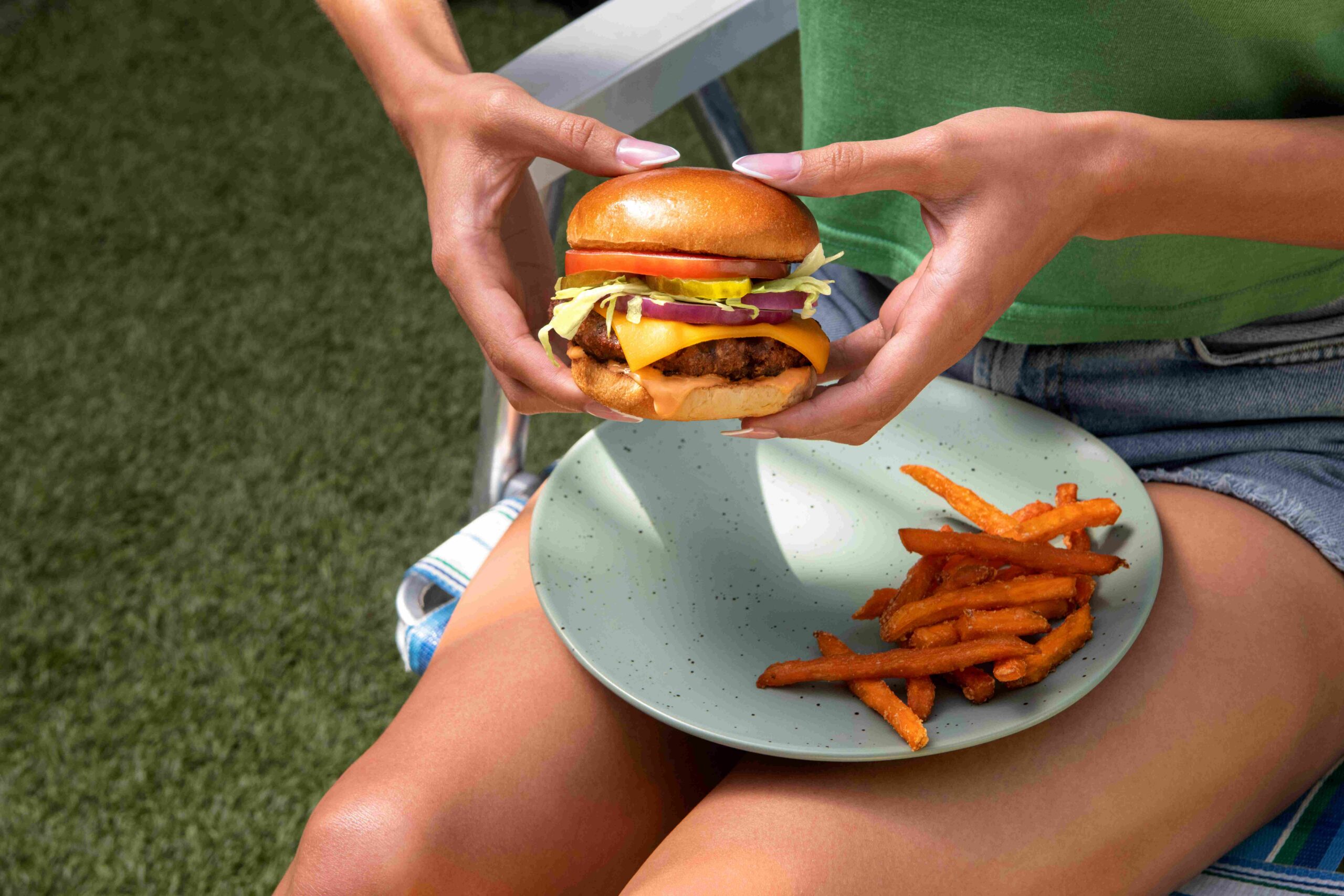
A separate IFIC survey found protein has become the main lens through which Americans judge whether a food is healthy, but consumers define protein quality on their own terms rather than the amino acid science behind it. Consumers don’t think about amino acids when they hear the term “protein quality,” according to statements by Wendy Reinhardt Kapsak, IFIC’s president and CEO. They’re thinking about taste and how a food fits their daily lives — the exact ground plant-based meat spent years struggling to hold.
Even Kerr, a 25-year vegan and one of the category’s earliest backers, says he doesn’t eat the products that often. “We eat pretty clean,” says Kerr. “We eat soy and tempeh and mushrooms.”
Kerr also argues the industry simply moved faster than food culture allows. “I think it got overhyped,” he says. “I think it should’ve happened slower. We’re trying to disrupt a century-old industrial food system in seven years, and that’s too fast.” He points to an internal framework, which Unovis calls IMPACT, standing for Identity, Motivation, Price, Awareness, Convenience and Taste, as the full list of factors a food product needs to solve simultaneously to win permanent shelf space through behavior change and long-term adoption. “We were trying to solve all six of those things, and it takes a long time to get there,” notes Kerr.
A Correction, or Something More Permanent?
Opinion splits, but less along optimist-versus-pessimist lines than most coverage suggests.
Roerink calls it “more like a correction than a disappearance,” arguing the category was overbuilt relative to its real consumer base during the peak years and is now resizing toward a more realistic level of demand. DuBois is more cautious about declaring a floor. “I’m not sure we’re done seeing that decline,” he says. “You have to see sustained numbers over time before you can say we bottomed.” He expects the category to persist at a smaller scale, concentrated in the freezer aisle rather than the fresh case, calling frozen meat and poultry alternatives a “sweet spot” less encumbered by the trust problems that sank fresh.
Segal points to diversification as the sturdier long-term story. Plant-based creamer, bars, ready-to-drink beverages, tofu and tempeh, and baked goods all grew in 2025 even as burger analogs shrank, she says. And 60% of U.S. households bought some plant-based food last year, with most of them repeat buyers. Even within the meat category of plant-based foods, there were still specific product forms such as shreds, chunks and strips that grew 10.4% to $99 million in 2025, with chicken and beef alternatives leading growth.
“The plant-based industry’s true strength lies in its diversity,” says Segal. “These bright spots demonstrate that consumer demand remains strong when products deliver on what shoppers are looking for.” Improving affordability and visibility can also accelerate that growth in the near term. Responding to consumers’ evolving expectations for taste, nutrition, convenience and value will help in the long term.
Kerr’s answer reaches further back than any quarterly sales report. He thinks the category’s real timeline was never seven years, more like 50, closer to the arc of a technology that needs sustained public investment rather than venture capital sprints. “It really needed to be a public-private partnership in order to work, like SpaceX and NASA,” says Kerr, pointing to how decades of unglamorous government-backed research eventually produced everyday technology such as solar panels and GPS.
Kerr, as well as Segal, also argue the price gap was never a fair fight to begin with, given how heavily conventional meat and dairy production is subsidized. “Remove all the subsidies and we’d crush them,” Kerr says of the economics facing soy and pea protein producers.
What the Category Teaches
Strip away the pea protein and the beet juice, and what’s left is a familiar shape. A product arrives that lets consumers signal something about themselves, and retailers and investors rush to be associated with the story before it has been proven at the register. Growth curves get drawn as straight lines because that is what a pitch deck needs them to look like.
Then the category runs into the only test that actually matters, whether people who try something want to buy it again.
“The category successfully generated trial but struggled to convert trial into habitual purchasing,” says Roerink. That, more than price or taste or ultra-processed panic on its own, may be the real lesson sitting inside five years of Circana data, and inside every food trend that has burned bright and cooled since.
Getting someone to try a product once is a marketing problem. Getting them to buy it again, month after month, without a celebrity backer or an IPO pop, is a much harder and slower business, and one Kerr says the industry never gave itself enough time to solve.