
The music industry is rocking again. Really rocking.
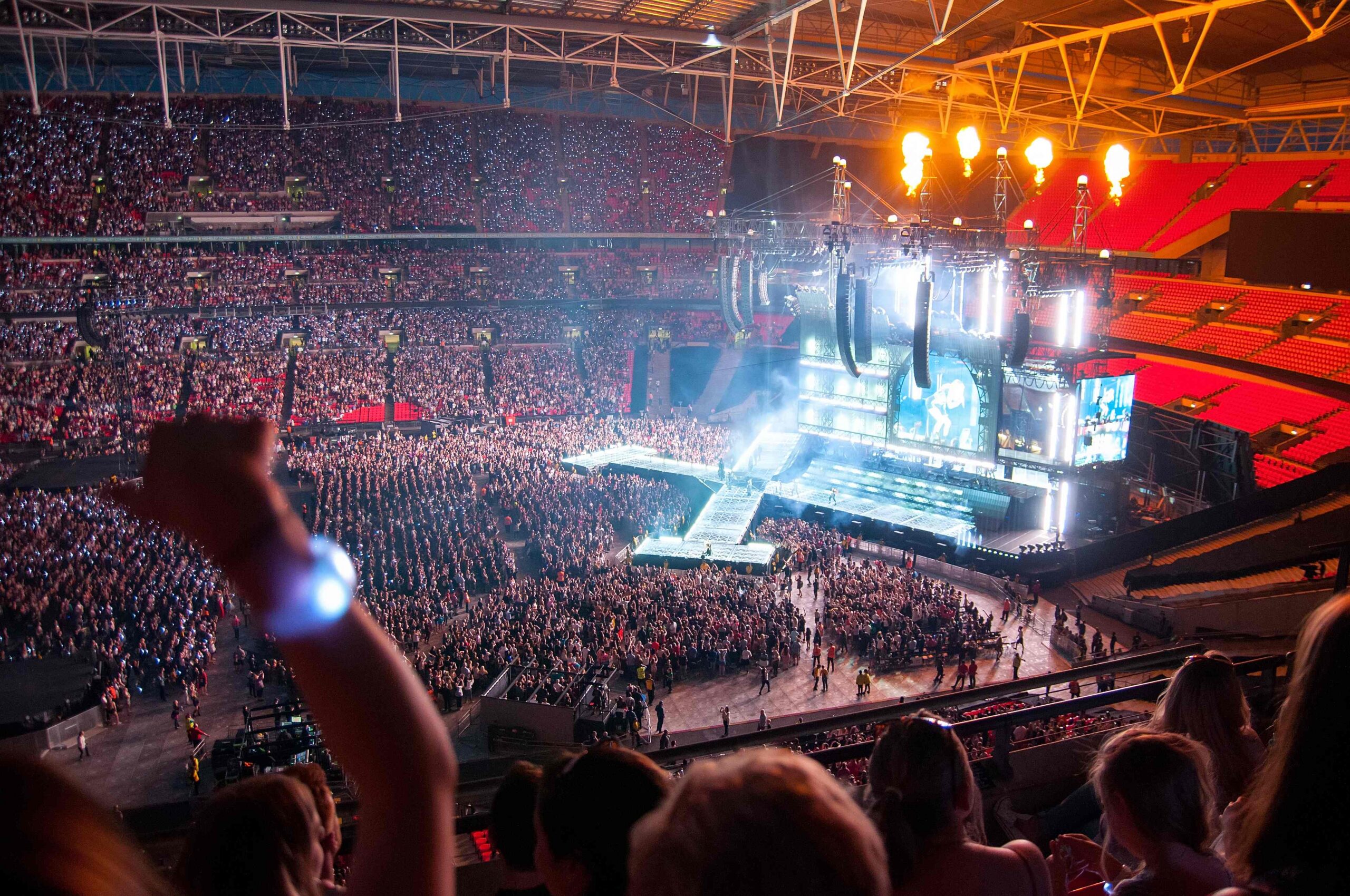
When Taylor Swift rocked up in Seattle, Washington, three years ago, geologists blamed the singer and her army of raucous fans for seismic activity equivalent to a minor earthquake. When the Swifties hit Stockholm the following year, economists calculated they nudged Swedish GDP and inflation.
Swift’s record-breaking tour — with estimated revenues of $2.2 billion (€1.9 billion) — is just the latest sign that the music industry is booming again like never before. In fact, all of the top five-grossing concert tours have occurred in the last five years, according to Pollstar, an industry publication.
Nor is the revival confined to live music. Last year, global recorded-music revenues, including streaming, physical music sales, downloads, and performance rights, hit a record $31.7 billion (€27.5 billion), up 6.4% from 2024, according to the International Federation of the Phonographic Industry, and up more than double what it was a decade ago. It’s an extraordinary turnaround for an industry that two decades ago appeared to be in terminal decline.
The reason? Streaming.
More Popular Than Sex
Arguably no industry was thrown under the bus by the internet as brutally as the music business. As internet use took off in the 1990s, music file-sharing exploded. Faced with free access to an almost limitless catalogue of music, music fans abandoned the decades-old habit of buying records and began swapping songs online instead.
Dedicated websites such as Napster, launched in 1999, made file-sharing even easier by connecting millions of users who could upload and download all the music they wanted.
By the turn of the millennium, an estimated 60-70% of bandwidth at U.S. universities was consumed by music downloads, forcing some to limit access to students. In 1999, MP3 — by then the dominant coding format for audio files — was the most highly searched term on search engines. Even more than sex.
But this orgy of free music spelled disaster for the record industry — and the artists it was supposed to represent. After peaking in 1999 at $22 billion, physical music sales, including cassettes, CDs and vinyl, fell by more than half over the following decade. The music industry, led by Metallica and Dr Dre, fought back, eventually forcing Napster’s closure in 2001, only to see file-sharing jump to new sites such as The Pirate Bay launched two years later.
New formats such as the iPod and legal download stores were not enough to reverse the collapse. That only came with streaming.
Launched in 2008, Spotify quickly won adherents in its native Sweden and then the UK. Touting initially free access to a gigantic music catalogue, streaming took off not because it offered a legal alternative to music piracy but because it did it better. Suddenly, listeners could access millions of songs instantly, and without downloading files from dodgy websites and risking infection with malware or a visit from the police.
“Spotify succeeded because it offered a better service,” says Hendrik Spilker, a professor of media and technology at the Norwegian University of Science and Technology in Trondheim. For an industry on its knees, streaming was a salvation.
Since 2011, when Spotify broke into the U.S. market, streaming revenues have ballooned from $600 million to $22 billion last year and now account for almost 70% of the industry’s income.
Big in the Philippines
This technological revolution has not only changed how we listen to music but what music we listen to. For musicians, digitalization is potentially a land of opportunities.
Through social media, streaming platforms and YouTube, budding artists have multiple means to promote and share their music and pick up a following. No more winning fans one by one through gruelling bar tours and selling CDs from the back of the truck.
Now any John, Paul or George can download the necessary software to turn their bedroom or garage into a makeshift studio and upload their songs where they can be heard by millions almost instantly. It’s a path that thousands have tramped since British rock band Arctic Monkeys won pop stardom via once-dominant social network MySpace twenty years ago.
“It truly has never been a better time for independent artists to find their own success outside of a record label,” argues Ryan Schmidt Esq., a singer-songwriter turned music attorney. “If you connect with the right audience at the right time with the right song, the sky’s the limit.”
Of course, fewer entry barriers mean more competition.
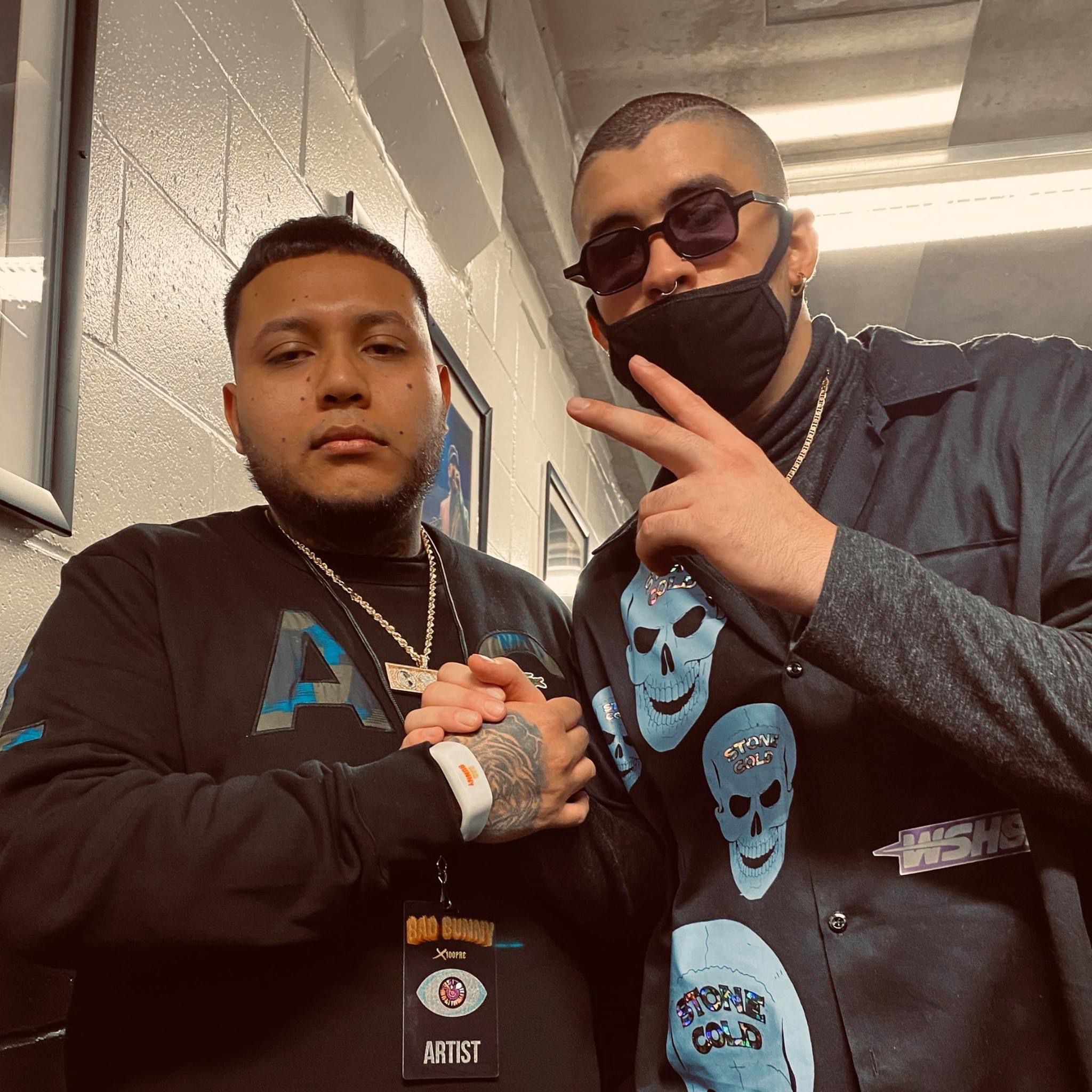
“The transition democratized everything,” says FenikoBeatz, a Grammy-nominated music producer who has worked with Bad Bunny and Rauw Alejandro. “But because digital made music so accessible, the market got incredibly oversaturated.”
By some estimates, more than 100,000 tracks are uploaded onto Spotify and other music streaming platforms every day. Cutting through the noise to stand out is becoming tougher and tougher.
Yet still many artists, many more than before, are making it and making some kind of living from it. Last year, more than 13,800 artists generated at least $100,000 from Spotify alone — that’s more than were stocked on record store shelves at the height of the CD era, the company says.
“More artists than ever are generating meaningful royalties from the platform,” a spokesperson for Spotify told Vision Magazine.
Rather than seeking earth-shaking mega-stardom, most artists are looking to succeed on their own terms. That might mean pursuing a very niche genre, or a specific demographic of fans. Musicians are increasingly developing live performances, merchandise, fan clubs and subscription services as ways of monetizing their talent outside the streaming ecosystem.
“It’s redefining what it means to be a star, what it means to be successful,” says Schmidt.
Streaming is arguably making music more diverse. Last year, Spotify’s Global Top 50 included songs in sixteen different languages, up from eight in 2020. English-speaking stars are being pushed aside by newcomers such as Bad Bunny (Puerto Rico), BTS (South Korea) and Rosalía (Spain).
More musicians and more music should mean more and happier fans. But still a growing number of critics are sceptical about this new musical paradise.
After all, most of the time, we are not choosing the music we are listening to. They are.
While streaming has made the world a lot easier for those (of us) who once loved burrowing into record crates, most of the time people just want something pleasant on in the background while they work, study or exercise.
Data suggests that the majority let the platform choose what music they listen to as a radio or a playlist. As it suits platform companies to keep us on their app for as long as possible, they tend to give us more and more of what they think we will like.
“Even if we have everything available, we end up listening to the things Spotify or other streaming services want us to,” says Spilker.
And when the algorithm starts choosing your playlist, it can make some weird picks.
Musician and activist Damon Krukowski was glad to see a track by his old band Galaxie 500 turning up in alternative music playlists but was puzzled by which one.
“It was never a single, never had a video, never a popular song amongst our fans,” says the drummer. But something about the song, its rhythm, chord sequence or similarity to other tracks, was getting it selected, so it is now the band’s biggest earner. “This song of ours sounds the least like us and the most like everything else and that’s why it was getting picked.”
In fact, the algorithms deployed by Spotify and other streaming services are so powerful that they are changing not only what music we listen to but also the music artists are making.
Given the need to keep listeners’ attention, new artists are releasing material with increasing frequency amid the fear that if they don’t, another will grab the spotlight.
“It has shifted the focus from pure artistry to constant content creation, algorithms, and data,” laments FenikoBeatz.
With streams only monetized if listened to for more than thirty seconds, songwriters increasingly strive to grab listeners’ attention with a hook before they hit the dreaded skip button. And to get onto the stream, music needs to fit in rather than stand out.
“The algorithm sort of incentivizes music to sound like things that are already popular,” says Tatiana Cirisano, vice president of music strategy at MIDiA Research. If you want to get heard by Drake’s legion of listeners, best make something that sounds similar.
That’s nothing new. Imitation has been a mainstay of music since the Stone Age. Popstars and classical composers have long known the importance of grabbing the listener’s attention early and hard. Think She Loves You. Or Beethoven’s Fifth. But research suggests the trend towards homogeneity is growing stronger.
A 2024 study by researchers at Queen Mary University of London found that the melodies of chart-topping songs have become less complex in recent decades, in terms of pitch and rhythm.
Albums, the backbone of recorded-music sales since the 1960s, have lost ground as streaming encourages listeners to consume individual tracks and playlists. Soon, only legacy acts such as the Rolling Stones — and megastars with fiercely loyal fan bases, such as Taylor Swift — may still have the clout to make listeners consume an entire record, predicts Cirisano.
Money Changes Everything
But the most heated arguments about streaming’s impact on the record business are not about the music but who gets paid when it plays.
As part of the licensing deals that enabled Spotify to expand into the U.S., the company struck a landmark deal with the big three record labels — Sony, Universal and Warner — by which they would gain a stake in the business in exchange for adding their artists to the site.
It was a transformational moment, but it came at a price – now a handful of companies, including some of the world’s most powerful (Google, Apple and Amazon) were the gatekeepers to all the world’s music — while artists had very little say.
Battles between musicians and record labels are as old as the industry itself. But for many, the deal the record labels struck with Spotify represents a major betrayal. Artists now receive just a fraction of a cent for each time one of their songs is played. One million streams a month mean an income of around $3,000, which must be shared with their publishing company, managers, and bandmates. Since 2024, tracks receiving less than 1,000 streams in the previous 12 months on Spotify are not monetized.
“You need millions of streams today just to see the kind of return a mid-tier physical release used to pull in,” says FenikoBeatz.
It shouldn’t have been like this, complains Krukowski, who cofounded United Musicians and Allied Workers (UMAW), an organization representing freelance music makers. In the late 1990s, the U.S. Congress passed legislation to regulate royalty payments under new digital broadcast technologies such as satellite and internet radio, under which half would go to the artists.
However, Spotify and the record companies successfully argued that streaming was different. Because listeners actively select songs, rather than passively receiving a radio broadcast, on-demand streaming should not be subject to the same rules, they said.
UMAW is now pushing legislation in Congress, sponsored by Democratic Representative Rashida Tlaib, that would create an additional streaming royalty fund designed to pay artists at least a penny per stream.
Of course, some musicians are doing very well out of streaming. With an estimated 100 million listeners a month (more than any other artist so far this year), the seismic Ms. Swift is estimated to be earning a cool $4 million a month from Spotify alone.
But while those at the top make millions, thousands of less well-known artists struggle to earn anything.
“The trouble is it’s a very steep pyramid… The entire recording industry essentially has been made into amateurs,” says Krukowski.
Spotify counters that it paid out a record $11 billion to the music industry last year — equivalent to almost 70% of its total revenues. Fees are not calculated according to a fixed amount of money per stream. Instead, artists receive a proportional share of the platform’s total revenue dedicated to royalty depending on how many listens they garnered.
This pro-rata system may mean that artists can see their income fall relative to their popularity among listeners just because other artists were doing better, notes Cirisano. With millions competing for eartime, artists are receiving an ever-thinner slice of a limited cake.
“The payment structure needs to change because it doesn’t make sense to have the same remuneration model that we had in an era where there was so much less music being released,” she argues.
That could involve differentiating between active and passive listening and charging accordingly. While some might want to pay a premium to be able to access rare Hank Williams cuts or every recorded version of La Traviata whenever they like, many more might be happy to just follow the flow of songs that the algorithm thinks, often accurately, they will like.
After all, for less than the price of a CD and not much more than a cup of coffee, we can now listen to almost all the recorded music ever produced when and wherever we like.
And having got it, we as customers are reluctant to give it up, even if it means denying many artists their due rights.
The fault may not lie in the stars — or their labels or the algorithm — but in ourselves.