
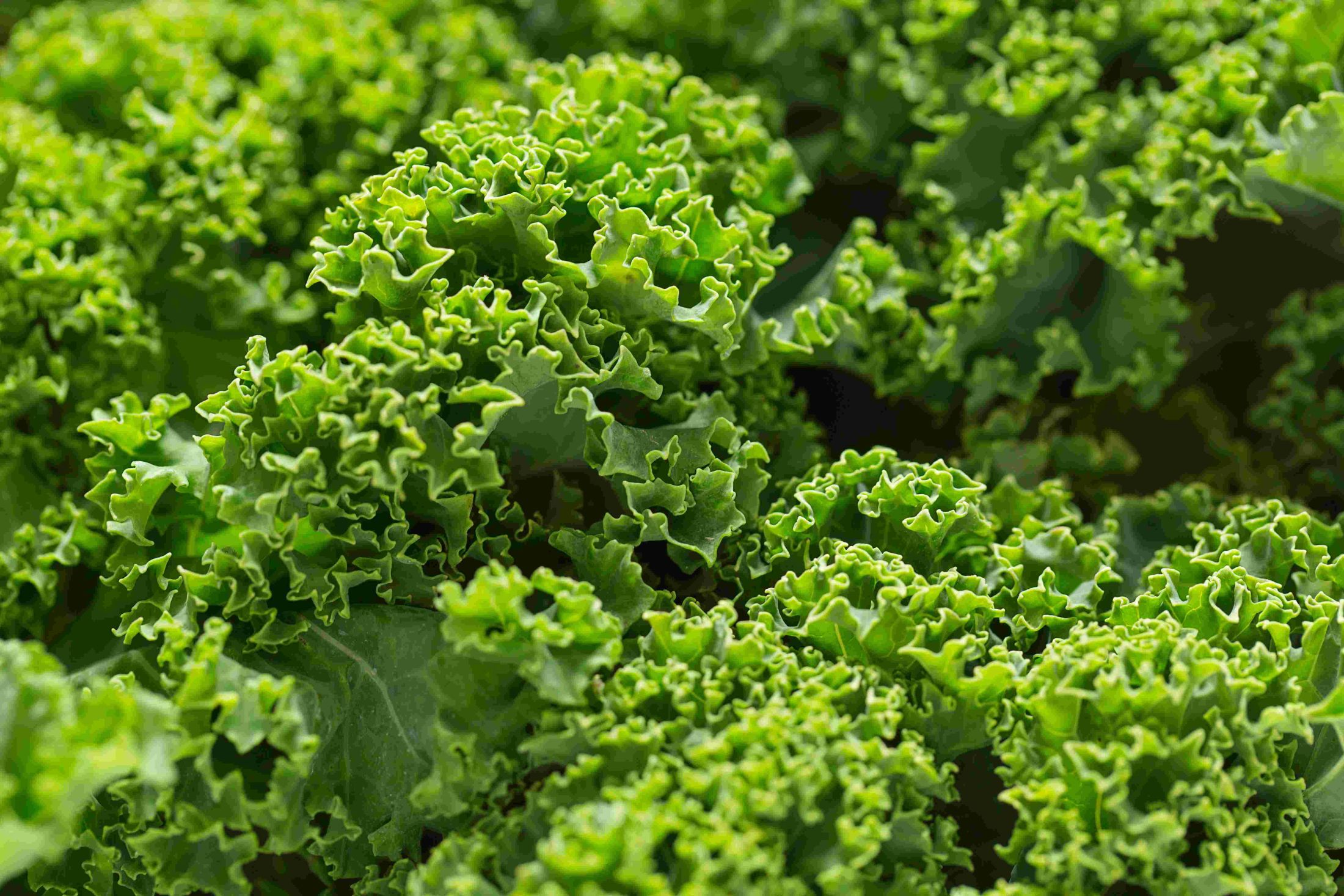
Before 2012, the largest single buyer of kale in the United States was reportedly Pizza Hut — not for salads, but for garnish. Curly green leaves lined the chain’s salad bar displays, purely decorative, rarely eaten and never celebrated. By any reasonable culinary measure, kale was irrelevant.
Then something strange and seemingly unplanned happened. Within a decade, kale would skyrocket from salad-bar decoration to global superfood, from a niche health food curiosity to a $1.8 billion global market.
And at the improbable center of that story is a British PR professional, a meal in France, and one of the cheekiest acronyms in food marketing history.
A Salad in France
Oberon Sinclair didn’t set out to change produce marketing. She set out to satisfy her curiosity. “I was in France, and it was in a salad, and I was like, ‘What is this?’” she recalled, laughing. Sinclair was not, by her own admission, deep in the food world at the time.
She spent two decades in music, fashion and marketing, founding her public relations and creative agency My Young Auntie, co-launching Jack Spade with designer Andy Spade and working out of NeueHouse, the Manhattan co-working space she helped create.
But curiosity has always been her superpower. “I’m almost obsessively curious about everything. Design things, food, people — my eyes are like a walking camera,” she says. “I take everything in.”
What she took in from that French salad was a dark, leafy green with genuine nutritional heft and enormous untapped potential. She brought the idea home to New York, asked her friends Ben and Phil at the downtown restaurant she represented, The Fat Radish, to put it on the menu — “first they were like, ‘you’re joking’” — and then she did something that would become a masterclass in grassroots food marketing. She registered a nonprofit called the American Kale Association.
“I thought it was really funny,” she says, “because American Kale Association is AKA.” The joke, as it turned out, was also the strategy: an ad hoc body with no members, no budget, no funding from any farm or food company and no agenda beyond the conviction that this under-appreciated green deserved a wider audience.
“I wasn’t harming anyone. I was trying to promote something, to see if I could do it in a guerrilla way,” says Sinclair. “It wasn’t overthought. I didn’t have any charts. I wasn’t an expert. I just thought it would be a cool thing to do.”
Sinclair and a small team tweeted, pushed recipes to the website, talked to food editors, coaxed celebrity friends, put kale on sandwich boards outside Manhattan restaurants and lobbied chefs directly.
Kale by the Numbers
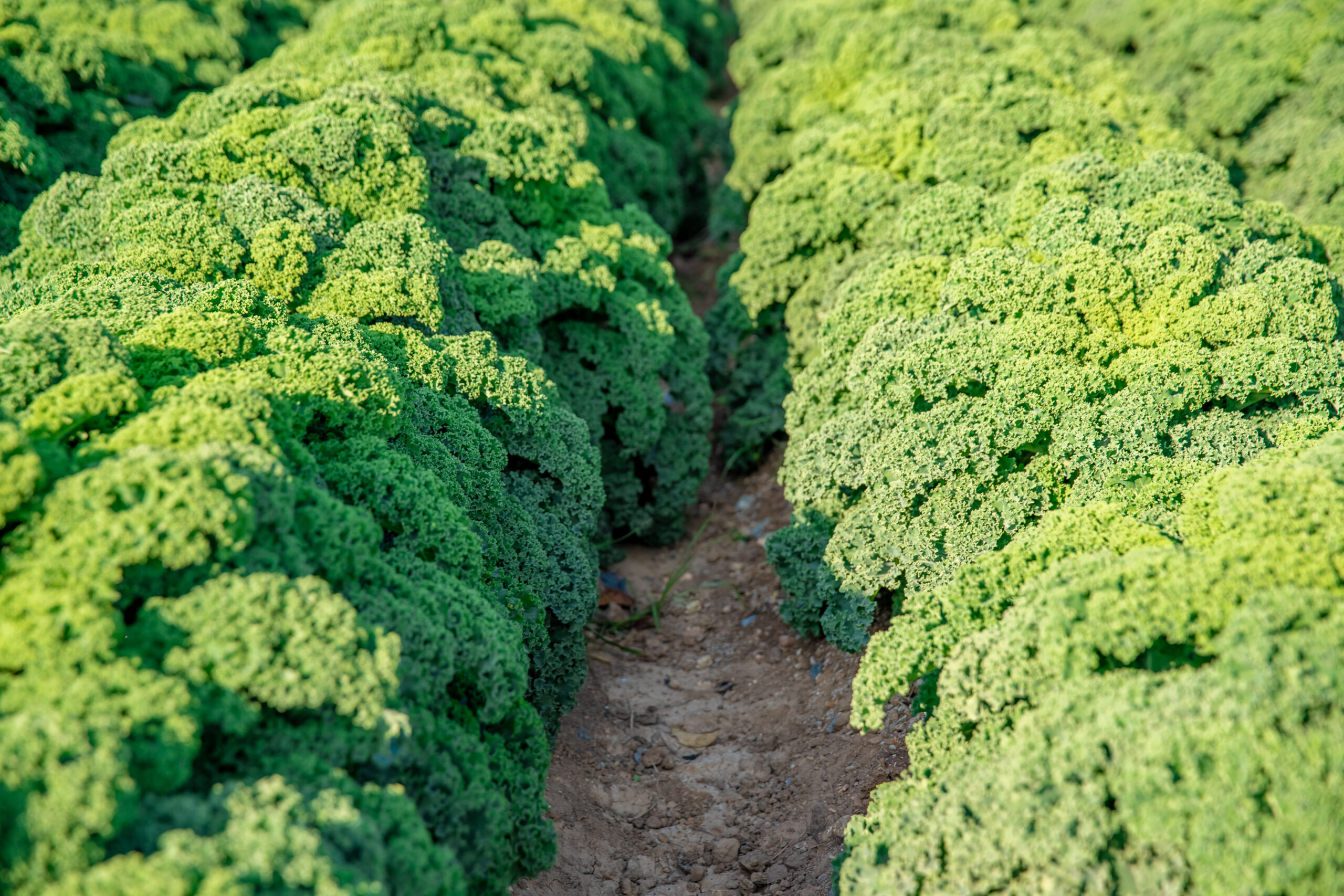
Those efforts resulted in a new cultural norm backed by hard numbers. According to the U.S. Department of Agriculture’s 2012 Census of Agriculture, the number of kale farms in the U.S. grew from 954 in 2007 to 2,500 in 2012 — a 162% jump in five years. Kale acreage ballooned from 3,994 acres to 6,256 acres in the same period.
That was only the beginning. By 2017, farm numbers had reached 8,066 — more than eight times the 2007 figure. The most recent USDA Census of Agriculture, conducted in 2022, records 7,743 kale farms operating across the U.S., with total acreage climbing to 18,121 — up from 15,325 in 2017. The slight dip in farm count alongside growing acreage signals classic sector maturation: consolidation among larger, more efficient producers rather than any retreat from the crop.
Tim Coolong, professor of horticulture and extension vegetable specialist at the University of Georgia, has watched the kale boom play out from the field level. He has a pragmatic view. Georgia is second only to California in U.S. kale production.
“It seems that while kale acreage grew rapidly around 2015, give or take, it has remained relatively stable since the late 2010s in Georgia,” he says. “Most of our growers didn’t switch to kale necessarily but still continued to grow other greens, with kale acreage just becoming a bigger part of their overall planting.”
Kale is easy to add to farms already growing collards, he says, as they’re both transplanted, usually harvested multiple times and have similar post-harvest management. “I suspect that much of it could have been marketing. People have been consuming greens in the South for a long time, but I think kale caught on in other parts of the country where greens typically weren’t part of the standard menu,” says Coolong.
The Cultural Tipping Points
Kale’s trajectory in the early 2010s was powered by a series of high-profile moments that money couldn’t have bought and, in many cases, Sinclair’s network helped engineer. In 2009, food magazine Bon Appétit ran a recipe for kale chips by renowned chef Dan Barber. A year later, Dr. Oz introduced kale to his television audience, followed in 2011 by Gwyneth Paltrow baking kale chips on “Ellen.” By 2012, Bon Appétit had named it the Year of Kale. National Kale Day launched in 2013, and in 2014, Beyoncé wore a KALE sweatshirt in her music video for “7/11.”
“Beyoncé in her kale video — of course, everyone knows that,” says Sinclair, with the wry familiarity of someone who has told this story many times but still finds it amusing. Kale’s Google Search peak came in December 2013. But the staying power is perhaps more remarkable than the peak: In 2026, kale is still searched 40% more than it was in 2005, according to Google Trends.
North America generated $626.4 million in kale revenue in 2025, dominating the global kale market valued at $1.8 billion — a 34.8% revenue share, according to market research firm Dataintelo. The firm attributes kale’s success to health media, celebrity endorsements and the farm-to-fork movement.
“It was just a thing that went on every day that just caught on and became huge,” notes Sinclair. “Globally huge. And still is.”
From Novelty to Non-Negotiable
No company better exemplifies kale’s journey from trend to table staple than Sweetgreen. The fast-casual chain, co-founded by Nicolas Jammet, put kale front and center in the early 2010s when that was still a genuinely risky menu call.
“We set out to build a menu around real, whole ingredients that feel as good as they taste, and kale was a natural fit from the start,” says Jammet, now chief concept officer. “At the time, it wasn’t widely used as a base, but we saw an opportunity to prepare it in a way that’s both flavorful and satisfying — something you could build a meal around.” The Harvest Bowl — built on a shredded kale base — has been Sweetgreen’s No. 1 item since its introduction in 2014, with more than 30 million sold.
“In Sweetgreen’s early years, ingredients such as kale felt more exploratory,” says Jammet. “Today, kale is less of a novelty and more of a staple, serving as a foundational green across our menu.”
The supply-chain implications were equally significant. One Texas farm partner, Rio Fresh, connected with Sweetgreen during a period of kale shortage, transitioned to organic production, and expanded from roughly 50 to more than 850 acres. It has since supplied the chain with more than 5.7 million pounds of organic kale.
What the Retail Data Shows
More than a decade later, grocery shoppers are still buying kale. U.S. retail sales of fresh conventional kale totaled $7.2 million in the four-week period ending July 13, 2025, according to the International Fresh Produce Association. That’s 3.1 million pounds at $2.32 per pound.
And organic kale added another $2.8 million at $2.80 per pound in those four weeks. Kale has high market penetration. Conventional kale is now carried by grocery stores that account for more than three-quarters of all U.S. retail food sales — meaning most American shoppers can find it in their local store. The superfood remains firmly established at retail.
At the retail level, kale’s permanence is obvious to the buyers who move it. “Kale has seen significant growth in demand across ShopRite stores throughout the Northeast, available fresh, pre-washed and in convenient salad kits,” says Ross Farnsworth, vice president of produce at Wakefern Food Corp. “Kale has truly earned its place in our customers’ shopping baskets — it’s much more than just plate decoration.”
Why Kale Was a Harder Sell
Not every successful produce trend faces the same entry barriers. Kale had a significant one: It was genuinely difficult for inexperienced home cooks to prepare well.
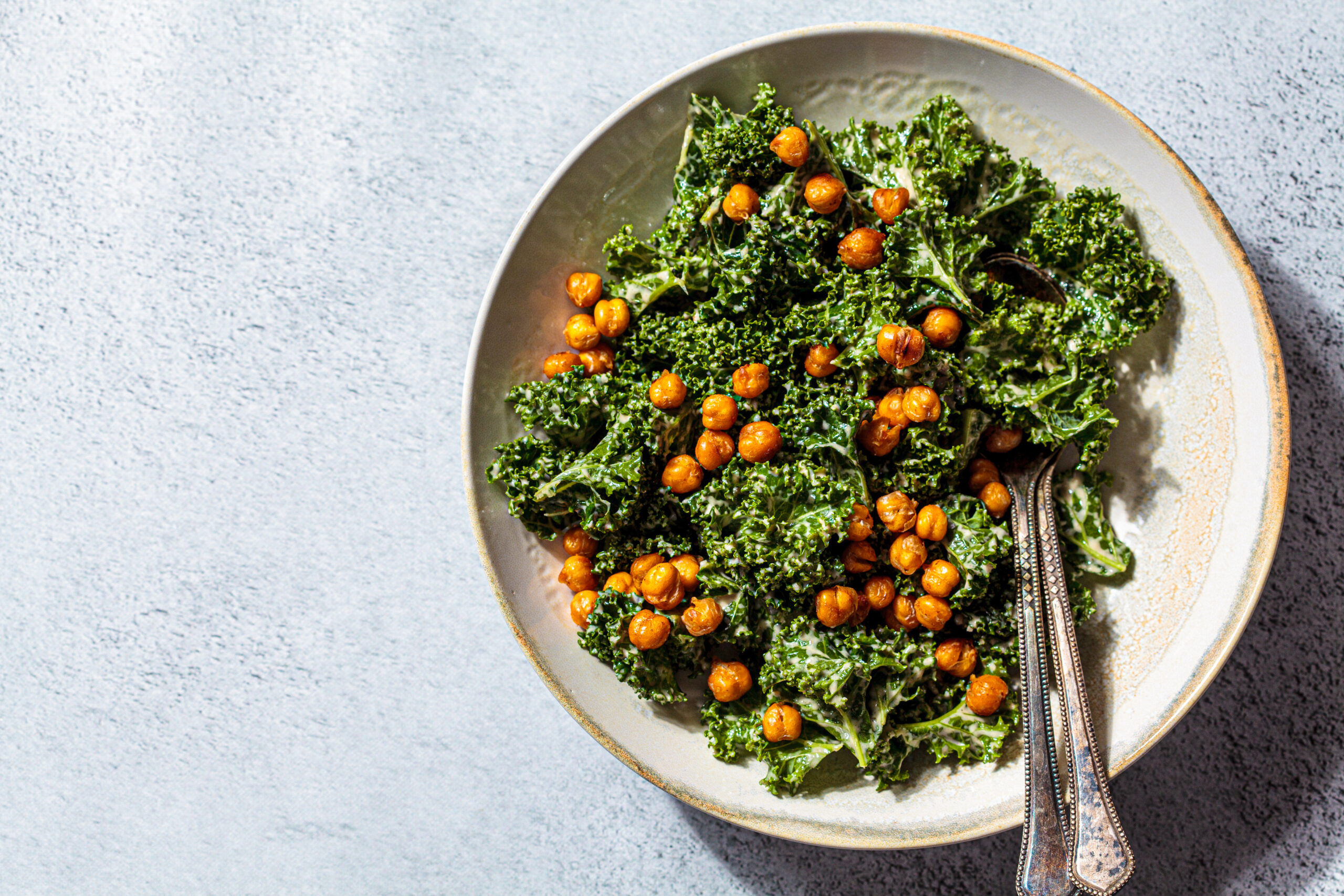
“Kale is a vegetable that tends to inspire strong opinions — you either love it or you don’t,” says Katie Calligaro, director of marketing and communications at The Foundation for Fresh Produce. “And more often than not, that reaction comes down to preparation. Properly massaging the leaves, for example, genuinely transforms the texture and flavor. Without that step, the experience can fall flat, and a consumer quickly concludes the vegetable simply isn’t for them. When in reality, it just wasn’t prepared correctly.”
Sinclair agrees, in her own raw, refreshing style. “It’s kind of like a tough vegetable with an unforgiving stem,” she says. “It’s not to everyone’s liking. It depends how you cook it [and] which kind of kale you get. Some of it’s impossible to eat and really hard to digest, let’s be honest.”
But Sinclair helped push kale into the mainstream because she’s a personal fan, growing her own for homemade salads, smoothies and chips. Calligaro draws a parallel to Brussels sprouts, another once-reviled brassica that foodservice rehabilitated before home cooks followed.
“The differentiator, ultimately, is taste: An ingredient has to deliver a genuinely good experience for repeat purchase behavior to take hold,” she says. “That is precisely the challenge consumer-facing marketers navigate daily — closing the gap between a great foodservice experience and confident home preparation.”
A Watershed Moment and the Limits of Hype
The kale phenomenon eventually led to an oversaturated market. The early pace of growth was not sustainable. In the summer of 2014, Bejo Seeds — which supplied seeds for 80 to 85% of U.S. kale acreage at the time — warned of a global kale shortage. By 2017, think pieces about kale fatigue were circulating. Supply had outpaced demand.
Sinclair had no illusions. “We got to the point where it was like, ‘Oh my God, I created a monster,’” she says. Then, with a pause and a laugh: “But we still eat it.” Unlike many food trends, kale did not disappear once the hype subsided. It became a staple.
The Marketing Playbook, Demystified
Produce marketers and growers have been trying to reverse-engineer the kale campaign ever since. Sinclair, who has gone on to work on acai with Sambazon and wild Alaska pollock for Trident Seafoods CEO Joe Bundrant, is generous but clear-eyed about what is and isn’t replicable.
“My advice? Just do things differently. Everything is so bland. Make it fun. They should make the campaigns as good as the content,” she says. The ingredients she identifies as essential are less tactical than cultural: access to the right networks, genuine curiosity about the product, a willingness to operate outside conventional structures.
“There’s room for magical campaigns — why not?”
For the produce industry, which has historically marketed commodities rather than experiences, this is both an invitation and a challenge.
“Kale’s success is a textbook case of earned, third-party credibility,” says Calligaro. “When chefs and culinary tastemakers champion an ingredient, consumer trust follows.”
IFPA data reinforces where that trust is now flowing: Consumer interest is channeling into value-added formats — salad kits, chopped blends, pre-washed options — with 38% of U.S. consumers actively seeking fresh-cut or convenience vegetable products. Nearly 73% are willing to pay more for organic or locally grown credentials.
After Kale
Kale has had to muscle its way on stage among avocado, açai, Brussels sprouts, cauliflower, dragonfruit and mushrooms. In 2026, “cabbagecore” is circulating as a trend descriptor. But it’s not an either-or situation.
“We don’t see cabbage as a vegetable replacing kale,” says Sweetgreen’s Jammet. “What you’re seeing now is less about one ingredient replacing another, and more about expanding variety — with cabbage adding a new dimension while kale remains a core staple.”
Meanwhile, Sinclair is already eyeing the next horizon. She’s currently a small partner in FUL Foods, a company producing clean spirulina — a naturally green-blue alga similar to the algae seaweed. It has the potential to replace synthetic food dyes that the Food and Drug Administration is pushing the industry to phase out.
“Spirulina is going to be everywhere,” she says. “In every food product — from jam to medicine to ice cream. And farmers can grow it.”
Whether spirulina follows kale’s trajectory remains to be seen. What is certain is that the fundamental mechanism — an ingredient with genuine merit, a network of evangelists and a story that earns media coverage rather than buying it — remains as relevant as ever.
“I was never doing it to make a buck,” says Sinclair of the kale campaign. “I was doing it to see if I could prove something to myself, that I could put something on the map.”
She laughs. “The kale thing still blows my mind, actually. It really does.”