
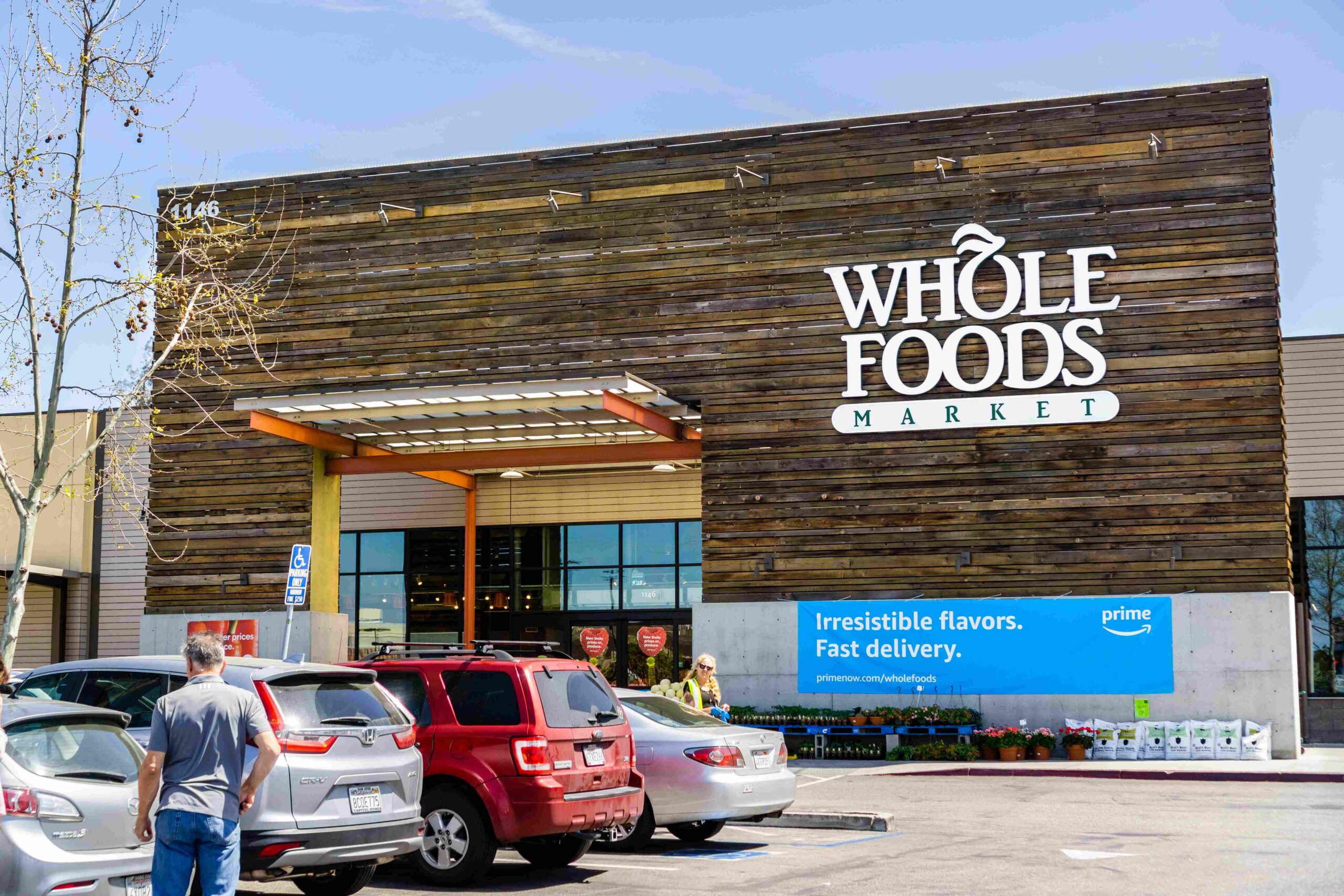
Few deals arrived with as much bombast as Amazon’s acquisition of upscale supermarket chain Whole Foods Market.
When the $13.7 billion takeover was unveiled in June 2017, investors immediately feared Jeff Bezos’ tech behemoth was about to do to supermarkets what it had already done to booksellers, toy stores and other bricks-and-mortar retailers. Shares in Walmart fell 5% in one day; Kroger, its nearest rival, by 9%.
Their fear was understandable. Amazon had spent two decades overturning the retail sector using a mix of aggressive pricing and a slick logistics operation. Many historic brands, including Borders, Sears and Toys R Us, were falling by the wayside. The company’s decision to buy a national supermarket — a first for the tech firm — looked like it could be a game-changer for the grocery industry.
But nine years later, Armageddon has not arrived.
Traditional champions Walmart, Kroger and Albertsons together with discount rivals such as Costco and Target continue to dominate the grocery sector, deriving most of their revenues from in-store sales. Last year, Amazon and Whole Foods accounted for around 3% of the U.S. grocery market, compared to Walmart’s market share of more than 20%.
Despite Amazon’s push and an aggressive response from established supermarkets, the internet has not transformed grocery retail as thoroughly as it has books, electronics or clothing.
Even the Covid-19 pandemic, which created near-ideal conditions to test online grocery shopping by keeping millions of consumers at home, was unable to fully shift the dial. FMI — The Food Industry Association noted that in 2025, around 10% of U.S. groceries were bought over the internet, including both delivery and pickup purchases.
“I’m a huge fan of online retail for everything but groceries,” explains Santiago Gallino, a business professor based at the Wharton School at the University of Pennsylvania.
Why? For a start, groceries are bulky, relatively low-priced and sold on razor-thin margins, making them expensive to pick, pack and deliver.
For Amazon, that has proved a major challenge. The company grew rapidly by distributing relatively expensive goods, books, electronics and clothing where distribution costs were a minimal addition. But its Prime free-delivery subscription service, which consolidated a huge client base, was much harder to justify if customers wanted a bag of chips or a carton of milk.
Secondly, fresh foods have special and specific requirements for storage and logistics, as well as regulations, which just don’t apply to consumer durables and footwear. Unlike books, fruit, dairy and meat products cannot be left unattended on a doorstep or warehouse shelf.
Finally, because of their perishable nature and natural variety, most shoppers still prefer to see the actual apple or steak they are buying to ensure its size, freshness and appearance, favoring in-store purchases.
“People still prefer to do the buying in person so they can see what they’re getting. They can even get the inspiration in the store,” notes Neil Saunders, managing director for retail at data analytics firm GlobalData.
A Marriage of Necessity
These challenges are common to all online grocers but were even greater for Amazon, a relative newcomer to the sector. Hence its bid for Whole Foods.
For both companies, the tie-up came at a critical moment.
Walmart’s $3.3 billion acquisition of online retailer Jet.com in September 2016 had suddenly intensified the battle for online groceries, sparking a price war that left Amazon selling many brands below cost and frayed relations with major suppliers. Suddenly, Bezos & Co. needed a partner with know-how and footprint in the grocery space.
Its choice of partner was also circumstantial. Following years of slowing growth, Whole Foods was under pressure after activist investor Jana Partners acquired an 8.8% stake and demanded radical changes that could have altered the business beyond recognition.
With both parties under pressure for help, the deal was done at speed. After executives met for the first time, it took just a few weeks for an outline deal to be struck, according to Jason del Rey in his book on the period, Winner Sells All.
But it came as a surprise. Bezos, the architect of e-commerce, had long resisted building a large physical retail network while Whole Foods co-founder and CEO John Mackey had predicted online grocery sales would be Amazon’s “Waterloo.” With his new boss presumably cast as Napoleon rather than Wellington.
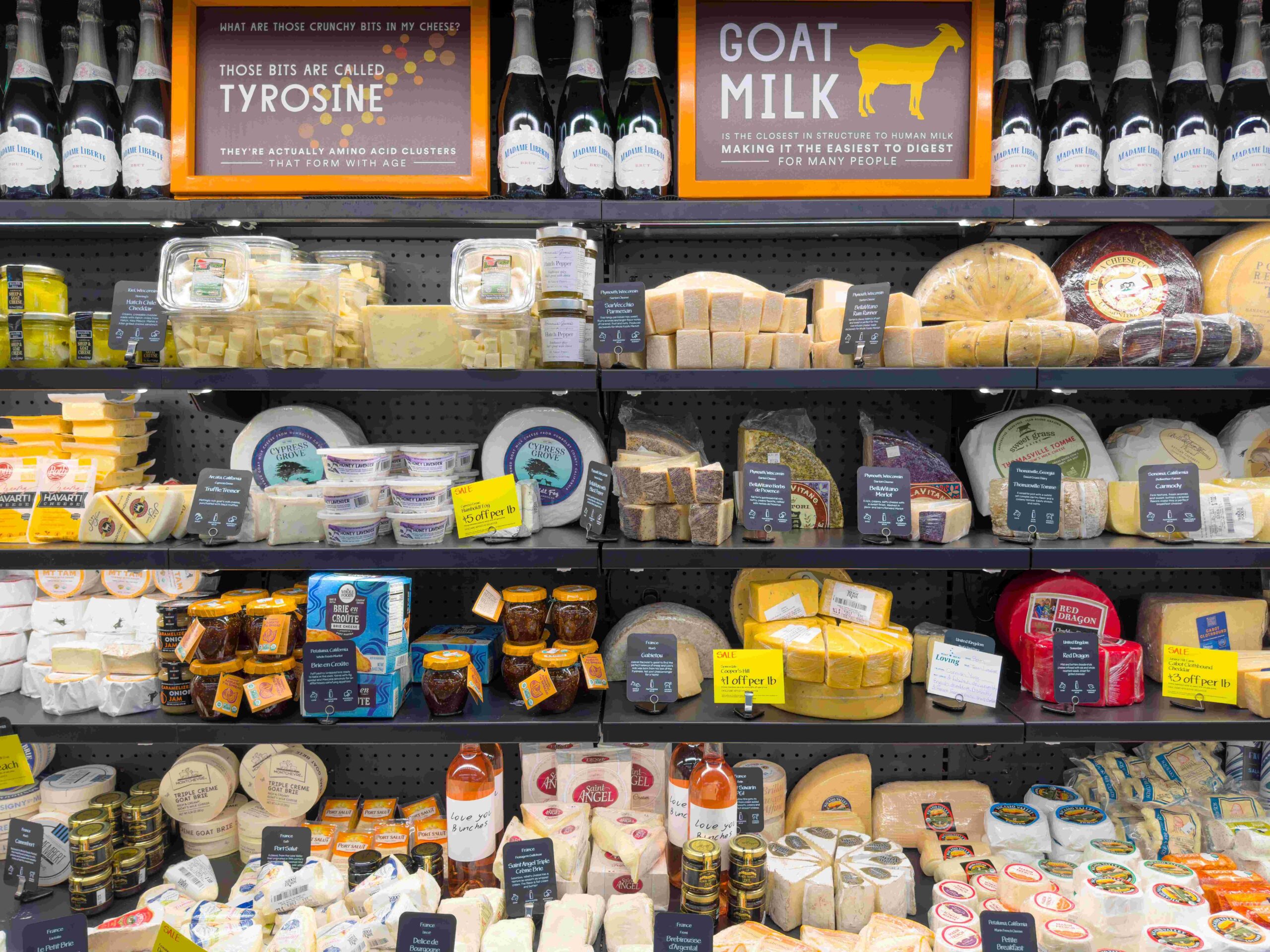
The two businesses appeared polar opposites. While Amazon promised to sell everything under the sun as cheaply as possible, Whole Foods carefully curated its range around health and sustainability with little thought to competitive pricing — snarkers called it “Whole Paycheck.”
Under New Management
Despite these cultural differences, the change in ownership appears to have made little difference to the brand.
Despite fears of Amazonification, Whole Foods remains a favorite for its high-quality fresh foods and gourmet prepared dishes. Although some customers complain that it has lost some of its luster and famously knowledgeable staff, others see no significant change.
The main modification has been the addition of Amazon collection desks in many stores, bringing mainstream brands such as Pepsi and Ruffles into what was once sacred ground. And with Whole Foods incorporated into the tech giant’s e-commerce operation, shoppers may now find they are sharing the aisles with Amazon workers fulfilling online orders.
“You don’t want to feel like you’re buying your groceries in a distribution warehouse. You want to bump into your neighbor,” says Gallino.
Thanks to its wealthy owner, the chain has continued to grow, adding around 100 new stores and renovating existing locations. But it remains a minnow in the U.S. supermarket sector, representing just 1.6% of U.S. grocery sales in 2025, according to Numerator, a consumer data firm.
At the same time, rivals have upped their store game, adding more and better-quality fresh produce and building their own links with local suppliers. Discount retailer Aldi has opened 1,200 stores over the same period to become the country’s seventh largest chain by sales.
“It was very much a learning experience for Amazon as well. They were not grocery experts,” says Colin Sebastian, a senior research analyst at investment bank Baird & Co. “And merging a bricks-and-mortar operation with a highly advanced e-commerce operation has not resulted in the type of synergies they were hoping for, at least in the short term.”
Amazon’s other efforts to move into physical retail, such as Amazon Go, which allowed customers to shop without passing through a conventional checkout, and Amazon Fresh, an in-house attempt at building a mass-market supermarket chain, proved even more disappointing.
“Amazon Fresh was supposed to fill the mass market gap in its ecosystem, but it did not succeed,” says Sujeet Naik, an analyst at Coresight Research.
Grocery has therefore remained a rare setback in another decade of unbridled success for the firm.
Since buying Whole Foods, Amazon’s market capitalization has risen severalfold, making it one of the world’s most valuable companies, while its IT infrastructure business — Amazon Web Services — has grown into a purring profit engine.
Meanwhile, Amazon’s failure to grab grocery market share has left the field open for its rivals. Since buying
Jet.com and taking on its founder, Marc Lore, to lead its online efforts, Walmart has increased U.S. online grocery sales severalfold to a little more than $70 billion by fiscal year 2026. Its secret weapon: A network of more than 4,500 stores in almost every nook and cranny of the country, a key advantage over Amazon, especially in rural areas.
“No one is better at fast home delivery, which increasingly includes fresh perishables, though Walmart is giving them a run for their money,” says Jay Jacobowitz, president of Retail Insights.
Meanwhile, delivery apps such as Instacart and DoorDash have proved more adept at online grocery sales than companies with decades of retail experience.
“[Their] lack of success in grocery has given the opportunity for these other players to grow,” says Baird’s Sebastian.
No Retreat From Grocery
Despite the slower-than-expected take-off, few expect Amazon to retreat from Whole Foods or the wider grocery market. For a company committed to growth, withdrawing would mean surrendering a share of a $1 trillion industry — and amount to a painful admission of defeat.
But nor does Amazon appear ready to pursue market share at any cost. Despite the opportunities created by the Covid-19 lockdowns, it has acquired no further bricks-and-mortar grocery chains. Instead, in January this year, it announced that it would close its Amazon Fresh and Amazon Go physical stores and focus its physical grocery business on Whole Foods. That more focused strategy comes as Amazon and Walmart prepare to go head-to-head in an increasingly fierce battle for online grocery customers.
“They want the market share, even if they lose money on some orders, because they see this as a lifetime equation from the point of view of winning over the customer,” says GlobalData’s Saunders.
After years of experimentation, Amazon may finally be getting its grocery offer into shape. The expansion of same-day delivery could give it an advantage over Walmart and regional supermarket chains, particularly as Americans become more comfortable buying groceries online.
Adoption remains uneven. Some consumers have moved almost entirely online, while others buy packaged goods and non-perishable foods digitally but still visit stores to choose fruit and vegetables, meat and dairy products themselves. Whole Foods’ reputation for high-quality fresh food could help Amazon overcome that reluctance.
Online retailers are also becoming better at delivering produce that meets shoppers’ expectations. Amazon customers can now specify not only the weight and variety of some items but also their preferred level of ripeness — a significant advantage for anyone trying to avoid green bananas or ensure their avocados last until the weekend.
“Amazon is probably in the vanguard of retooling the grocery experience, but it’s not perfect yet,” notes Saunders.
Nearly a decade after its landmark acquisition of Whole Foods, Amazon’s technological prowess, vast delivery network and ownership of a respected fresh-food retailer have still not translated into dominance.
“They’re still searching for the formula that ultimately translates into meaningful traction,” says Baird’s Sebastian.
Amazon has yet to solve the online grocery puzzle. But it is not going away.