
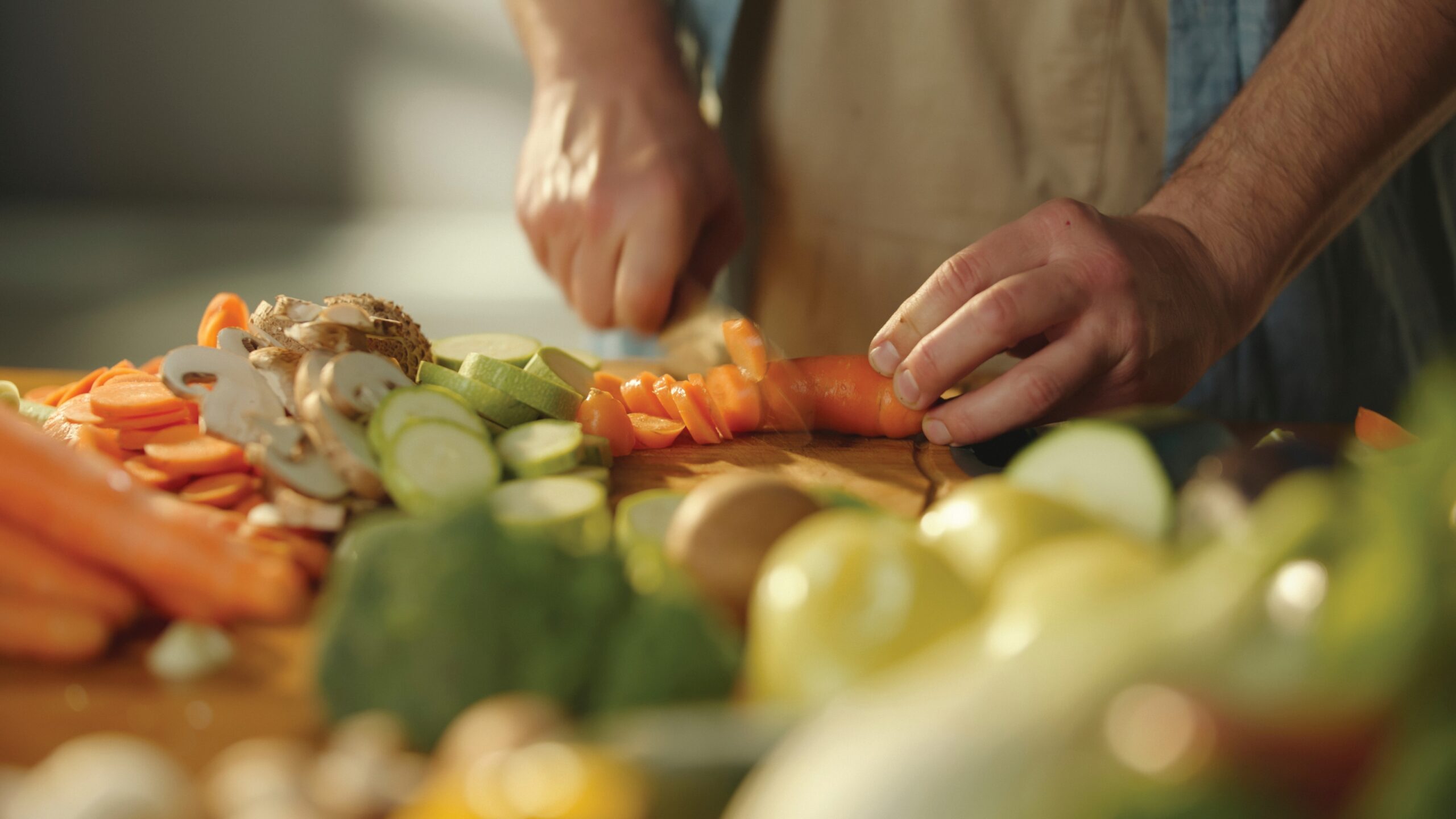
Here is a number worth sitting with for a moment. One trillion. That is approximately how many fruit and vegetable servings would be consumed across Canada and the United States each year if every person ate seven servings a day — a level of consumption broadly in line with healthy-eating guidelines in both countries. Multiply that by the combined population of two of the wealthiest, most food-secure nations on earth.
On paper, it is perfectly achievable. In practice, we are missing it by roughly half a trillion servings. That is one million servings every minute. One full truckload of fresh produce every 10 seconds left uneaten. The gap is not a rounding error. It is a structural failure, and understanding it requires us to stop blaming the usual suspects and start asking harder questions.
Price Is Not the Whole Story
When produce consumption underperforms, the lineup of suspects is familiar. Price, the economy, tariffs, supply chain disruptions; these are real forces, and nobody is dismissing them. But here is what the data keeps revealing: price is not the primary driver holding consumers back.
Our research at Execulytics found that 35% of consumers say preparing produce takes too much time. Thirty-eight percent say they waste too much when they overbuy. Half of consumers will not buy produce unless they already have a specific recipe in mind. And 80% buy the same items week after week, not out of passion, but out of habit. Same apples, same bananas, same salad mix. The devil you know beats the vegetable you don’t.
Lowering the price of kohlrabi does not teach anyone how to cook kohlrabi. A discounted unknown is still unknown. Produce is not just price elastic; it is friction elastic. The real barrier is not always the shelf price. It is the anxiety that shows up at 6:45 on a Tuesday evening, when someone opens the fridge, stares at the wilting spinach and the optimistically purchased shiitake mushrooms and quietly closes the door.
That moment is where half a trillion servings go to die.
The Behavioral Signature
Taken together, these findings form something more revealing than individual data points: a behavioral signature. A consistent, predictable pattern of hesitation and self-doubt playing out across millions of kitchens every week.
Fear of waste is a cornerstone of that pattern. About 40% of shoppers admit they leave products on the shelf because they worry they will not consume them before they spoil. Our apple research found that 13% of purchased apples are eventually thrown away. Not strawberries, not fresh herbs — apples, the long-lasting, low-maintenance, supposed easy win of the produce department. One in eight, gone, just like that.
The spiral is predictable once you see it: Shoppers overbuy with good intentions. But then something stands in the way of those intentions, and produce goes to waste. The whole experience leaves a mark. Future purchases are approached with more caution or skipped entirely. Variety stalls, volume plateaus and the closed loop tightens.
The kitchen compounds the problem. Fresh produce carries a surprisingly high cognitive load. Every item asks something of the shopper: How should I store this? When will I use it? What do I make with it? What happens if I don’t get to it? When energy is low and planning is thin, produce loses. It does not fail in the store. It fails Tuesday night, when motivation is thinner than the remaining shelf life of the baby greens.
One More Roadblock: The Culinary Skills Gap
And then there is the issue rarely discussed in polite produce industry circles. Culinary skills. Or more precisely, the lack of them.
Thirty-five percent of consumers openly say that vegetables cooked in a restaurant are superior to anything they produce at home. More than one in three concede defeat before they have even turned on the stove. Forty percent of mushroom buyers, people already motivated enough to seek out exotic varieties and put them in the cart, report having no idea how to cook what they brought home. They cleared the first hurdle with genuine enthusiasm, then stood in the kitchen with no road map and let it wilt into an expensive, guilty compost contribution.
Forty-three percent of pear customers say they would buy more pears if they simply knew how to cook, bake or grill them better. Nearly half of an already engaged customer base self-limit their consumption not because they dislike pears, but because nobody ever showed them what a pear could become. That is not a demand ceiling; that is a door left stubbornly, unnecessarily unopened.
Where the Opportunity Lives
Here is what makes all of this genuinely exciting rather than discouraging. These barriers are not weather events or tariffs. They are human behaviors, and human behaviors can be understood, influenced, and shifted.
Reduce the fear of waste and you de-risk the purchase. Reduce the planning burden and you unlock variety. Close the culinary skills gap and you create a loyalty to ingredients that no promotional flyer ever will. Consumers who learn to roast a portobello with garlic and balsamic do not go back to ignoring the mushroom section. Consumers who discover that a poached pear is 40 minutes of mostly hands-off cooking become evangelists who tell their friends.
Will solving any one of these barriers get us to 1 trillion servings? No. But 1 billion servings here and 1 billion servings there, and pretty soon we are talking about consumption growth that actually moves the needle.
The produce is already beautiful. In some cases, it is already in the cart. What stands between the consumer and a few billion more servings is someone willing to ask the right questions, act on what the answers reveal and meet shoppers where their week actually breaks down, not where we wish it didn’t.
One trillion servings is audacious. It will not be won at the checkout lane. It will be won in kitchens, in moments of hesitation, in small decisions made midweek in front of an open fridge. Understanding why those decisions go the way they do changes everything.
That is where the work begins.
- Execulytics Consulting is a Toronto-based strategy and research firm that helps fresh produce companies understand consumer behavior, identify growth opportunities and turn market insights into commercial action.