
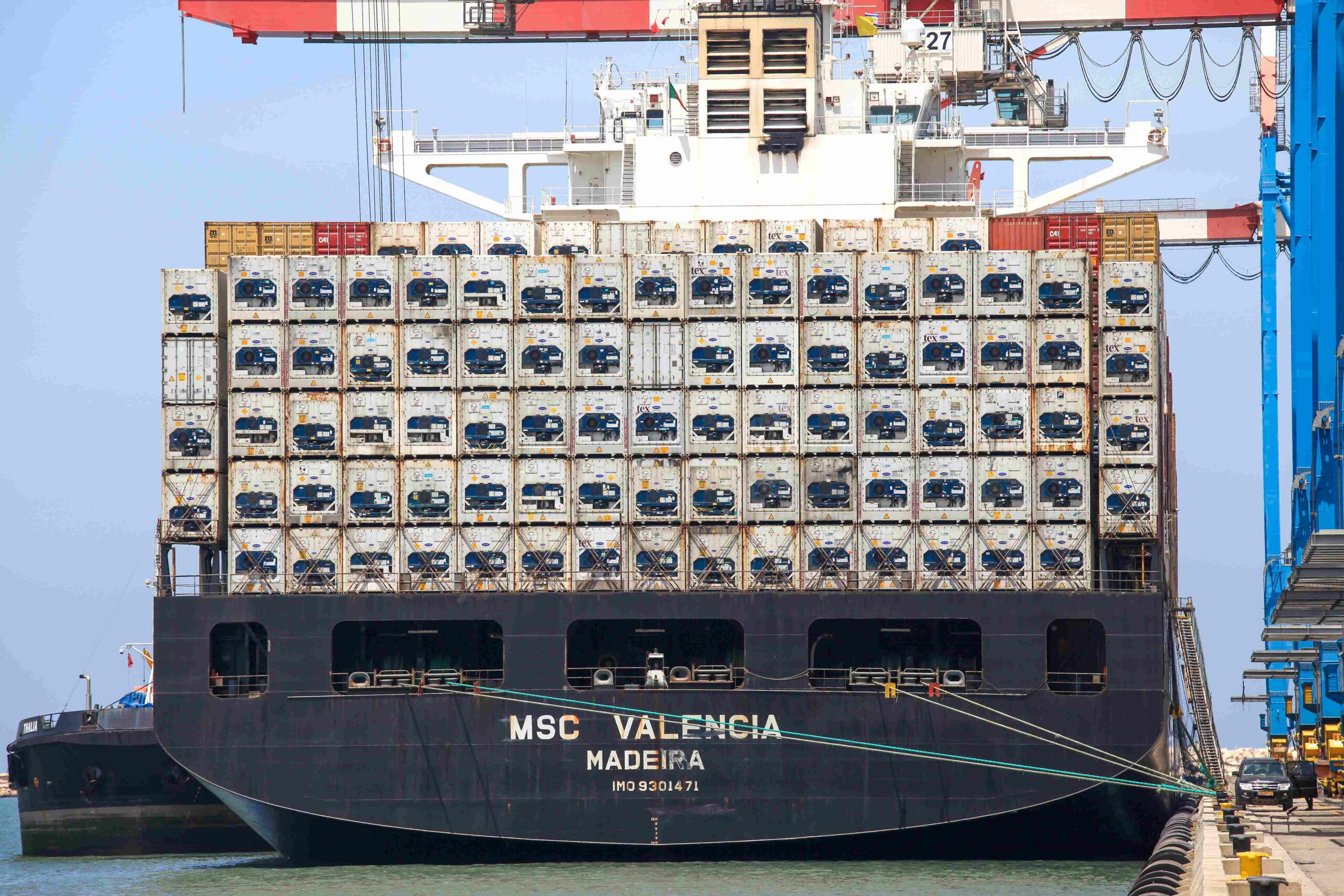
Agricultural trade is entering a phase it was not designed for. For decades, the system was optimized around a single assumption: that goods would move predictably. Ships would depart on schedule. Ports would operate within expected ranges of efficiency. Trade corridors, while occasionally disrupted, remained broadly stable. That assumption is no longer reliable.
The scale of recent disruption makes the shift difficult to ignore. Red Sea attacks sharply reduced traffic through the Suez Canal in 2024, forcing many vessels to reroute around the Cape of Good Hope and adding roughly 10 days to two weeks to most Asia-Europe voyages, and materially increasing freight costs on key routes. In 2023 and 2024, drought conditions constrained Panama Canal transits, reducing capacity and forcing additional rerouting across Latin American export flows. At the same time, many fresh produce importers in Northern Europe experienced extended port dwell times reminiscent of the pandemic period.
The causes differ. The result is the same: disruption is no longer exceptional — it is embedded in the operating environment.
For produce exporters and importers, this is more than a logistics problem. It changes the basis of competitiveness. The question is no longer only how cheaply or efficiently products can be moved. It is how reliably they can be moved when the system itself becomes unstable.
Competitiveness is shifting from efficiency to continuity.
The End of Linear Trade
The global agricultural supply chain was built on linearity: farms to packhouses, packhouses to ports, ports to stable consumer markets. That model is now being tested along three connected fault lines.
The first is geopolitical risk. Trade routes once treated as neutral infrastructure have become exposed to conflict. Houthi attacks in the Red Sea significantly reduced Suez Canal transits, which account for around 10–12% of global maritime trade depending on measurement. This corridor, previously a highly efficient link between Asia and Europe, has become a high-risk chokepoint. Meanwhile, drought conditions have also affected the Panama Canal, adding another layer of unpredictability to intercontinental flows.
The second is policy volatility. Tariff frameworks are increasingly used as short-cycle policy instruments rather than long-term stable regimes. Recent tariff adjustments in several major markets have altered landed cost structures for multiple agricultural categories within short policy cycles. In parallel, European regulatory frameworks such as the EU’s Maximum Residue Limits (MRLs) for pesticides have continued to evolve, with frequent amendments and a narrowing list of approved active substances creating additional uncertainty for exporters. The effect is a compressed planning horizon, where visibility extends in quarters rather than years.
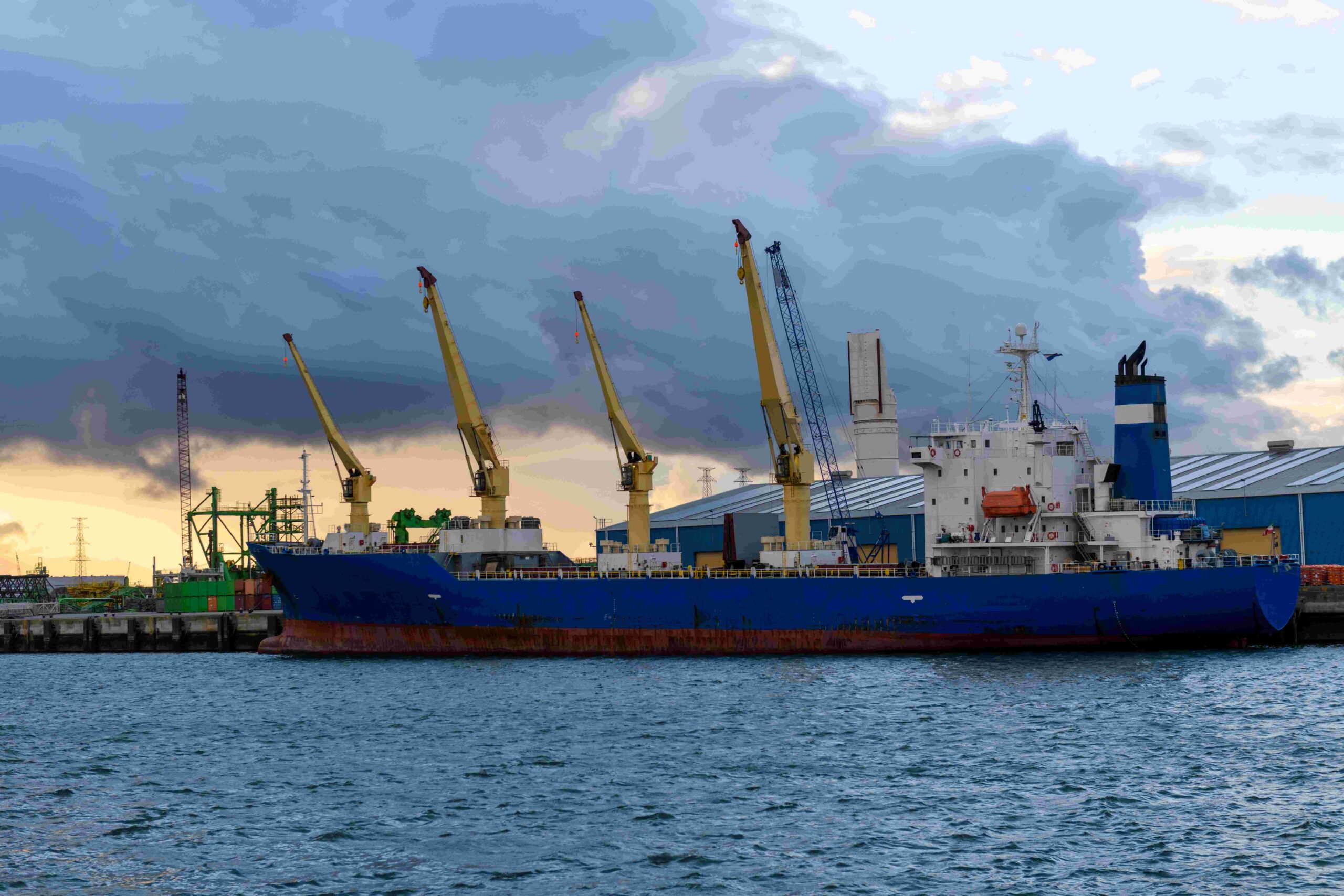
The third is operational fragility. Labor negotiations at major U.S. ports in late 2024 and early 2025 created renewed risk of disruption across East and Gulf Coast gateways. In Europe, Rotterdam and Antwerp continue to experience recurring congestion episodes, where inland barge and rail capacity can become as constraining as maritime throughput. In North America, the Los Angeles–Long Beach complex remains structurally efficient but periodically vulnerable to surges, while inland rail and trucking networks introduce additional variability between coastal entry points and inland demand centers.
Together, these forces have weakened the old assumption of continuity. Trade is no longer a straight line. It is a system of conditional pathways, each viable only under certain conditions.
Supply Chains Are Being Re-Anchored
As linearity breaks down, supply chains are being re-anchored around risk distribution rather than pure cost optimization. This is not a marginal adjustment. It is visible in three operational shifts.
The first is localized value-adding. Packing, ripening, and processing are increasingly moving closer to consumption markets. Banana ripening capacity in Northern Europe has expanded steadily, while avocado conditioning infrastructure has developed across both Europe and the U.S. East Coast. The logic is straightforward: proximity to demand reduces exposure to long-haul disruption and increases flexibility during transit volatility.
The second is parallel market access. Exporters and importers are building multiple entry routes and diversified destination channels. Moroccan and Egyptian citrus exporters, for example, increasingly use multiple Southern European ports rather than relying on a single entry point. Similarly, Peruvian blueberry programs now often split volumes across the U.S. East Coast, West Coast, and Europe, adjusting allocations within season based on freight conditions and demand strength.
The third is distributed infrastructure. Cold storage, ripening facilities, and inland hubs are being established within destination markets to allow product to remain within the commercial system even when primary corridors are disrupted. While capital-intensive, this shift reflects a simple trade-off: infrastructure cost versus program continuity risk.
The emerging system is not necessarily cheaper. It is more adaptive.
From Efficiency to Optionality
Efficiency — minimizing cost, inventory, and supplier complexity — defined supply chain design in a stable global environment. In a volatile one, it becomes a source of fragility.
The emerging organizing principle is optionality: the ability to shift route, supplier, or destination without breaking commercial continuity.
Optionality is distinct from redundancy. Redundancy duplicates capacity for failure scenarios. Optionality builds multiple live pathways into the operating model so that reallocation can occur in real time.
This shift is visible across three dimensions.
Market optionality means maintaining diversified demand channels across regions, allowing exporters to redirect volume when specific markets tighten or become constrained.

Supply optionality reflects hemispheric and regional sourcing diversification to reduce exposure to weather-related and geopolitical concentration risk. Recent weather events in Southern Europe, for example, have highlighted the vulnerability of highly concentrated seasonal supply models.
Logistics optionality involves treating cold storage networks, inland hubs, and secondary ports as active components of the system rather than contingency buffers, enabling rerouting during transit rather than after disruption.
Across all three, the principle is consistent: systems must remain functional even when individual nodes fail.
When Trade Flow Becomes Strategy
One recent example shows how trade flow itself can become strategy. A South African citrus exporter supplying major European retail programs faced repeated disruption from the global ripple effects of the Red Sea crisis — including reefer container shortages and blank sailings — alongside congestion at domestic and Northern European entry ports during a recent peak season.
Historically, the response would have been reactive: rerouting shipments under pressure, renegotiating delivery windows, and absorbing margin volatility.
Instead, the exporter restructured its European entry architecture ahead of the following season. Volume was split between Northern entry points such as Rotterdam and Southern ports including Algeciras in Spain and Vado Ligure in Italy. Short-term cold storage capacity was established in Spain, allowing product to be held and redistributed based on real-time port conditions. Commercial agreements were also adapted to allow greater flexibility in routing decisions while maintaining strict service-level commitments on shelf availability.
The result was not just operational continuity. During periods of congestion, volume could be reallocated through alternative corridors without major disruption to retail programs. In some cases, this stability contributed to the exporter securing additional program allocation in subsequent seasons, as buyers prioritized reliability during volatile periods.
The product did not change. The architecture around it did.
The Resilience Gap
The divide between exporters is increasingly architectural rather than purely operational.
One group continues to operate reactively — responding to disruption as it occurs, rerouting under pressure, and absorbing cost through margin compression.
The other embeds flexibility in advance — building parallel routes, diversified markets, and buffering infrastructure into the structure of their supply chains. This creates a widening resilience gap.
Importantly, disruption does not distribute evenly. It concentrates disadvantage on those without optionality and rewards those who have built it into their operating model. Volatility, in this sense, functions less as a shock and more as a sorting mechanism.
Data as Operating Infrastructure
As physical systems fragment, data is becoming the connective layer that enables coordination.
Traceability platforms originally designed for compliance, including regulatory reporting and retailer assurance, are increasingly being used as operating tools.
The shift is from simply knowing where a shipment is to understanding the conditions surrounding it: port congestion levels, transit delays, temperature integrity, demand signals, and geopolitical risk exposure along key corridors.
This turns data from static reporting into decision support.
Optionality without real-time information cannot be executed effectively. Information without operational flexibility has limited commercial value. The two must evolve together.
Regional Drivers, Converging Outcomes
The drivers differ by region, but the outcomes are converging. In Europe, regulation is pushing transparency, traceability and documented risk management deeper into supply chain design, even as some reporting timelines are being revised. In North America, volatility in labor markets, freight pricing, infrastructure capacity, and trade policy is forcing similar structural adjustments through commercial pressure rather than regulation. Different catalysts are producing a similar response: supply chains are becoming strategic operating systems rather than transactional logistics networks.
Preparedness as Competitive Advantage
The era of stable routing is over. What is emerging is not disorder, but a system designed to operate under constraint and variability.
In this environment, resilience is not a defensive posture. It is a commercial capability embedded in supply chain architecture.
Exporters and importers that invest in optionality do more than maintain continuity during disruption. They can capture share when competitors are slower to adapt.
When trade breaks, it does not do so evenly. It breaks along the lines of preparedness. And when that happens, market share does not disappear. It reallocates toward the companies whose systems were built for instability.