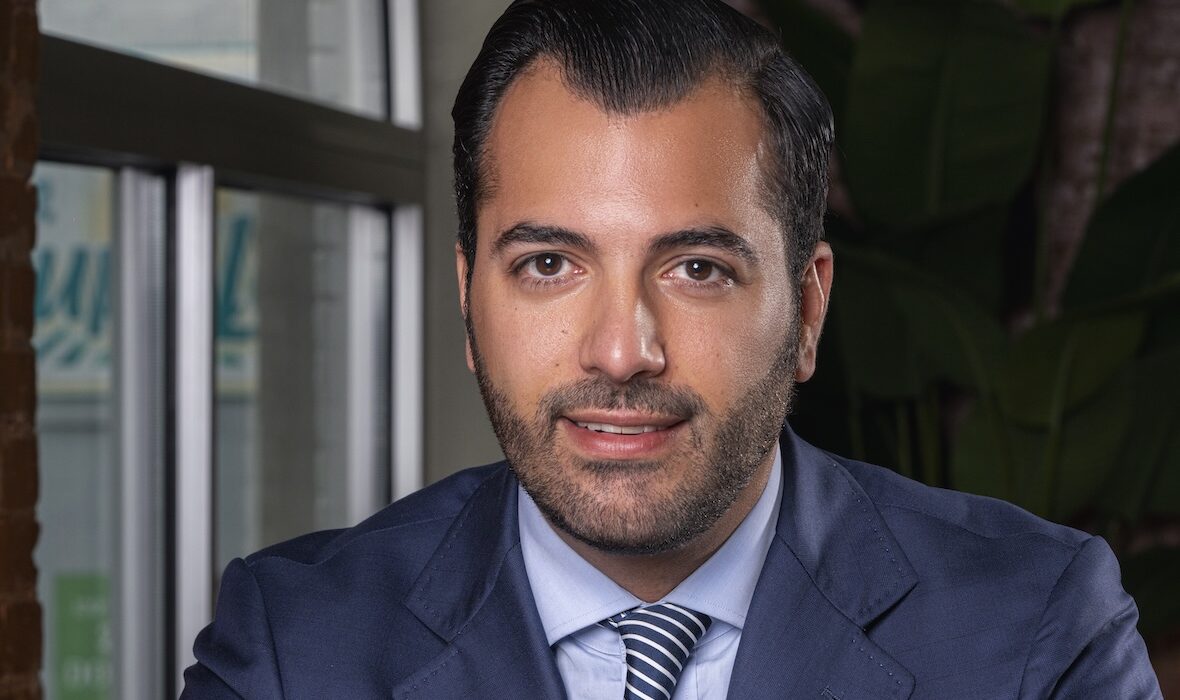
Anthony Serafino didn’t set out to lead a produce business — he studied journalism and Spanish at Michigan State, drawn to storytelling and communication. But by his early twenties, he had joined the family company, North Bergen, NJ-headquartered Exp Group, a grower and distributor of hundreds of produce items. A decade later, he now serves as president, steering an expanding organization that spans the United States and is growing in Europe and Asia.
Serafino — whose father is Italian and mother is Cuban — grew up just outside New York City, “surrounded by fresh fruits and vegetables” in his home, in markets, and in supermarkets, witnessing firsthand the rhythms and challenges of the business. That upbringing, he says, gave him more than industry knowledge: it instilled a leadership philosophy rooted in values. “For us, family values are the foundation of everything — our pillars are quality, service, brand, and culture,” he explains. His father’s guidance, combined with the loyalty of a workforce where “people have been working with my father longer than I’ve been alive,” shaped a management style built on trust, continuity, and long-term relationships.
Exp Group was established in 2005 by Serafino’s father, Emil — the company’s CEO — who came to the U.S. from Sicily before founding his first produce company in 1967. Exp Group itself came about somewhat organically. “It wasn’t something meticulously planned — it just made sense,” explains Serafino. “My father already had relationships with suppliers bringing in bananas, and it naturally evolved into a formal company.”
While originally focused on a few tropical items such as bananas, avocados and yucca, it now handles a huge portfolio of more than 300 SKUs. It has its own production operations in the Dominican Republic, growing around a dozen products, including taro, avocado, yautia, and aloe vera. The majority of what the company sells is sourced from a global network of third-party growers, with key supplying countries including Mexico, Ecuador, Guatemala, Costa Rica, and Honduras. “We wanted to be a true A-to-Z provider,” says Serafino, describing a model that combines direct growing, joint ventures, and close partnerships with farmers. “That model works very well for us. It’s more collaborative, less capital-intensive, and ultimately more efficient than trying to own everything ourselves.”
Serafino says the company, which has over 500 employees globally, today has revenue in the nine-digits. Though the company began on the East Coast, its footprint is now national, with offices and distribution centers in New York and Texas. It is also targeting three acquisitions of distributors in the coming months. “We’re looking to expand in three key markets: the Mid-Atlantic, the Midwest, and the West Coast, many of which are aimed at increasing our footprint in sectors such as foodservice, grocery, frozen and logistics.” On top of that, the company is planning to launch an over-the-road logistics division, Exp Freight, in 2026, which will “serve as a bridge for all our locations nationwide,” complementing Exp logistics, which handles Northeast port operations.
In this interview, Serafino discusses how he balances respect for his father’s legacy with the urgency of growth, innovations in supply chain, emerging markets, diversification, and the changing face of produce marketing. He also explains why tropicals are no longer niche, how frozen produce fits into the needs of tomorrow’s consumer, and his vision for the future of the industry.
How do you balance respect for your father’s legacy with the need to change, adapt, and experiment?
My father’s legacy is incredibly important. He is turning 70 in February, and while we always respect the company’s heritage, we also know that what worked in the past isn’t always the way of the future.
Fortunately, he’s very open-minded and tech-savvy. He understands the consolidation and merger trends in our industry, as well as the growing role of digitalization and artificial intelligence.
I’m the second generation, and I’ve seen many multi-generational companies lose sight of their roots. We don’t want that. We want to take the foundation he built and add to it, so one day he can say, “Anthony, you’ve done an amazing job.”
It’s truly a privilege to see my father in the office six days a week when I’m not traveling. Some people might struggle with that dynamic, but I love it. He’s my best friend. He’ll always be part of the business — as a leader, mentor, and advisor. I’d be foolish not to keep that wisdom around for as long as possible.
In what ways has your background outside of agriculture helped you bring fresh perspectives to your role at Exp Group?
I’ve always been passionate about financial markets, and that’s shaped how I think as a leader. In any organization, if something doesn’t work, you pivot fast. That mindset of adaptability, speed, and urgency comes from my interest in finance and investment.
I also love the culinary world. I’m not the best cook, but I’m a passionate consumer. One of my favorite restaurants, The French Laundry, has the phrase “sense of urgency” written in its kitchen. I love that. We apply the same principle to everything we do, whether it’s logistics, real estate, or produce.
In December 2024, you became a minority shareholder in the English soccer team Bromley Football Club (based in Greater London). What drew you to that investment, and do you see any parallels with building a produce business?
I’ve always wanted to be a diversified businessperson — finance, football, agriculture, produce.
For me, Exp Group is the core, but ventures like Bromley FC and my interest in finance and private investment are branches. I see them all as interconnected.
There’s a tremendous opportunity in sports right now. The audience for football, or soccer, is growing rapidly in the United States. I studied abroad in London during college, which gave me a lasting affection for the U.K. When the opportunity arose to invest in Bromley FC, it just felt right.
It wasn’t about saving a struggling club — they already had a great foundation. It was about helping scale an organization with strong roots, much like what we do in produce. Football is the world’s sport, and it fits perfectly with my vision of global business and cultural connection.
What role does innovation play at Exp Group?
Innovation and technology investment are top priorities for us. Every year, we dedicate significant capital expenditure to tech and efficiency. Historically, the produce industry has lagged in technology adoption, but that’s changing fast. The new generation entering the workforce expects efficiency and digital tools, so it’s up to employers to provide that environment.
We invest in enterprise resource planning (ERP) systems, automation, and cloud solutions that make our workplace more efficient.
These investments pay off. Maybe not immediately in profit, but in efficiency — and over time, efficiency translates into real savings. Artificial intelligence and cloud tools are already helping us reduce labor costs and streamline operations.
With such a diverse product offering, how do you stay on top of everything?
Great people. We have a strong executive team and leadership structure.
As a leader, I believe in trust. You can’t micromanage. My job is to set the destination — the vision and strategy — but the path we take can be flexible. The team can debate how we get there, but the destination is non-negotiable.
Supply chain disruptions — whether from weather, geopolitics, or transport costs — have been a huge challenge. How is Exp Group working to build resilience?
There’s only so much you can control. During the Covid pandemic, we learned a great deal about supply chain resiliency, but I actually think the current environment is even more challenging.
Today, we’re facing tariff shocks, stagflation, and rising business costs. Tariffs are the biggest factor. The uncertainty around trade policy makes it hard for any business to plan. When operating costs fluctuate unpredictably, you can’t allocate capital efficiently.
We’ve invested heavily to strengthen control where possible, particularly by managing our own logistics fleet. That’s been key. We’ve made strides in controlling as much of our supply chain as possible. What makes this environment difficult is the lack of clear information and the geopolitical instability. Every company now has to consider the global macro picture when making business decisions.
We now operate in a world that’s more protectionist and nationalist. Running a global business in that environment is complex, but I still believe in diplomacy and collaboration. If global leaders can work together, the entire world benefits.

How involved are you in Europe and Asia?
We do some importing from Asia and a bit of business in Europe, but Asia is a larger focus for us. Understanding pricing dynamics in those regions is crucial, even when we’re not selling directly there, because it affects the cost of products at the source.
When exporters in Central and South America are selling to Asia or Europe, that demand drives up global prices for commodities like mangoes, avocados, and plantains. So we monitor those trends closely.
We import garlic and ginger from China, for example, so maintaining strong relationships and keeping an eye on the U.S.-China trade situation is essential.
Outside the United States and Asia, where do you see the biggest opportunities for growth in the coming years?
Europe. I think Europe is poised for a rebound after years of stagnation. The region hasn’t fully recovered since the global financial crisis, while Asia and the U.S. have surged.
Europe has a lot of what I call “low-hanging fruit.” Demographics are changing, and I think there’s renewed appetite for modernization and innovation. The European Union knows it must become more pro-business.
So I’m optimistic about Europe’s long-term potential. Our 10-year strategy includes both Europe and Asia. Asia’s population growth and consumption trends make it vital, and China remains a complex but very important partner.
Produce consumption on the whole seems to have been relatively flat in Europe compared with other major markets. How do you interpret that?
It has been flat, but I think that will change. Around the world, people are becoming more health-conscious. Americans are drinking less alcohol and eating healthier foods; Europeans are doing the same.
Asia’s produce consumption is up because of population growth, but even in places with stable populations, the health trend is undeniable. In every region except Europe — Africa, Asia, South America, North America — imports of fruits and vegetables are rising. Statistically, that imbalance can’t last forever.
Falling population growth can hurt innovation, so societies have a strong incentive to stay healthy and sustain their populations. That, in turn, drives fruit and vegetable demand.
Let’s talk about products. You mentioned tropicals earlier. Is that still your core focus?
Tropicals remain a cornerstone of our business. We sell more than 300 SKUs, but our anchor items — avocados, bananas, plantains, papaya, taro (malanga), yautia, aloe vera, and chayote — remain central.
These items represent our roots, but we also supply many others: passion fruit, dragon fruit, ginger, garlic, grapes, lettuce, mangoes, tomatoes, onions — you name it. Our strength lies in offering customers everything they need, from tropicals to mainstream items.
Interestingly, we started with tropicals rather than traditional commodities, which is the opposite of how most companies grow. That focus turned out to be a strength.
Tropicals have become far more mainstream in both the U.S. and Europe. Plantains are being consumed more than ever. Products like yuca and taro are being used in snacks and food processing — think taro chips instead of potato chips.
Consumers are becoming more health-conscious, and tropical ingredients fit that shift perfectly. Globalization and immigration have also made these foods more familiar. As different cultures mix, more people are cooking with plantains or cassava.
We’re doubling down on tropicals, sourcing from more countries, expanding packaging options, and offering more retail-friendly formats.
Exotic and tropical fruits and vegetables like dragon fruit and aloe vera are now mainstream. Even cooking with green bananas is becoming common. This trend started years ago but accelerated after Covid.
Aside from tropicals, what other product areas are you most excited about?
Frozen. That’s a major focus for us now. Consumers — especially millennials and Gen Z — want convenience. They don’t always have time to peel, chop, and cook from scratch. Frozen fruits and vegetables save time, and time is the one currency you can’t buy back.
Frozen offers freshness, value, and efficiency. You can open a bag, pour it into a pan, and dinner’s ready in minutes. We’re investing in this sector because the data is clear: it’s growing fast.
It’s also a generational trend. Fewer young people aspire to become farmers, and they’re consuming food differently. Just as many young people now want to be YouTubers or TikTokers, they also expect fast, digital-era convenience in what they eat.
Technology shapes consumption, and frozen is part of that evolution. For us, it’s about meeting consumers where they are.
Looking ahead, what do you see as a key but perhaps less-discussed transformational trend in the U.S. produce industry?
Marketing. Everyone talks about technology and innovation, which are essential, but marketing is what will really transform the industry.
When I was a kid, people looked for coupons in newspapers to see what was on sale. That doesn’t happen anymore. Today, shoppers discover produce on social media. Japanese strawberries trend on TikTok, and the next week, supermarkets in Tokyo can’t keep them in stock.
The same dynamic is happening in the U.S. and Europe. Social media is shaping food trends in real time. That means produce companies need to think differently about how they communicate, advertise, and build brand awareness.
We’re doubling down not just on technology — but also on marketing.
What changes do you think need to happen in the U.S. produce industry to encourage people to eat more fruits and vegetables?
It ties directly to marketing. Older generations will continue to shop as they always have, going to their local grocery stores. But younger consumers are different. You have to reach them where they spend time — on digital platforms — with engaging, authentic content.
It’s not just about advertising; it’s about inspiration and storytelling. Show them plantains being made into chips, or the convenience of frozen vegetables. Make it fun, relatable, and shareable.
We’re living through what I call the “new Roaring ’20s.” Just as the 1920s in the U.S. were marked by innovation and optimism, the post-Covid era is driving new consumer behavior and technological change. The companies that communicate effectively during this time will define the next decade of the produce business.
How are supplier–retailer relationships evolving?
They’re becoming less transactional and more partnership-driven. I always tell our team: we’re not in the produce business — we’re in the people business, serving fruits and vegetables. Once you understand that, everything changes.
Relationships, trust, and shared values are what matter now. We work with partners who’ve been with us for decades, and every year we add a few new ones to grow together. Our responsibility as a large organization is also to bring smaller partners into the fold so they can scale with us.
Sustainability and fair trade are key considerations, as are transparency and shared ethics. It’s not about chasing pennies; it’s about building long-term value. If you drop a partner for a few cents, you lose the relationship capital you’ve built over years.
Retailers’ biggest nightmare is an empty shelf. So we all have to work together — growers, suppliers, and retailers — to make sure that doesn’t happen. Partnership, not price wars, will shape the future of this business.
What advice would you give a young person interested in starting a career in produce?
Network. Talk to people. Build relationships. This is a people industry, and human connection will always matter more than technology. Attend trade shows, shake hands, have a coffee — or a beer — and get to know others in the business.
When I go to Fruit Attraction in Madrid, I’m there from the moment it opens until the sun sets, meeting people all day. That’s how opportunities are made.
I also encourage young professionals to observe their leaders and find ways to add value. If you notice something your boss dislikes doing, learn to do it well and take it off their plate. It’s a simple but powerful way to grow your career.
Finally, what is your vision for the future of the produce industry?
The future is healthy, sustainable, and technology-driven — but still human at its core.
Produce is a consumer staple; people will always eat fruits and vegetables. The question is how they’ll consume them. Frozen, fresh-cut, plant-based, and convenient formats are all growing. Technology like AI will change operations, but people will still make the final choice of what they eat.
You can already see where the culture is heading: snack and alcohol sales are down, nicotine and tobacco alternatives are up, and non-alcoholic beverages are booming. Companies are adapting — Philip Morris now sells more nicotine pouches than cigarettes, and Peroni sponsors Formula One with its 0.0% beer.
Consumers want products that improve their health and well-being. That’s where the growth is. The future of produce lies in aligning with that shift — being on the right side of the health and sustainability trends that are redefining how people live and eat.
We’re fortunate to be in produce because it’s inherently healthy, and that is what will continue to move the category forward.