The food system is entering a decade of double disruption. Never before have we been more knowledgeable and connected in how we plant, grow, process, distribute, and consume food at scale. Internet of Things (IoT) sensors and other data streams, together with powerful artificial intelligence (AI) algorithms that seamlessly crunch data in the blink of an eye to recommend or take actions, have already revolutionized the way we manage the food value chain. At the same time, consumer patterns have changed drastically.
The emergence of weight-loss drugs has a palpable impact on food consumption patterns, where the expected decrease in sales will translate into billions over the next few years. Decades of studies and awareness campaigns on how food affects our health have created a shift to quality over quantity, and a strong demand for nutrient-dense, protein-packed products vs. sugary drinks and snacks.
Recent events only exacerbate these trends. Tariffs on food imports from countries such as China, Mexico, and Canada, as well as the push for a specific nutrition agenda, create challenges and opportunities for supply chain and product optimization. Even weather patterns and climate-related pressures create a shifting landscape: heat, droughts, and fires lead to changes in the molecular composition of produce and ingredients, in turn changing their sensory profile and bioactive properties. This trifecta of technological, geopolitical, and environmental changes has created a perfect storm that pushes all players to innovate and adjust in this dynamic environment.
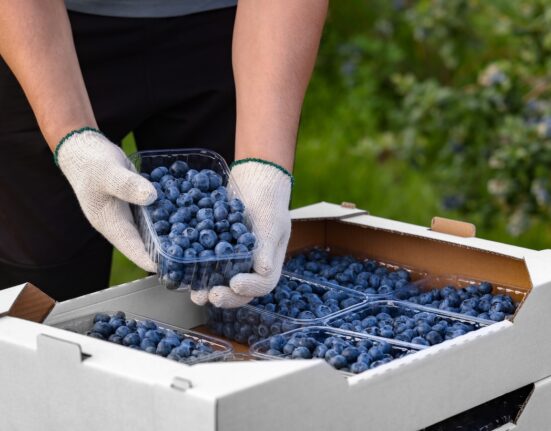
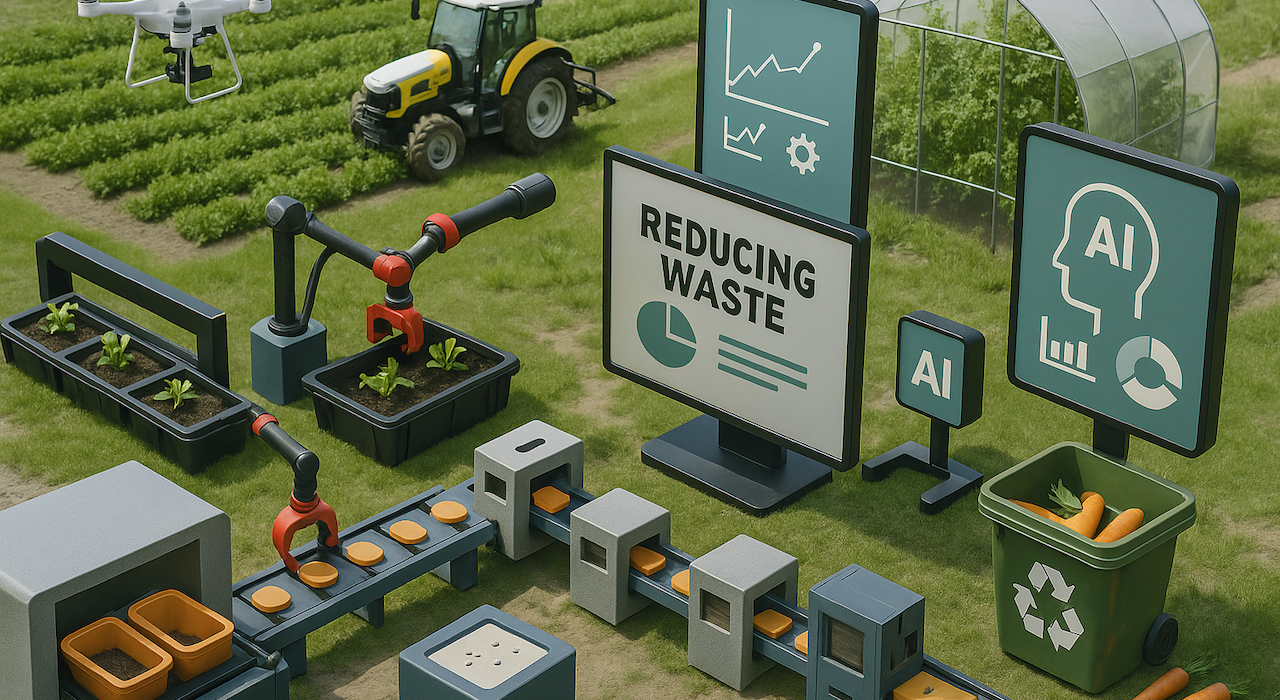
From farm to fork, AI adoption has accelerated over the past couple of years. On the farm, platforms like Cropin bring real data into the picture, using satellite images and local field data to forecast yields, spot pest risks, and track plant health. After harvest, tools like Clarifruit and LUCAi help inspect and remove underripe fruit, increasing load quality and reliability. Solutions in storage and transportation, such as the sensor and AI-driven management platforms from Zest Labs, IBM Food Trust, and OneThird, reduce waste by up to 25%.
On the shelf, solutions from Afresh and Shelf Engine reduce shrink by roughly 15%. Beyond agricultural production and distribution, consumer packaged goods (CPG) companies are using AI to reformulate and optimize their food-processing parameters by combining chemical and multi-physics models together with AI. These digital twins allow them to address supply chain variability, new product innovation, and consumer demand faster, better, and cheaper by reducing the trial-and-error cycles and also make the innovation process more systematic and less serendipitous.
So what’s next? The productivity and innovation improvements of AI and agtech are already here, but we expect them to become more staggering. We are witnessing a massive investment in emerging ventures that use large language models across all industries.
AI is becoming the “tractor and barcode” of our time, a general-purpose technology that will fundamentally rewire agriculture, manufacturing, and grocery. What started with decision-support is now evolving into agentic AI that not only predicts but also acts, coordinating farms, supply chains, and stores in real time. The result will be a self-optimizing food ecosystem, farms that run more autonomously, supply chains with low waste, and frictionless, personalized grocery experiences, with AI acting as the connective and neural tissue that brings all this together.
As we discover more about what is in our food and what it does to our bodies, we are also beginning to link agricultural, processing, and consumer practices to sustainable, nutritious, and affordable products, at scale. The direction we take today with these technologies will determine not only how we feed the world, but also how we nourish it.
- Ilias Tagkopoulo is the Director, AI Institute for Next-Generation Food Systems (AIFS); Professor of Computer Science, UC Davis. The AIFS, one of the 29 national AI institutes that have been funded by NSF and USDA, develops AI solutions for the food supply chain and is a partnership between UC Davis, UC Berkeley, Cornell, and the University of Illinois Urbana-Champaign.