After years of volatility — from pandemic lockdowns to supply-chain shocks and the lingering effects of inflation — U.S. consumers have quietly rewritten their relationship with food.
The disruptions of the early 2020s did not just alter buying habits temporarily; they reset them. Industry experts say that what has emerged is a more fragmented and pragmatic consumer — one whose daily decisions in the grocery aisle reflect an enduring mix of caution, flexibility, and fatigue.
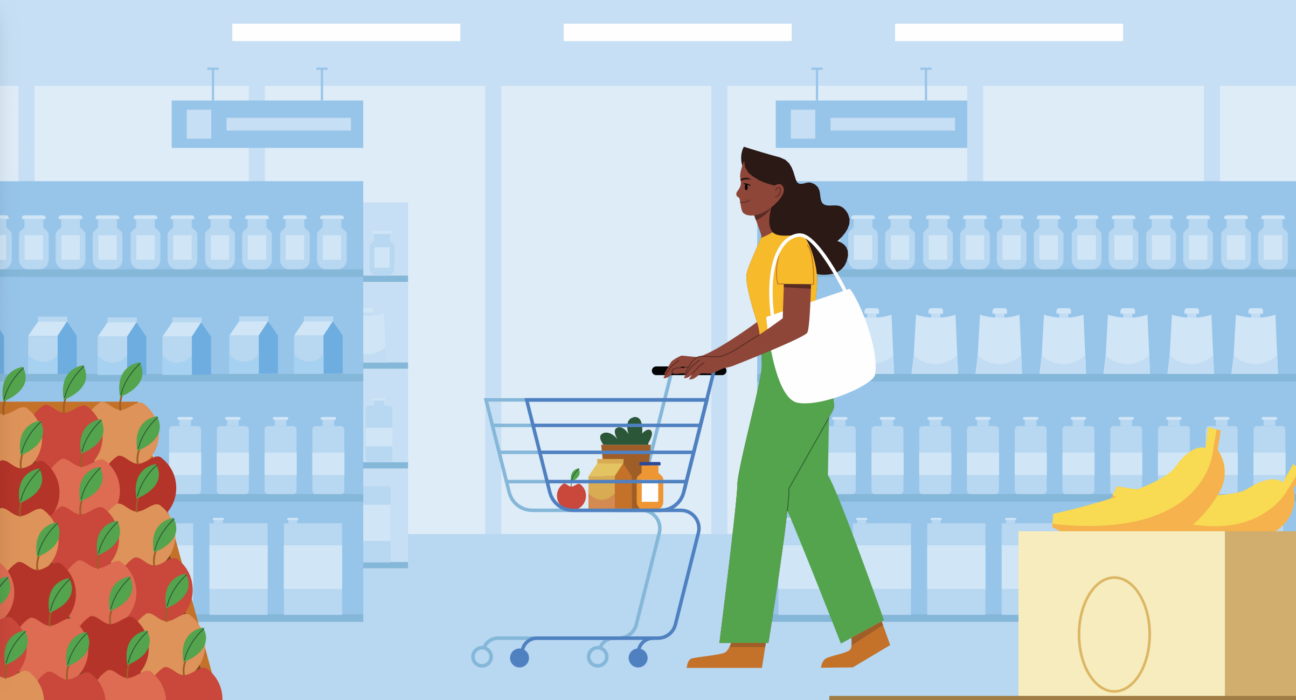
“Consumers today buy just what they need, when they need it,” says Jonna Parker, team lead for the Fresh Foods Group at Circana, a market research company. “They’re shopping more often, across channels, for smaller baskets and specific occasions.” Shopping has become a series of micro-trips — sometimes online, sometimes in person, often at different retailers in a single week. For younger generations who came of age during this period, she adds, this behavior isn’t temporary.
Consumers feel busier than ever, Parker notes, even when their schedules may not objectively be so. That feeling of constant busyness, combined with years of elevated costs, has led to a deep restructuring of habits.
From an economist’s perspective, David Magaña, senior fruits and vegetables analyst at Rabobank, an agricultural lender and market research firm, sees this transition as both behavioral and structural. Over the past decade or so, there has been a major expansion in fruit availability year-round, he explains. “Imports have made once-seasonal categories like berries, avocados, and mandarins continuously present on shelves.” That constant supply has changed expectations: shoppers no longer think of certain fruits as seasonal luxuries, but as everyday essentials.
In Rabobank’s long-term data, Magaña points to the “Northeast movement” of key categories — meaning both prices and volumes have risen over time, a clear indicator of healthy, sustained demand. “For items like blueberries or avocados, we’re still seeing the demand curve shift to the right,” he says. But he also cautions that steady availability has bred a new kind of complacency. Consumers assume abundance as a given, which means loyalty must now be earned through experience, not access.
While the pandemic initially encouraged more at-home cooking, inflation later forced consumers to choose carefully where to spend — and where to save. Many are still shopping this way.
Magaña observes that discount grocers and club stores continue to gain share, even after food inflation has moderated. “Discount grocers are not giving market share back,” he says. “Consumers continue to search for value.”
For produce, this recalibration has a silver lining. Compared with most other food categories, fresh fruits and vegetables have remained relatively stable in price. Between 2019 and 2024, produce prices rose only about 18%, according to Circana, while the total food and beverage market climbed roughly twice that rate. Consumers, consciously or not, have noticed.
That combination — perceived value, healthier positioning, and near-universal relevance — has turned produce into what Magaña describes as a healthy alternative not only nutritionally, but economically. It is, he suggests, one of the few food categories where long-term demand still grows faster than the overall market.
But growth now comes in smaller, more frequent bursts. Shoppers want products that fit seamlessly into specific occasions: the lunchtime salad that replaces takeout, the snackable fruit that travels well, the ready-to-use herbs that make home cooking seem effortless.
For retailers, the challenge is to translate this new rhythm into merchandising. The perimeter of the store — once defined by bulk displays — is increasingly dominated by flexible formats, smaller packs, and multiple varieties designed to meet different needs. “Getting into the basket isn’t the high-five that it once was anymore,” Parker says. “The question is how to get in the basket for different meal occasions.”
Shoppers are visiting produce aisles more often but buying less per trip. That frequency is both an opportunity and a risk: it rewards freshness, visibility, and emotion, but punishes anything that feels cumbersome, inconsistent, or indulgent.
Redefining Value
Inflation may have cooled, but its shadow still looms over the grocery store. After several years of price shocks and cost-of-living anxiety, consumers are redefining what value really means — and they’re doing it in ways that are reshaping the fresh produce industry.
“Value has become much more multidimensional,” says Naba Bakar, vice president of marketing at GoldenSun Insights, a strategic consultancy firm. “It’s no longer just about price — it’s about what consumers feel they’re getting in return for their dollar.” Retailers, she adds, are having to redefine value in a way that aligns with today’s consumer mindset: convenience, consistency, freshness, and even emotional connection.
“Shoppers are more discerning than ever,” Bakar says. “They’re balancing tighter budgets with a desire for food that supports their lifestyle and values. That means produce companies can’t just talk about ‘quality’ in the traditional sense, they have to show it through storytelling, packaging, and the eating experience itself. For retailers, value now lives at the intersection of trust and differentiation. If you can offer produce that consistently delivers on flavor, appearance, and integrity, that’s where long-term loyalty is built.”
Laurie Demeritt, CEO of The Hartman Group, a consultancy, agrees that the industry’s definition of value has become too narrow. “Value is subjective and constantly evolving. Consumers look to their personal priorities when assessing relevance and worth, meaning the subjective and emotional dimensions of value can often make the biggest distinction at the product and service level.” For many, she explains, this could mean judging food not only by cost or quality, but by relevance: Will this make my life easier? Does it fit my sense of purpose or identity?
Magaña of Rabobank sees the same dynamic from an economic angle. Even in a period of high grocery inflation, he notes, fresh produce inflation was relatively mild — and in 2025, some vegetable prices were even declining. That positions produce as a category where consumers can feel they’re getting more for their money.
That interplay of frugality and aspiration runs through nearly every corner of the food business. Circana’s Parker illustrates it with salads: while value-added kits compete fiercely on price, the fastest growth has come in fully prepared deli salads — ready-to-eat meals with protein and dressing included. On paper, they cost more. In practice, they deliver a greater sense of value: no waste, no prep time, and immediate gratification. “Convenience remains an equally important value indicator,” she says.
The Search for Meaning
If inflation made Americans more cautious, it also made them more reflective.
“Consumers have moved even closer toward the ‘food is medicine’ concept over the past five years,” says Demeritt of The Hartman Group. She describes two intertwined motivations driving today’s choices: vitality and longevity. “Vitality is defined by consumers as having the vibrancy to enjoy life,” she says, encompassing physical, mental, emotional, and social well-being. “Eighty-one percent of consumers say maintaining a high level of vitality is important to them.”
As life expectancy rises and the wellness culture matures, the goal for many is not just living longer — but better. “In today’s modern ‘vitality span’ paradigm,” explains Demeritt, “the goal is to sustain a high quality of life measured by the extension of quality years of health, energy, connection, and purpose. To that end, 85% of consumers say they seek out foods and beverages that are good for their long-term health.”
For the fresh produce industry, that presents both opportunity and challenge. Fruits and vegetables are the original “functional food,” yet they rarely communicate that role effectively. The task now is to make health feel personal, not prescriptive.
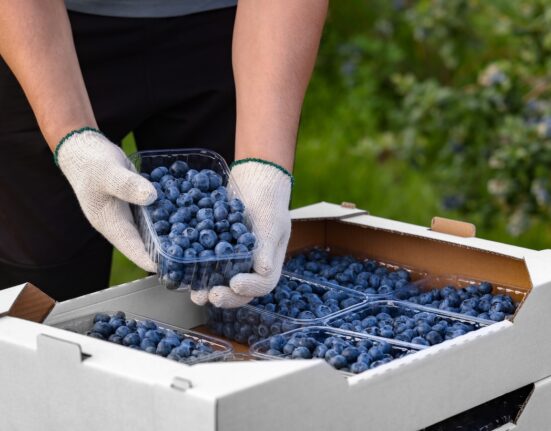
That personalization is already visible across shopping baskets, and with the rise of “snackification.” “People are looking for bite-sized snacks they can eat quickly in their inherent form,” notes Parker. “It’s not just pack size — it’s that certain fruits like blueberries or grapes are inherently convenient and make people feel good about their choices.”
Bakar sees a similar emotional undercurrent. “People are craving meaning and simplicity,” she says. “Another big shift is emotional: food is now a reflection of identity. Consumers want to see themselves in the products they buy — their culture, their values, their aspirations.” That desire for authenticity — real people, real purpose, real food — has made storytelling central to the produce business and opened up opportunities for companies to lean into it.
Fragmentation and Personalization
For decades, the food industry often talked about “the consumer” as if they were one person with one set of priorities. That model no longer fits.
“We have to stop thinking that our target audience is everyone,” says Parker. “While 100% of people buy fresh produce, they don’t all buy the same thing — and retailers who try to be all things to all people are losing relevance.”
Parker points to the success of retailers that have chosen a lane. “Sprouts and Whole Foods have become destinations for consumers who want natural and organic,” she says, “while club stores like Costco and Sam’s Club appeal to entirely different audiences — and both are growing.” Even among discount grocers, she adds, some now use produce to “bust myths” about quality, using fresh fruits and vegetables to signal trust and value.
In Parker’s view, the produce sector must evolve from chasing universal appeal to pursuing strategic relevance. It is important to understand who the loyal shoppers are for each category — and offering options that fit different lifestyles and levels of engagement. “For every category, there’s a group of loyal, frequent buyers and a group of occasional ones,” she explains. “They’re very different opportunities. You can’t approach them the same way.”
Demeritt sees a parallel trend within wellness itself: the rise of personalization. “Consumers are rejecting ‘one size fits all’ approaches to health,” she says. “They want personalized approaches that support their personal definition of wellness.” Hartman Group data shows that 83% of consumers think diets should be tailored to individual needs, and 61% have tried a customized eating approach in the past year — a six-point jump since 2023.
This shift has deep implications for the produce industry. “Given this move toward personalization,” says Demeritt, “the produce industry should understand how consumers are thinking about the various nutrients and benefits of individual produce items, and how those fit into these new wellness routines.”
Bakar says the same logic applies to branding. “Consumers are going to care most about trust and experience,” she says. “The next wave of loyalty will come from brands and retailers who make life easier, deliver real consistency, and help people feel good about what they’re feeding their families.”
In this fragmented landscape, connection — not coverage — drives growth.
Outlook: Empathy, Innovation, and Adaptation
The U.S. produce industry could be considered as having reached a turning point. Inflation is easing but not forgotten; consumers are optimistic yet cautious; and the very idea of “value” has evolved. The opportunity lies not in waiting for normality to return, but in adapting to a new one.
For Magaña, that future will depend on efficiency and innovation. “Innovation to increase efficiencies and productivity — and to provide consumers with a more consistent eating experience — will continue to be an area of opportunity,” he says. He points to advances across the supply chain — from genetics to mechanization and post-harvest technologies — that can help growers remain profitable while keeping prices accessible.
“The goal is to provide consumers with a more consistent eating experience so you can keep demand growing,” he says. But technology alone isn’t enough. Magaña emphasizes that demand must be earned through quality and relevance. Even as overall inflation stabilizes, he says, people will continue to look to fruits and vegetables as the best balance of value and wellness.
Demeritt adds a word of caution. One pitfall, she says, is the industry’s tendency to overestimate consumer resilience. “On the one hand, referring to consumers as ‘resilient’ is complimentary: it acknowledges their ingenuity,” she says. “However, the tone of some of the industry-speak around consumer resiliency points to shallow empathy at best, and ignorance at worst.” Companies that treat perseverance as endless elasticity risk losing trust. “To remain empathetic and culturally aware,” she warns, “corporations must think of and speak to consumers as peers.”
Bakar says that this is an exciting time for the produce industry, arguing that the conversation is evolving beyond transactions. “It’s about connection, storytelling, and shared values,” she says. “If we can bring humanity back to how we market and talk about produce, we’ll not only strengthen consumer loyalty but also elevate how fresh fruits and vegetables are perceived in everyday life.”
And for Parker, that evolution is both necessary and overdue. Her latest forecasts suggest the U.S. produce category will grow around 2% annually over the next three years — a pace that roughly tracks inflation. “But we can do better than that,” she insists. “If we do nothing, we’ll just be average. The opportunity is much greater if we adapt to how people really live, shop, and eat.”
The next phase of growth in produce will not be about identifying trends, but about recognizing patterns — seeing the structural, emotional, and behavioral changes already here, and responding with imagination and empathy. After years of upheaval, consumers aren’t reverting. This is the new normal.