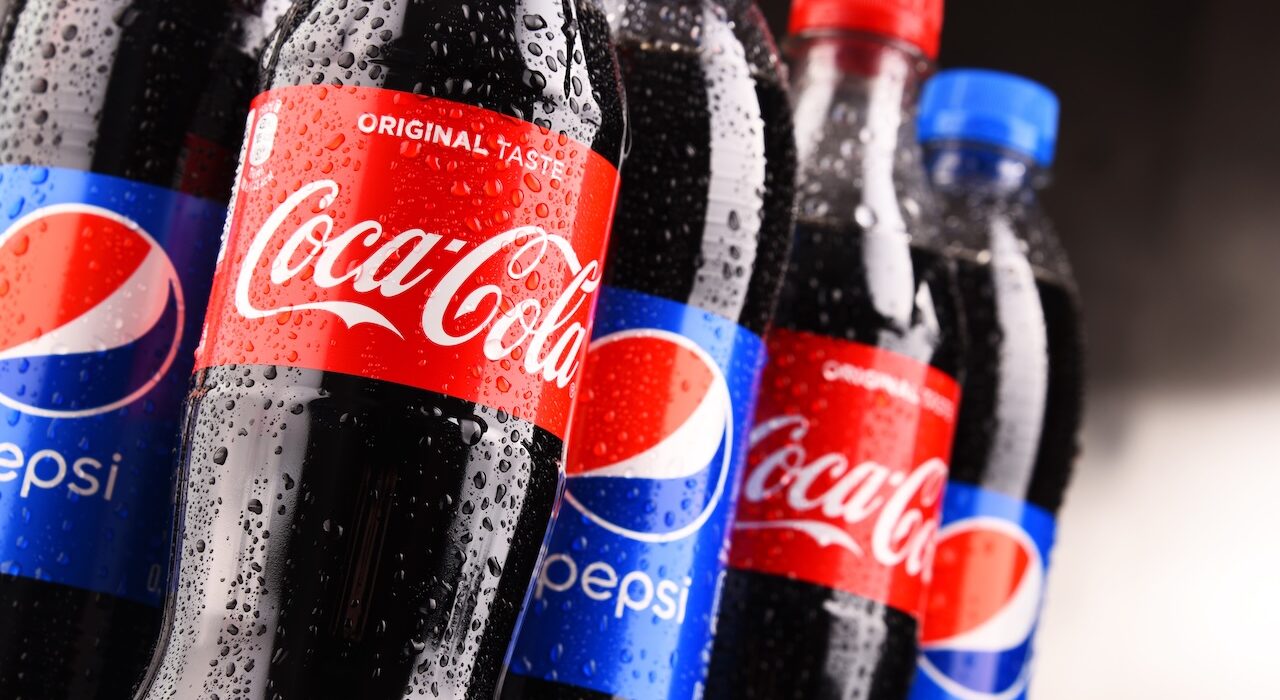
In the century-long rivalry between Coca-Cola and Pepsi, the battles have rarely been waged on taste alone. Advertising campaigns, celebrity endorsements, and global sponsorships may have grabbed the headlines, but a quieter war was being fought in factories, delivery trucks, and vending machines. Packaging — its shape, materials, and symbolic weight — was one of the fiercest weapons. From glass curves to aluminum gleam to plastic innovation, each breakthrough reshaped not only the companies’ fortunes but also the modern consumer economy.
The story begins in 1915, when Coca-Cola faced a fundamental problem: imitators. Local bottlers filled generic bottles with copycat concoctions, threatening to blur Coke’s identity. That year, the company launched a design challenge for a container so distinctive that it could be “recognized by touch alone and so unique it could be identified when shattered on the ground.” The winning design came from the Root Glass Company of Terre Haute, IN. Its silhouette, inspired loosely by the cocoa pod, became the now-famous contour bottle.
The bottle was patented in November 1915 and quickly rolled out nationally. A century later, Coca-Cola still highlights this origin story in its museums and marketing. As company archivist Phil Mooney once explained, “We wanted something that people would remember and identify instantly.” According to the 2015 documentary film Designing the Coca-Cola Bottle, this shape was both a marketing masterstroke and a deterrent against counterfeiting. It gave Coca-Cola ownership not just of a taste, but of a form recognizable even in the dark.
For decades, this glass bottle was the face of Coca-Cola. But after the Second World War, packaging became a contested battlefield. RC Cola — not Pepsi or Coke — was the first to sell soft drinks in cans, debuting steel cans in 1954. A decade later, RC pioneered the all-aluminum beverage can in 1964. The giants took notice. Pepsi began investing heavily in cans in the 1950s, recognizing the advantages: lighter than glass, unbreakable, and ideal for vending machines, which were sprouting across the United States. Coca-Cola, cautious at first, soon followed.
By 1967, Coca-Cola had moved decisively into aluminum cans. Aluminum offered several advantages over steel: lighter weight, lower transportation costs, and — at a time of rising environmental awareness — the possibility of recycling. Aluminum also presented new branding opportunities. Rows of brightly printed cans in supermarkets and vending machines reinforced advertising campaigns at the very moment of purchase.
The next great leap arrived not in metal but in plastic. In 1973, Nathaniel Wyeth, a DuPont engineer and brother of the painter Andrew Wyeth, patented the polyethylene terephthalate (PET) bottle. PET was shatterproof, transparent, and dramatically lighter than glass. Five years later, in 1978, Coca-Cola introduced its first 2-liter (half a gallon) PET bottle — a format that would transform consumption habits. Larger bottles catered to families, parties, and price-sensitive shoppers. Pepsi quickly followed, leaning on its youthful branding to promote cola as a shared, social drink.
The 2-liter bottle changed supermarket shelves forever. Stacks of family-sized PET containers encouraged bulk buying and shifted consumption from single-serve occasions to multi-day household use. For retailers, the economics were irresistible: larger units moved more product at lower cost. For the cola makers, PET delivered operational savings and distribution efficiencies. Coca-Cola’s own annual reports from the early 1980s emphasized PET’s impact on transport and bottling costs.
By the late 20th century, packaging had become an integral part of the cola war. The contour bottle defined Coca-Cola’s identity; cans fueled Pepsi’s convenience and portability; PET bottles expanded consumption and made both companies fixtures in supermarkets and households.
Innovation in Layers
The evolution of cola packaging reveals three overlapping waves of innovation: branding, distribution, and sustainability.
The first wave was branding. The contour bottle made Coca-Cola iconic, instantly recognizable worldwide. Pepsi, meanwhile, leaned on cans to reinforce its “Pepsi Generation” ethos in the 1960s and ’70s. Aluminum turned packaging into an advertising medium, with reflective logos and bold colors amplifying youth-oriented campaigns. As marketing chief Roger Enrico later wrote in his memoir The Other Guy Blinked, the cola wars were a battle for mind share, shelf space, and cultural symbolism. Packaging helped win all three.
The second wave was logistics. Steel cans reduced breakage and weight; aluminum improved recyclability and stacking efficiency. PET multiplied these benefits. The new bottles were lighter, safer, and easier to ship in bulk. They opened markets where glass was impractical, from beaches to stadiums. And they allowed for creative shapes that maintained brand identity — Coca-Cola went to great lengths to preserve the contour silhouette even in plastic. “If we lost that silhouette, we’d lose part of the brand’s soul,” a Coca-Cola packaging engineer reportedly told Packaging World in 1996.
In addition, PET accelerated production lines and reduced costs, although precise savings varied by market. By the 1990s, the PET bottle was not only the dominant package for colas but also a standard in bottled water and other soft drinks.
The third wave, still underway, is sustainability. By the 2000s, the very packaging innovations that had enabled global expansion were under scrutiny. Plastic waste became a public concern. Regulators and NGOs targeted single-use bottles as symbols of environmental degradation. Coca-Cola and Pepsi had to respond.
In 2009, Coca-Cola launched its PlantBottle, made of up to 30% plant-based materials such as sugarcane and molasses. Then-CEO Muhtar Kent described it as a significant development in sustainable packaging innovation, setting the course for bottles made with materials that are 100% recyclable and renewable. Two years later, PepsiCo announced its own prototype: a bottle made entirely from renewable resources, including switch grass, pine bark, and corn husks. Pepsi executives described it as a step toward a “bottle of the future.”
The commitments have grown more ambitious in the 2020s. PepsiCo has pledged to convert all Pepsi-branded products in the United States to 100% recycled PET bottles by 2030. Coca-Cola in 2022 set a goal of making at least 25% of its packaging reusable by the same year.
Analysts underline the irony: packaging innovations once celebrated for reducing costs and modernizing supply chains are now being redesigned to reduce carbon footprints. The cola war that began over taste and shape is now being fought over sustainability and ethical responsibility, as companies face pressure from investors, consumers, and the public.
Despite the shifts, the underlying principle remains the same. Packaging is a silent salesman, a logistical workhorse, and increasingly, a moral test. It has carried Coca-Cola and Pepsi through wars of imitation, convenience, and scale. Now it carries them into the war of public trust.
The great cola war of packaging is, at its core, a study in how physical innovation can shape industries. A century ago, Coca-Cola sought a bottle that could be recognized in the dark. Fifty years later, Pepsi used cans to dominate vending machines and convenience stores. In 1978, Coca-Cola’s 2-liter PET bottle redefined household consumption. And today, both companies are racing to design bottles that can disappear harmlessly into recycling streams — or never leave them at all.
As Coca-Cola’s chief marketing officer, Marcos de Quinto, said in 2016, “Packaging is our most visible and valuable asset.” It has also been the company’s sharpest sword. And the duel is far from over.