
Shanan Cox, senior director of merchandising within the produce team at Sam’s Club, grew up in Missouri in a family where agriculture was both livelihood and operating model. On both sides, her grandparents ran large dairy operations, and her family was also involved in beef farming. Through her father, she was exposed to the oil and gas business as well.
That background shaped how she views the food system. “From a very early age, I saw agriculture not as just production, but as decision-making, risk management and long-term thinking,” says Cox. “That background has given me a very deep respect for the people behind the product and a clear understanding that food doesn’t just appear on a shelf. It’s a result of hard work, investment, and a lot of variables outside of anyone’s control.”
What drew her toward retail and fresh produce was the chance to close the loop between field and shopper. “Retail is where all of that work either delivers on its promise or it doesn’t. Being part of getting that right has always really mattered to me,” she explains.
After earning both her bachelor’s degree in business administration and an MBA from Missouri State University, Cox built her career across sourcing, merchandising and account management. She spent more than five years at Springfield, MO-based Market Fresh Produce, a large distributor, starting in 2010, in senior leadership roles spanning supply and distribution, national accounts, and brand strategy. She joined Sam’s Club in 2015 as a buyer in produce, advancing to senior merchant and, in 2023, to her current role.
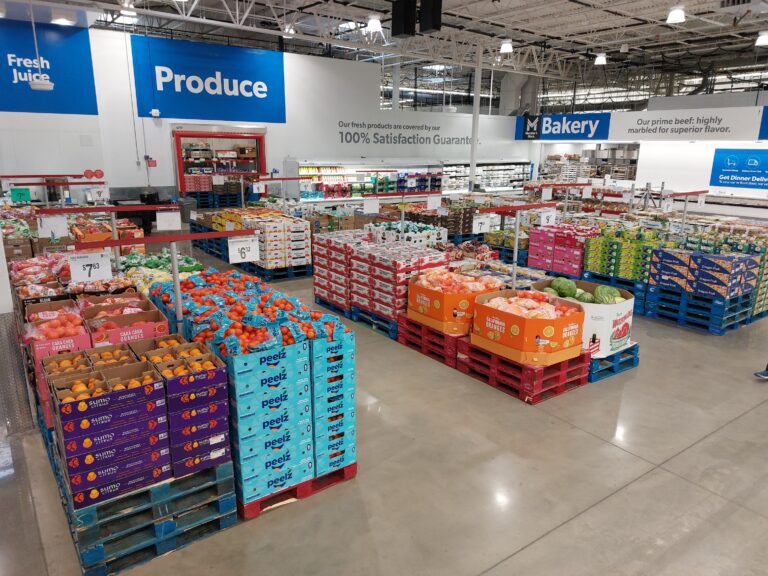
Today, Sam’s Club, the membership club retailer owned by Walmart, and headquartered in Bentonville, AR, operates more than 600 clubs across the United States and Puerto Rico, in addition to 200 locations across Mexico and China. Its model is deliberately streamlined: a limited SKU count, large pack sizes, and scale efficiencies designed to deliver value to members.
Looking back over her career, one lesson continues to guide her decision-making. “Success in produce specifically isn’t just about availability,” she says. “Having something on the shelf isn’t the same as delivering value. Quality, consistency, and performance are how we build trust.”
For Cox, that principle is not theoretical. When produce fails to meet expectations, she notes, the impact extends beyond a single item. It can weaken confidence in the category as a whole. “That’s why I focus so much on fundamentals, listening closely to our operators and our partners, our growers, and making decisions that support long-term consistency rather than short-term wins. It’s easy to get caught up in short-term wins early in your career. There have been some lessons in that area for me for sure.”
In the conversation that follows, Cox expands on how those fundamentals translate within a high-volume club environment: how scale sharpens discipline, how larger pack sizes intensify expectations around freshness and performance, and how supplier relationships must evolve to support resilience. She also discusses what advice she would give to younger professionals entering the sector today, and offers her vision for the future of the industry.
How did Sam’s Club’s different scale and model, compared to conventional grocery, shape your own learning curve?
I think the club model sharpens focus really quickly. We’re SKU-limited, we have a much more curated assortment, and we operate at significant scale, so every decision we make matters. There’s less room for complexity and very little room for inconsistency.
Scale amplifies both success and failure. When execution is strong, members sense it immediately. But when something falls short, it’s equally visible, and they tend to remember that more than the positives. You’re only as good as your last win.
That environment reinforces accountability and partnership. It’s really taught me that quality and execution are not optional at scale. They’re essential, especially in a club model.
How would you characterize the role of produce within the broader Sam’s Club value proposition for members?
Produce plays a foundational role, but only when quality is not compromised. It’s not good enough to simply have the product available and on the shelves. Our members expect produce that looks good, tastes good, and performs at home, especially when they’re buying large pack sizes. That requires extreme focus on variety selection, sourcing discipline, and overall execution.
The right varieties matter. Harvest timing matters. Cold chain integrity matters. When those elements are aligned, the produce department builds trust and reinforces why members choose to shop with us. When they aren’t aligned, no price point can compensate for those misses.
How do you balance price leadership with quality, consistency, and member expectations in fresh produce?
Price leadership only works when quality is protected. It goes back to some of the points I mentioned earlier. Members don’t separate value from experience. They look at them together.
Our focus is on delivering the best quality available at scale. That requires strong partnerships, clear standards, and disciplined execution. Quality is not a trade-off. It’s the foundation. It’s what makes value sustainable and keeps members coming back.
Are there specific ways the produce department is evolving compared with a few years ago?
Yes. I think the department overall has become more intentional and more disciplined. There’s a greater focus on consistency, sourcing resilience, and executional excellence. The produce industry is operating in a much more complex environment than it did in years past, and that has reinforced how important fundamentals really are.
We’re also seeing higher expectations around transparency and performance from our members. They want confidence in what they’re buying, and that puts pressure on the entire supply chain to deliver consistently.
How do data, scale, and operational discipline influence merchandising decisions at Sam’s Club?
Data is obviously a hot topic right now. Data helps us understand demand, seasonality, and performance. But discipline is what turns those insights into results. At scale, forecasting accuracy, replenishment, and club standards are critical.
Produce will always involve variability. The best decisions come from combining data and technology with experience, strong relationships, and operational understanding. Technology supports the process, but experience and judgment are what really matter in produce. There is more data available now than there was a few years ago. But it’s easy to get lost in the data if you’re not careful. That’s why experience is still so important in this category.
How does selling produce primarily in larger pack sizes shape how you think about freshness, shrink, and value?
Larger pack sizes raise expectations. Any small problem becomes a large, very visible problem.
Members are making a bigger commitment when they buy those pack sizes, and they expect the produce to hold up across multiple uses. That puts pressure on freshness, supply chain execution, and overall quality. Issues surface very quickly at volume, and that reinforces why sourcing discipline and handling standards are such a focus for us.
When it’s done well, larger pack sizes deliver very strong value and can reduce waste for members. But when something misses, it’s amplified.
What changes in customer behavior are you seeing most clearly in the produce department right now?
Members remain very focused on fresh food and health, but I think they’re more intentional now and more value-conscious.
They want confidence that what they buy will perform and support how they eat. That has always mattered, but it feels more amplified right now.
There’s also a growing awareness around the role food plays in overall well-being. Produce sits at the center of that conversation. But interest alone isn’t enough. When quality is inconsistent, it discourages repeat consumption. When quality is reliable, it reinforces healthy habits.
How do you think about assortment discipline versus experimentation in a high-volume environment?
Discipline comes first. In a high-volume environment, complexity very quickly becomes risk.
With that said, thoughtful experimentation still matters when it’s purposeful. Innovation should improve the member experience. It shouldn’t just be new for the sake of being new. It needs to be strategic and very intentional when we introduce new items. Execution always comes first.
Where do you see the biggest opportunities to drive incremental produce consumption within the club format?
The biggest opportunity is trust. When a member knows they can consistently buy produce that will perform at home for them and their families, they buy it more often and they use more of it. I’m a perfect example of that.
The growing focus on food as part of a healthy lifestyle creates momentum for produce. Retailers have an opportunity to reinforce healthy eating by making produce dependable, easy to use, and consistently high quality. When we reduce friction and disappointment, consumption follows naturally.
From your perspective, what separates a strong produce supplier from an average one today? Where do you see room for them to bring more value?
I get asked this question a lot. I think strong suppliers deliver consistency, transparency, and, above all, strong partnerships and relationships. They understand scale. They communicate early, and they help solve problems in a proactive way.
The best partners don’t just supply products. They navigate volatility and protect quality across the system. They keep the end user front of mind, the member or consumer who is actually consuming their product, not just delivering to their immediate customer.
Do you have any advice for produce suppliers hoping to work specifically with Sam’s Club?
Absolutely. It’s very important to understand our model and understand our members. Who are you serving? Who is the end user? Be prepared to operate at scale with discipline and consistency. Strong communication and a long-term mindset matter just as much as the product itself.
How do supplier expectations need to change when working with a retailer like Sam’s Club?
At scale, reliability becomes non-negotiable. Volume amplifies everything, both the good and the bad. That means capacity planning, quality standards, and execution discipline are all critical. Protecting the member experience is always the priority, and successful partners align to that mindset.
Are there areas where retailers and suppliers still fundamentally misunderstand each other?
Overall, Sam’s Club has fantastic partnerships with suppliers. But across the industry more broadly, I do think there are areas of opportunity.
Retailers can underestimate some of the production challenges and environmental issues that suppliers are navigating. At the same time, suppliers can underestimate how quickly execution issues impact member trust.
The strongest relationships are built on transparency, shared goals, and mutual respect for the entire system. Both sides need to keep that top of mind.
How do you see the role of technology evolving in produce department merchandising, forecasting, and replenishment?
Technology brings the opportunity to improve forecasting, visibility, and efficiency. It helps teams be more proactive and better prepared for change. But produce is still a biological category. Technology works best when it supports people and experience in decision-making rather than replacing them. It’s a support tool. Experience and judgment still matter tremendously in produce.
Looking five to 10 years ahead, what does produce retail need to get better at, fast?
Resilience and execution are top of mind for me. The industry has to respond faster to change while still maintaining what matters most to members — affordability, quality, and access. If we want people to eat more produce, we have to earn their confidence. That starts with quality and strong fundamentals.
For younger professionals entering produce today, what mindset will matter most if they want to build a long career in retail?
It’s changed a little since I began in the industry, but there are certainly some things that have remained consistent.
I think being curious, adaptable, and definitely having humility in your career is important. Produce is one of the most complex categories in retail, and it’s becoming even more dynamic in the current environment. Conditions change quickly, whether it’s labor, weather, or customer expectations.
The people who build long-term careers are those who stay curious, ask good questions, respect the expertise of their growers, suppliers, and front-line teams. The humility portion of that is extremely critical, because produce will always remind you that you don’t control everything.
The strongest leaders are the ones who learn continuously and collaborate well.
What is your vision for the future of the grocery and produce industries?
I’m extremely optimistic about the future of produce because it sits at the intersection of health, value, and trust. There’s a growing awareness around the role fresh food plays in well-being, and produce is uniquely positioned to lead. But leadership starts with execution.
Retailers and suppliers have both an opportunity and a responsibility to reinforce healthy eating by delivering consistent, high-quality products that perform every time. When we do that, we don’t just drive sales. We build habits, loyalty, and long-term impact.