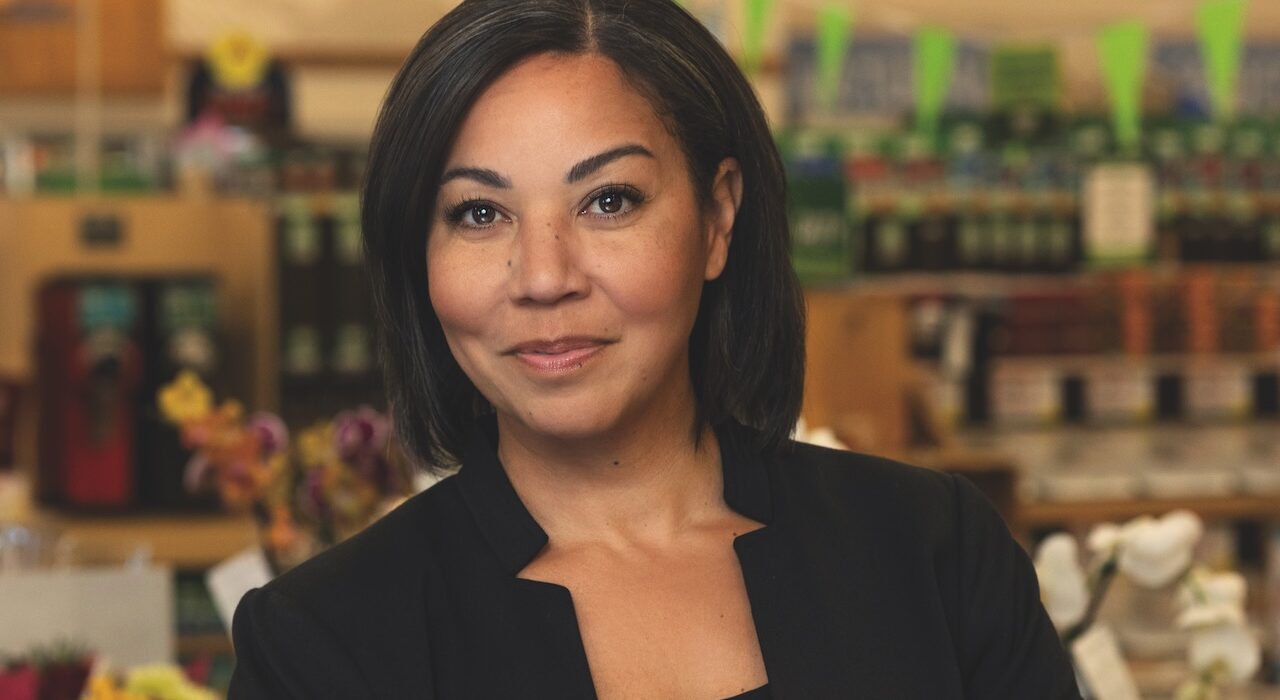
After more than two decades in retail — spanning apparel, home goods, and pet — Sonya Constable stepped into the fast-moving world of fresh produce. Two years into her role as vice president of produce at Sprouts Farmers Market, a supermarket chain based in Phoenix, she now leads one of the most distinctive produce programs in U.S. grocery — known for its focus on health, freshness and organics.
Based in Phoenix, Constable grew up in Tucson, AZ, attended the University of Arizona, and began her career in supply chain and planning at the now-defunct department store Mervyn’s. She later moved into merchandising and buying, eventually holding leadership roles across a range of categories. While her background doesn’t mirror the traditional produce career path, it gave her a strong understanding of how to build strong retail experiences — and how to keep the end customer in mind.
She joined Sprouts just after the pandemic, initially overseeing the bulk department during a transitional period. “I made the move into grocery because it was Sprouts — the company really aligns with my values. And at this point in my career, that alignment matters a lot,” she says.
When asked to step into produce, she brought not just operational experience but a new lens. “I came in with a strong customer point of view,” she says. “That’s been a big part of what’s made us successful — marrying customer insight with our team’s deep produce knowledge. It’s been a really great dynamic.”
At Sprouts — which employs 35,000 workers and operates more than 400 stores in 24 states — Constable sees the produce department as central to the retailer’s identity. She and her team are focused on keeping freshness at the core, while also expanding opportunities for flavor discovery, seasonal innovation, and product sampling. She’s also helped guide Sprouts’ growing attention to strategic sourcing, new growing regions, and long-term supplier partnerships — key elements for delivering on both quality and consistency.
Constable views the produce category as uniquely rewarding: a part of the grocery store that directly supports shoppers’ health goals and connects them to where their food comes from. “Produce is the original whole food,” she says. “We get to deliver something nourishing and real, and that’s a powerful thing to be part of.”
Here, Constable discusses the evolution of her department, her priorities around freshness and innovation, how she approaches supplier relationships, and the consumer trends she’s watching — from regenerative agriculture to regional sourcing. She also shares her thoughts on speed, storytelling, and what the industry needs to do to keep growing consumption in the years ahead.
To someone just starting out in the grocery or produce world today, what advice might you give them?
I think I come at this from a bit of a different perspective. If you’re a good merchant in retail, you’re a good merchant, and you can learn what you need to learn. I think I’ve shown that, coming into produce later in my career.
I’ve also brought people onto my team who’ve been able to learn from their peers. So my advice would be: don’t be afraid to step in. Produce can be intimidating because it’s complex and fast-moving, but it’s learnable. And that’s the key — if you’re smart, passionate, and willing to learn, you can be very successful in produce. It’s a really fun place to be.
What are your current priorities for the produce department at Sprouts?
You’re going to hear this from me a lot — it’s the customer. The customer is what we’re laser-focused on. My team and I are really working to create an engaging shopping experience. We want customers to discover new items they’ve never seen or tasted before. We want to help them find the product attributes that are important to them. Our customer base leans more toward organic than the traditional grocery shopper, so we need to deliver on that. It’s a key priority.
Freshness is another big one. In produce, you’ve got nothing without fresh. It’s critical for us to give customers more time at home with the product, so they have a great experience not just in our stores, but after they leave as well.
As a retailer, being dialed into your customer is the only way to win. And what our customer wants at Sprouts is very different from what the customer at a big-box retailer is looking for. So we have to be consistent about listening to our customer, understanding their needs, and delivering on those — always with that lens of freshness.
How do you ensure freshness?
We spend a lot of time working with local suppliers. That’s key — not just for freshness, but because those relationships matter to us.
So, step one is how we source the product. Step two is what our supply chain does with it. We have our own produce distribution centers, and how we handle the product throughout the supply chain is critical.
And then the final piece is at the store level — how stores handle the product, how they cull it, how they rotate it, how they treat it, and how much refrigeration we have on the floor.
All of that matters for freshness. And the great thing is, everyone — from supply chain to merchants to the stores — knows our produce strategy and is moving in the same direction.
How do you see your department evolving over the coming years?
I think over the coming years, my goal is to get fresher and to get better. We’re going to keep running at this. The experience for our customer is everything.
Produce will continue to be the shining star in the middle of the Sprouts store. So as a team, it’s important for us to keep bringing new products to our customers — new flavors to experience, more opportunities to taste a Verry Cherry plum or pick up some of the freshest greens they can find.
For us, it’s about continuing to do what we do really well: delivering a great experience.
On that new product angle — do you find there’s a lot of demand or curiosity for new varieties or completely different items that shoppers maybe haven’t seen before?
We see our customers get really excited about that. Summer is the best time, with all the seasonal fruit coming in.
We do a lot of sampling, because sometimes you’ll see something on the shelf that looks interesting, but you have no idea what it tastes like or how to use it. That’s why it’s so important for us at the store level to get it into the customer’s mouth — so they can actually experience something new and different. That’s one of the great things about working in produce.
Could you share a specific example of a recent innovation in your produce department, whether in sourcing, merchandising, or display, that you’re especially proud of?
We always put innovation through a customer lens, whether it is product, merchandising, display, or supply chain. In merchandising, we launched new wet wall fixtures in all our stores; they allow us to manage the inventory levels by volume group, so whether it is a low-volume or high-volume store the product will always look fresh and full.
Could you talk a bit about how Sprouts approaches relationships with smaller or regional growers — or just growers in general?
One of the most important things to us is strategic partnerships. Historically, sourcing was very transactional — conversations centered around what’s happening this year or this season.
Now, we’re approaching it differently. We’re talking long-term with our suppliers — not just about what they can deliver for us, but how we can support them as true partners. We want to be boots on the ground, understand their challenges, and help them succeed.
We’re building long-term relationships, not transactional ones. We both win if we’re both successful. Both of our business models have to work if we want to get where we need to go in the future.
Organic produce has seen tremendous growth over the past several years and decades. How does that growth compare to the rest of the produce department at Sprouts?
For our customer, it’s definitely growing faster — faster than the rest of the market, in fact. We penetrate much higher in organic than the broader market because that’s what our customer expects from us. It’s been a bit easier for us to source organic vegetables, so that’s where we’ve seen the most traction so far. But when we think about our long game — and about long-term conversations with suppliers — fruit is a big focus. That’s a longer play, because you’re planting trees, and that takes time.
Still, it’s important for us to grow that side of the business, because our customer wants it. They’re looking for flavor, but they also want the organic attribute — because it matters to them, and to how they feed their families.
What advice would you offer fresh produce suppliers who want to partner with Sprouts?
My advice would be: know our customer, and find a way to be different.
We already have strong, strategic relationships with our current suppliers. So for new partners, we’re looking for something unique — something we’re not already getting from existing relationships. That could be a new flavor, a new variety, or even a new product altogether.
There’s definitely room for differentiation, but I’d encourage any potential supplier to really think about what’s special about what they’re bringing to the table. That’s how they can help us continue to grow our relationship with the customer.
When evaluating new supplier relationships, what are some of the common mistakes or missed opportunities you see from potential partners — and what would make a grower really stand out to you?
When evaluating potential partners, a common mistake that I see is suppliers coming to us offering things that we already carry from regions that we already source from. We have very strong growing partners across the world, and to stand out it is important to offer something different. That may look like unique assortments, packaging innovation, or growing regions that fill in gaps. Growers should be thinking about what the customer would be looking for in freshness and flavor to deliver something new.
We already have those deep partnerships in place. And for those partners to stay healthy, we can’t treat them transactionally or drop them at a moment’s notice.

Are new varieties something you actively look for?
Absolutely — that’s very attractive to us, because it’s attractive to our customers.
But there are other ways to bring differentiation, too. One is new growing regions. We’re always looking at ways to shorten the distance between the field and our distribution centers. There are regions we haven’t yet partnered with that offer great opportunities to bring fresher product to market.
There’s also innovation happening in the supply chain — in how goods are moved and handled. That’s another area we’re very interested in. So while product is key, there’s a lot of opportunity to innovate beyond the product itself.
You mentioned exploring new growing regions and innovation in supply chains. Are there any particular regions or technologies you’re currently excited about?
We are excited to be expanding into new regions as a company that unlocks sourcing in new geographies. For example, we are expanding into the Midwest where we will need to find growing partners. It is important for us to keep the growing close to our stores to deliver the freshest product. We will always try to source local first as we expand into these new regions.
How do you see the relationship between retailers and suppliers evolving over the next decade or so? I mean across the industry, not just at Sprouts.
I think we’re going to see a deepening knowledge of each other — and that’s where we all start to win. Not just the Sprouts customer, but the produce customer in general.
When suppliers begin to take a customer-centric view of what they’re growing, and retailers really invest in understanding who their suppliers are, what their challenges are, and how to find solutions together — that’s where the industry gets stronger.
That kind of alignment ultimately benefits the customer. And that’s what we all want in produce: to increase consumption of fresh fruits and vegetables across the board, not just within individual banners.
What are the most important steps grocers and suppliers can take to strengthen resilience across the supply chain?
I think it comes down to communication. We have to understand one another — understand each other’s strengths, understand each other’s challenges.
There’s no magic bullet when it comes to strengthening the supply chain. It’s going to take work. It’s going to take education. And it’s going to take real partnership if we want to get really good at this. Ultimately, the customer is going to benefit — and every retailer and supplier that figures this out together is going to come out stronger.
Where do you see the greatest opportunities for innovation in fresh produce logistics and procurement?
I’d say technology is the biggest area we haven’t fully tapped into yet. There’s a lot happening — and it’s happening fast — when it comes to tech in produce.
That’s where I see the innovation coming from in logistics and procurement. The potential is there. It’s going to take a lot of knowledge and education on both sides — retailers and suppliers — to unlock it.
Ultimately, it goes back to getting more time at home for the customer. If we can deliver fresher product with more shelf life once it’s in their kitchen, that’s the kind of innovation that’s going to help grow produce consumption.
And on that tech topic — do you see artificial intelligence playing a role in the logistics chain or procurement strategies?
Definitely. I think AI can definitely help with demand forecasting. It can help us get the right amount of each product to the right distribution centers at the right time. That means faster turns, which is really important.
There’s also technology out there that can improve how goods flow through the distribution center — the layout, the routing, the efficiencies. And there’s tech focused on ripening, too — helping us get more dialed in on bananas, mangoes, avocados.
There’s a lot of innovation happening, and I think in the long run, all of it is going to benefit the customer.
How do you think fresh produce retailing will change in the next five to 10 years?
I think the ultimate goal will stay the same — but how we get there is what’s going to change.
That end goal is still about delivering a fresh product and giving the customer more time with it at home. That’s always going to be the expectation when it comes to produce.
What’s going to evolve is the how: using tech to move product more quickly, getting faster turns on shelf, improving our forecasting, and even bringing more fun and flavor to the assortment.
I think we’ll find ways to improve the eating experience, especially for items that might not taste as good today. So there’s a lot of opportunity ahead — but the end game remains the same.
What consumer behavior trends are you paying attention to that you think others in the industry should be watching?
I think everyone needs to be dialed into who their customer is. You don’t win as a retailer if you don’t know your customer. That, to me, is the most important thing any retailer can focus on — understanding your customer and figuring out how to deliver what they’re looking for.
People can try to duplicate what Sprouts is doing, but our customer is different. So if you want to win in your space, you have to know your space — know your customer — and find out how to win with that person.
Across our store — not just in produce — we’re seeing customers look for attributes that align with their diets and how they feed their families. At Sprouts, you can easily shop for a gluten-free diet, a vegan diet, a high-protein diet — and you’re not the person tucked into a corner of the store. You’re the focus.
We’ve brought a lot of innovation and flavor to products that also offer those attributes. That’s been really important for our customer.
We’re also seeing growing interest in things like regenerative agriculture. Customers are starting to care more about what’s happening to the land where food is grown. They want to know the soil is being treated with respect. That’s a trend I see gaining momentum.
If you could change one thing about how the produce supply chain functions today, what would it be?
I’d want it to be faster. Ultimately, it’s about the customer and their experience. The faster we can move product through the supply chain — without damaging it — the better the experience is for the customer at home.
That’s always the goal: make the customer happy and give them the best possible product experience.
And just one final question — what’s something that worries you about the produce industry, and what’s something that excites you about its future?
What keeps me up at night is that you can have the best laid plans in produce — and then Mother Nature steps in and changes everything.
I like to be thoughtful and planful in how we show up, but we’re in a business that depends on growing conditions. That’s not always easy to manage, and it brings a lot of uncertainty.
But what excites me is the sheer amount of opportunity in produce. There’s so much potential to grow consumption and get healthy food into people’s homes across the country.
That’s fun. It’s a great reason to come to work. I know I’m doing something good for our communities — and that feels really good.