
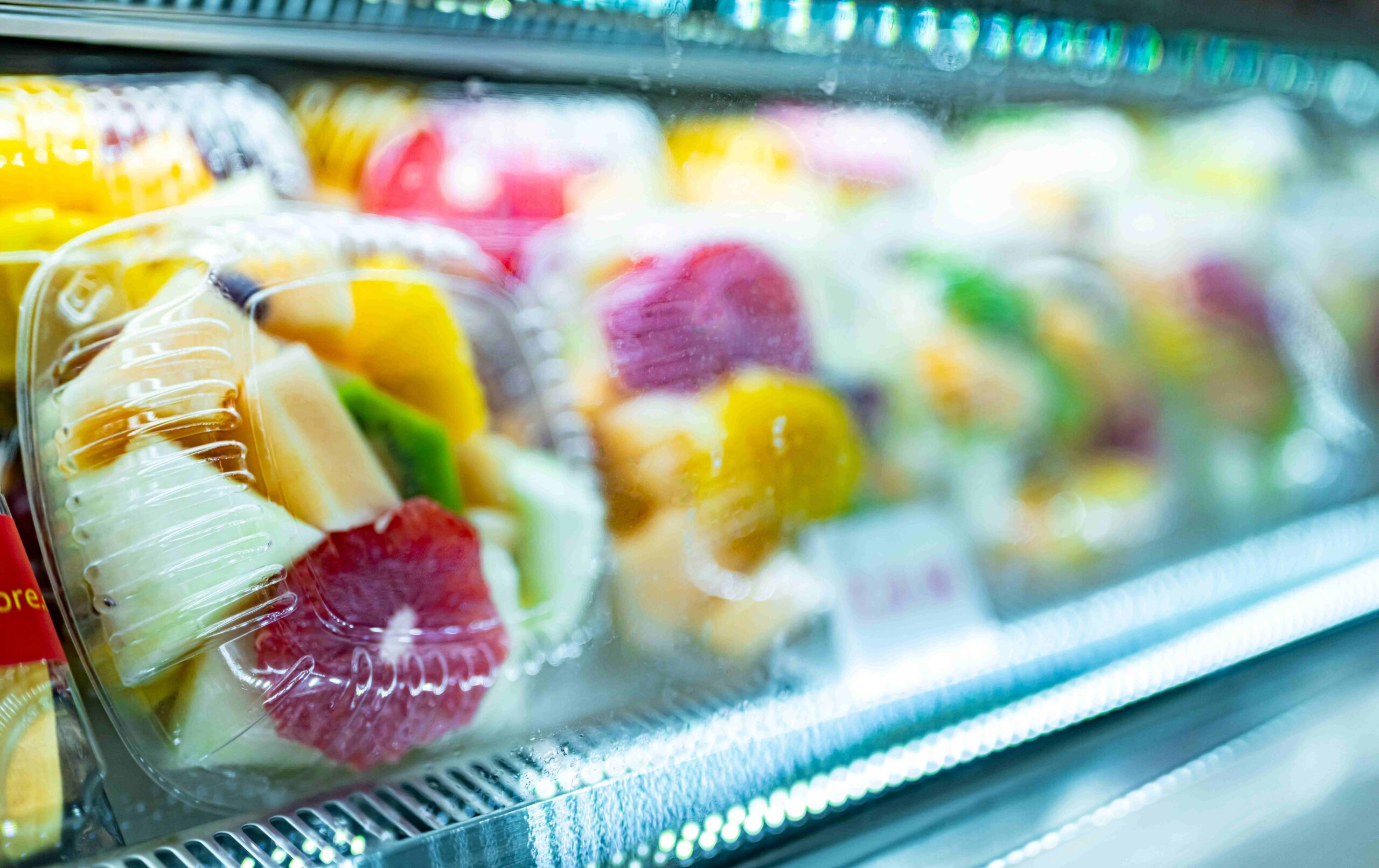
Extended producer responsibility (EPR) regulations for packaging are gaining ground, shifting more responsibility for plastic and other packaging waste from taxpayers to producers and suppliers. For fresh produce, the question is whether the industry can meet those rules without compromising shelf life, food safety or affordability.
Vonnie Estes, vice president of innovation at the International Fresh Produce Association (IFPA), says the U.S. picture is fragmented. Seven states now have packaging EPR laws in place, but their scope, timelines and compliance requirements differ. Penalties for non-compliance can also vary considerably.
“It’s been a huge traceability and documentation problem,” says Estes. “Most of the time [fines] can go to the producer, but [they] can go to the retailer as well.”
Estes oversees a USDA FAS-funded grant at the IFPA to find alternatives to single-use plastics that will allow U.S. growers to export. “We may be compliant in the U.S., but when we export to Europe or Asia, or even Canada, we have to be compliant with their standards,” she explains. “A lot of what’s driving innovation right now is regulation, and the regulation kind of got ahead of solutions, so we’re trying to figure out how to come up with solutions.”
According to Kay Cooksey, a professor in food, nutrition, and packaging sciences at Clemson University in South Carolina, some companies are making “baby steps” toward compliance with EPR, while others are making massive changes, such as switching over entirely to paper. Others still are just starting to incorporate some recycled content into their packaging materials.
However, she has her doubts about how far the move toward fully sustainable packaging will go. “The infrastructure for handling the volume of 100% recyclable and compostable materials is not there, so the incentive isn’t there either, except for the fact that Europe is driving it,” says Cooksey.
“I don’t really see us implementing [regulations] to the same degree that Europe is, but we still have to implement close to it because of global markets.
“Priority No. 1 for companies I’ve been talking to is shelf life, and then if they can get sustainability, that’s great. If they can’t get the shelf life, they will sometimes need to throw sustainability out the window.”
The Plastic Reduction Goal
Reducing or eliminating plastic packaging has long been a goal of sustainability campaigners; indeed, California’s SB 54 requires all single-use packaging and single-use plastic foodservice ware sold in the state to be recyclable or compostable by 2032.
Cooksey says incorporating recycled content into food packaging is not always practical. Suitable recycled material can be difficult to source, and even when available, its quality and purity may not meet food-packaging requirements.
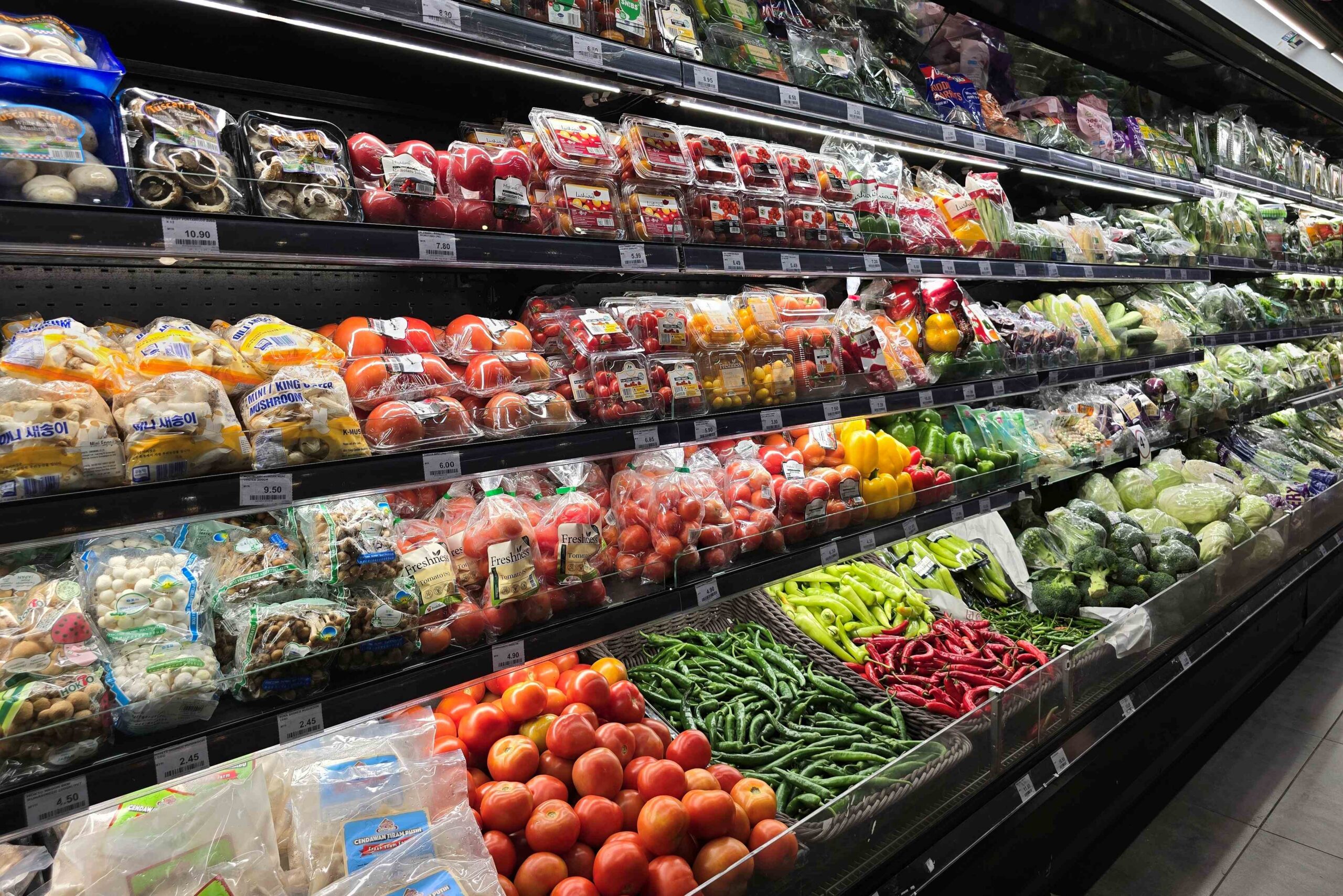
If a food company needs to eliminate plastic, one option would be paper or paper-based packaging, but it is not practical in every situation. “Switching from a molded container to a paper tray for in-field packaging is … just not going to work because a paper container would not be strong enough to protect fruit during lengthy sea journeys and won’t provide possible barrier protections needed to control ripening.”
Similar policy proposals have met resistance elsewhere. In 2023, the Canadian government proposed a pollution-prevention planning notice calling for at least 95% of fresh fruit and vegetables to be sold in bulk or plastic-free packaging by 2028.
“We actually had some U.S. vendors saying, ‘if this happens, we’re not going to ship to Canada,’” recalls Dan Duguay, senior director, sustainability, at the Ottawa, Ontario-headquartered Canadian Produce Marketing Association (CPMA).
The proposals, according to Duguay, triggered a industry-led Regulatory Impact Assessment, which pointed out that such a move could have a dire impact on food waste, affordability and availability, and even exclude some categories from the Canadian market.
“This revealed just how critical the functionality of packaging is for the industry — things like ensuring food safety, mitigating loss or waste, and maximizing shipping efficiency,” he says.
Estes at the IFPA agrees: “One of the reasons we rely on plastic so much is because it works so well for food safety, extended shelf life, and just protecting the product. What we’re starting to see now is we’re trying all these different kinds of solutions, but they end up increasing food waste.”
When one unnamed UK grocery retailer switched from plastic cartons to fiberboard for berries, food waste rose 50%, says Estes.
“What are you really solving for?” she says. “Is that better than not having a plastic clamshell?” Her point is that packaging decisions have to account for the resources lost when more product is wasted.
According to Estes, the industry is now beginning to take a more systems-based approach to the problem by looking at the overall environmental impact, rather than just focusing on eliminating plastics.
Ahead of the Game
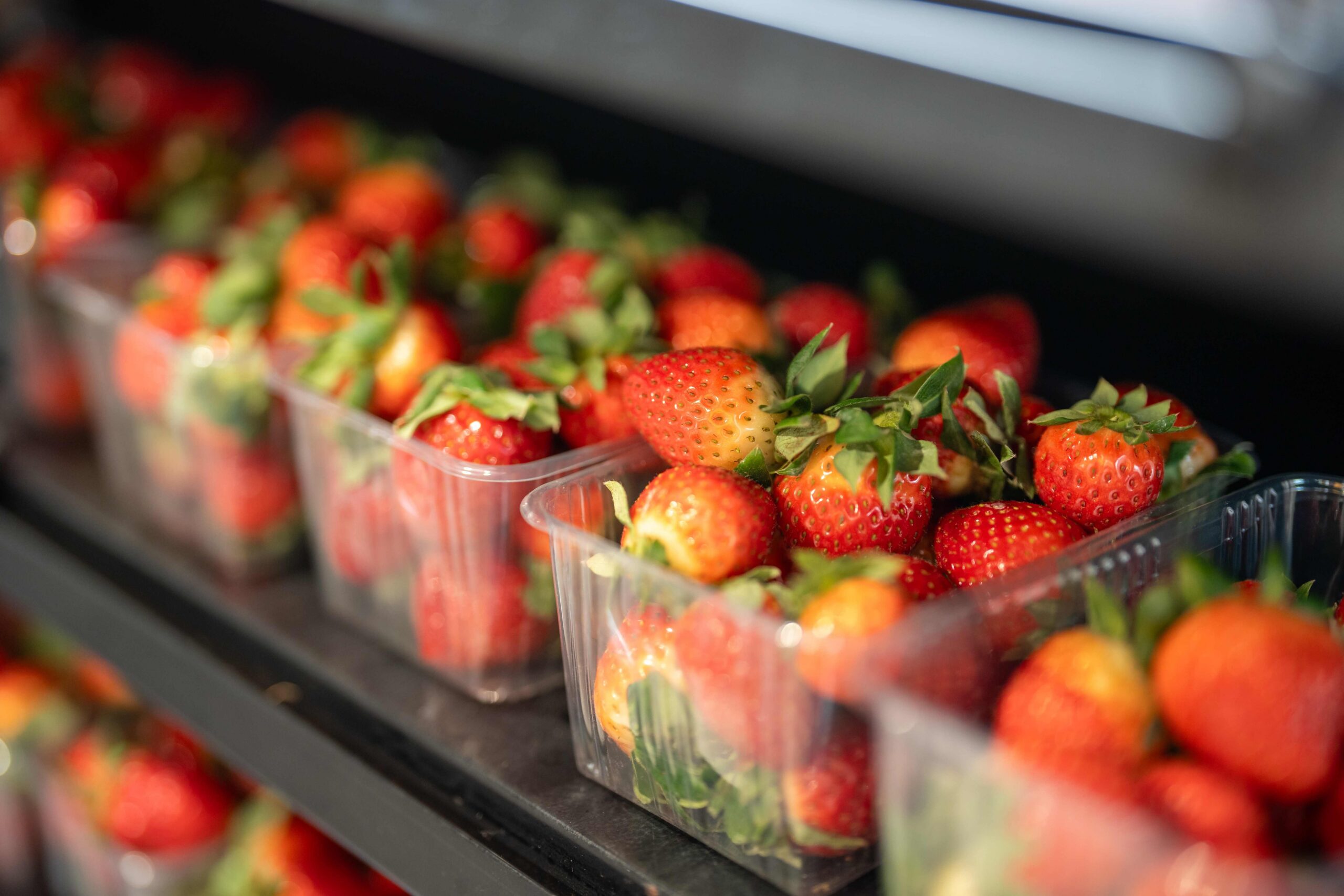
Headquartered in Salinas, California, Naturipe Farms has used plastic clamshells, made from recycled water bottles and other PET thermoforms to pack its fresh berries since the 1990s. This policy has reduced food waste, while also extending the shelf life of the fruits, according to the company’s director of sustainability, Janis McIntosh.
“Clear clamshell packaging decreases greenhouse gas emissions by reducing the amount of raw resources needed to make the package, as well as reducing the fuel usage as lighter packaging makes lighter shipments,” she explains.
“We have made a lot of progress optimizing the clamshells during the past 30 years. Many of our berry clamshells now use up to 90% post-consumer recycled PET plastic. We have also introduced Association of Plastic Recyclers-approved wash-away labels that make the packaging easier to recycle.”
At the same time, McIntosh recognizes some of the inherent difficulties in making packaging more sustainable. “Most of our berries are packed in the field, which brings unique challenges,” she says.
“Fresh berries are delicate, so any packaging solution must protect the fruit, maintain freshness, provide visibility, withstand the elements, meet food safety requirements and remain economically viable for growers and retailers. Balancing these needs with sustainability goals is complex, but as better solutions become available, we will continue exploring opportunities to advance our packaging program.”
McIntosh says EPR fees are significant, in some cases equal to or larger than the grower’s profit. “We have been able to distribute the costs of the first EPR program, but as more programs are coming online, we are concerned that it will increase food prices,” she adds.
Another concern is regulatory inconsistencies between states. In Oregon, the largest producers face life cycle assessment (LCA) requirements, while the state’s producer-fee structure also takes recycled content into account.
In contrast, McIntosh says California requires a “source reduction plan” — completely different from an LCA — that accounts for reductions made since 2013 and sets out planned reductions through 2032.
“To comply with all the details, it takes months to prepare before a deadline,” says McIntosh. “Greater consistency would help everyone. It would make compliance easier and allow industry to spend more time focusing on innovation and less time navigating different sets of regulations.”
Potential Solutions
Estes says there is no single solution for every category of produce or market. Packaging choices will have to vary by crop.
“Produce is so much harder [to transport than other foods] because it’s living,” explains Estes. “It continues to respire, taking in oxygen and releasing carbon dioxide, and different crops require different temperatures, humidity levels and atmospheric conditions, so it’s technically complicated.”
Possible solutions being considered for USDA FAS-IFPA grants include compostable films, seaweed-based films, molded fiber products, recyclable products, and home-compostable PLU stickers. “There’s lots of innovative solutions, and we’re trying to fund them,” says Estes.
However, even if a viable solution is found, she says getting that material into the production cycle brings with it a whole other set of problems, from achieving producer, retailer and consumer acceptance through to adapting — or building — equipment capable of handling it.
“The innovations that we see that are interesting are functionality-centric,” agrees Duguay. One potential solution is compostable packaging, though many composters still need to validate that it is compatible with their systems, he notes.
Another is increasing shipping efficiencies by designing pallets to be able to carry substantially more during a single shipment, while the concept of reuse is also attracting interest.
“In produce, there have been some interesting pilot reuse programs, including one in Ottawa, which explored three potential produce-related uses — the in-store salad bar, fresh-cut, and the produce section itself,” says Duguay. “What became clear was the conditions are not there in the produce section.”
A separate pilot program that the CPMA is watching closely, this time in Belgium and focusing exclusively on mushrooms, appears more promising. Already successful at a business-to-business level, Duguay says it remains to be seen if the reusable produce packaging project functions with consumers. Longer-term, though, he says the most potential for reuse lies with fresh-cut.
Supply Chain Economics
Although such conversations have often been framed in environmental terms, Duguay says the industry is increasingly taking a “total cost of ownership perspective.”
“You take all these things, and how do you quantify the economic impact?” he asks. “With EPR fees, which impact the total cost — the cost of transportation, packing yield, product shrinkage, and shipping — the question becomes what is the total cost of ownership?”
Estes is even more blunt: “Someone has to pay for it, and the margins are razor-thin, so the grower ends up paying for it, and they try to charge the retailers, who then say, ‘we won’t pay for it.’”
“All this innovation costs more,” says Estes. “Eventually, at some point, the consumer is going to have to pay, because it’s too much for the industry to absorb. At some point, the consumer is going to have to pay more for those strawberries that aren’t in a clamshell.”
For McIntosh at Naturipe, such conversations have become much broader than simply asking what a package costs, encompassing aspects such as recyclability, consumer expectations, retailer goals, and regulatory requirements, as well as the need to sustain the product and the grower.
“Sustainable packaging options create long-term value by reducing waste, supporting retailer sustainability initiatives, and strengthening consumer trust — it is about finding solutions that make sense environmentally and economically,” she says.
The Next Move
The way forward, notes McIntosh, is to focus on consumer education, particularly around the packaging choices the produce industry makes. “Unlike most consumer products, fresh produce is biologically active post-harvest and requires a package that protects it throughout the handling and distribution process,” she says.
One reason for optimism, McIntosh says, is GS1 Sunrise 2027, a global effort to move from 1D UPC barcodes to 2D alternatives, such as QR codes, that can provide greater traceability and transparency.
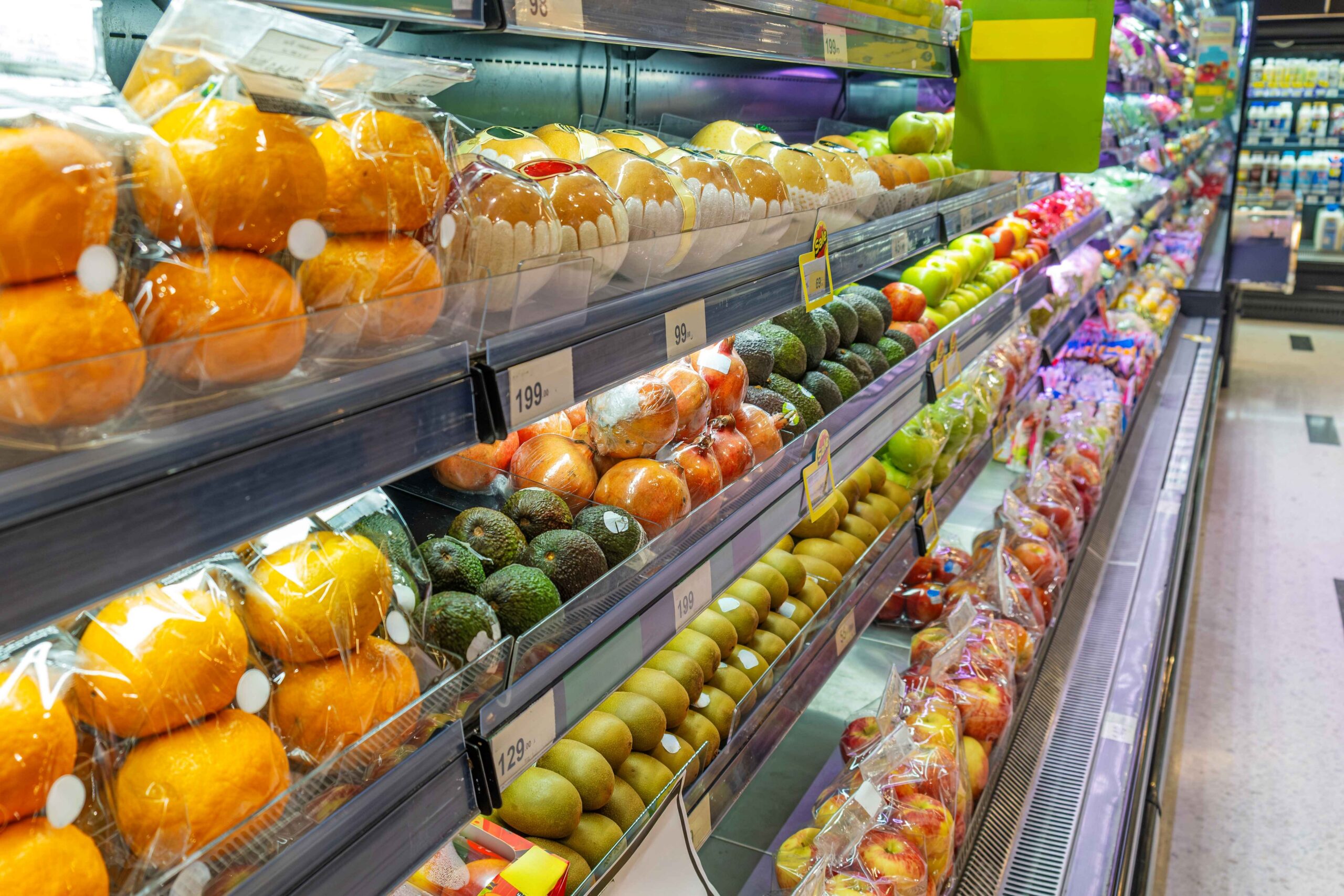
Kay Cooksey at Clemson predicts greater use of recycled content in packaging in the coming years, although she says compostable and paper-based options will see more limited growth. “We might see some additional paper tray introductions, but they’re going to be for smaller producers; the big producers can’t really do it,” she says. Berry trays, for example, are packed in the field and must be closed and stacked quickly for cold storage and distribution. Moving to paper or molded pulp trays would require major changes to field packing, stacking and truck loading, which would represent a major challenge.
Estes says the IFPA is hoping for more consistent federal rules that can keep pace with the more uniform approach being adopted in Europe. But she cautions that the brakes could well be applied if prices begin to spiral. “As the costs start hitting the system and people start seeing the food waste, I think those kinds of things will get louder, and maybe it’ll bring some sanity to some of these systems,” she says.
Estes also argues more attention should be paid to nutrition needs and affordability at a consumer level. “If we keep raising the price to meet environmental needs, that’s going to hurt people from a nutrition point of view,” she adds.
While Duguay says there will continue to be pressure to move away from plastic, he notes there is likely to be a parallel push to not compromise on functionality.
“That is where I think this conversation is going to go over time,” he predicts. “I think we’re also going to see more focus on optimizing the shelf life. That will be driven by things like food loss and waste mitigation. The challenge will be to keep costs low at the point of purchase.”
However, Duguay also adds a note of caution: “One of the functions fresh produce packaging plays is that it allows for inspectability. Consumers, when they buy cereal, don’t need to see the cereal.
“When they buy cookies, they don’t need to see the cookies. When they buy vegetables and fruit, they like to see what they’re buying. If you cannot see the product, it’s not going to sell.”