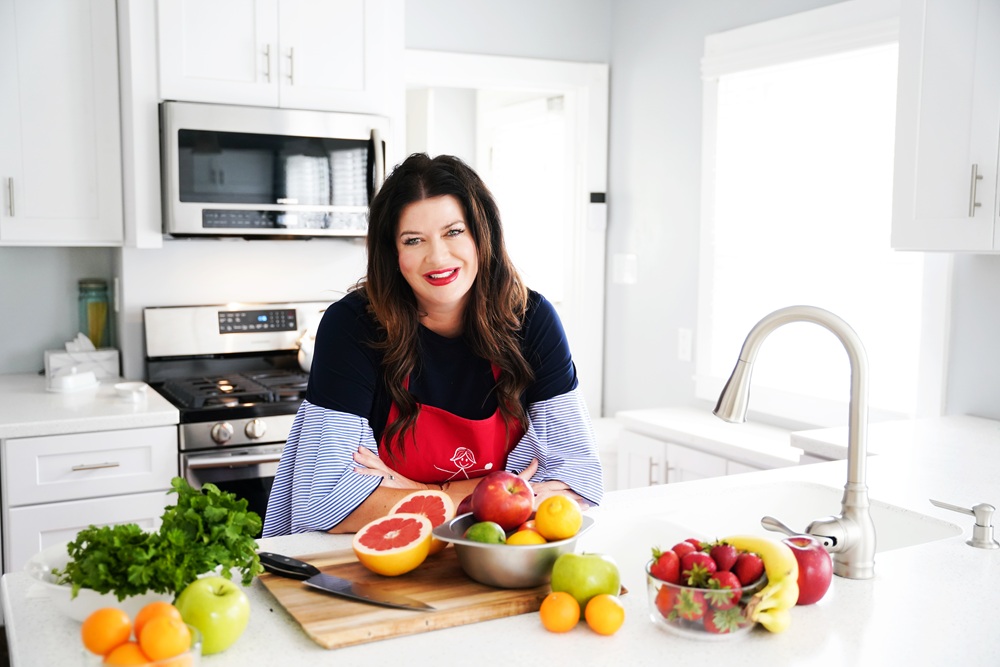
Following a successful tenure at produce distributor Indianapolis Fruit — first in sales and later in marketing — Lori Taylor negotiated a deal with the company to buy The Produce Moms — a successful website she had created and the company had built in 2012 while she was working there.
Since taking that entrepreneurial leap in 2015, Taylor has been on a mission to put more fruits and vegetables on every table. The idea was largely inspired by Taylor’s two toddler sons, who have grown up alongside The Produce Moms.
With her Midwest charm, authentic persona, passion and boundless energy, Taylor is a walking and talking billboard for The Produce Moms. Despite the typical hurdles building a successful business, Taylor has managed to stay on course and attract legions of diverse followers to her company’s website — approximately two million to be more precise.
“From the beginning, my plan was just to not go out of business. I certainly didn’t have the funds to do too much, but I pushed to get into the rooms with vendors by bartering, or whatever else I could think of,” says Taylor.
“I am so grateful to all my mentors and partners who have believed in our cause. It’s ok to associate me with The Produce Moms, but people now see it as bigger than one individual because we have been building a solid community for more than a decade,” she says.
And it’s no wonder as The Produce Moms website is a colorful cornucopia of ideas, recipes and tips for selecting, storing and serving produce items. “We educate consumers on the benefits of eating fresh produce, the growing process, and how to select, store and serve it,” is the verbiage Taylor chose for the website. “We believe education is the catalyst to driving consumption,” says Taylor, who also notes The Produce Moms can be a little bit of a renegade at times.
“It’s important for people to know they don’t have to shop at premium grocers or farmers markets because regardless of the store — the produce where they shop is an excellent choice. We work hard to break down the barriers of not trusting agriculture,” she says.
The following interview has been edited for clarity and brevity.
For those in the produce industry who may be less familiar with The Produce Moms, how would you describe your mission and the core services or initiatives you offer to drive produce consumption?
Our mission is to get more fruits and vegetables on every table. At our core we are a media and lifestyle brand that has built a community around fruits and vegetables. We believe there is a place for fruits and vegetables in all areas of consumer lifestyle — recipes, crafting, home décor, beauty, and pets are just some of the topics we cover in our editorial. When it comes to our purpose, The Produce Moms wants consumers to know that any time they are choosing a fruit or vegetable, they are making an excellent choice. I serve my family frozen and canned vegetables — I don’t overthink it. We believe in educating people, and we are always trying to help our audience better understand agriculture.
The produce industry as a whole has made it a priority to increase produce consumption. How successful has it been?
The industry doesn’t have the money to pay for play — we need grocers to make shopper marketing programs more accessible to produce vendors. I also think talking about declining consumption is an idiotic way to drum up interest. When you think about the human spirit, people want to align with winners, not losers. Anecdotally, the halo effect of the produce department is more prominent in grocery than it’s ever been. There are lots of products in center store boasting fruit and vegetable ingredients.
I also think produce merchandisers are doing a great job by keeping the department looking great. Despite labor challenges in grocery retail, there is no shortage of inspiration and impulse buy opportunities when you walk into a produce department.
How do you approach ROI when evaluating influencer campaigns or retail collaborations, and what KPIs matter most to you?
We strive to offer our partners evergreen content — that is our goal. It’s the entrepreneurial spirit in me. I have high expectations for our customers’ ROI. When someone trusts us for one season, I want them to get content and value that lasts for years to come. There are usage rights for our brand partners, and all the companies we work with want the content we create for their websites.
What kinds of partnerships have proven most effective in driving measurable increases in produce consumption — and how are you tracking that success?
I have a lot of admiration for our partners that actively invest in supporting school foodservice programs. Companies such as Bayer Vegetable Seed and Duda Farm Fresh Foods do a lot to support school foodservice. School meals drive produce consumption. As far as tracking success, I stay focused on what I can control.
What message do you find resonates the most with the public about produce? How do you create real change?
From our point of view, we believe in the power of family and moms. Encouraging consumers to always make fruits and vegetables the first thing they prep during meal time is one of my favorite action-oriented change agents. We all lose patience or run out of time when making dinner. If we start with produce it will always be on the plate. We provide a grassroots approach and connection, but lots of people and organizations are critical to the puzzle. Growers and shippers, organizations like the International Fresh Produce Association, the seed companies, media, retailers, and more. But clearly, this is all a pipe dream if farmers cannot stay in business. Every stakeholder in this industry should be prioritizing the farmer’s sustainability.
What’s your advice to fresh produce brands or suppliers looking to better engage Millennials and Gen Z shoppers — especially online or via social platforms?
I think my best advice is that you don’t have to be everywhere. We concentrate on content and social engagement. But produce brands do not have to do everything. If you can’t do a TikTok page — that’s okay. As a produce supplier, the No. 1 mission is to have the best tasting produce available, and there are some revolutionary flavor expansions going on with table grapes, apples, tomatoes, berries, peppers, lettuce and other commodities. The farmers are working on new varieties all the time. Lean into perfecting the flavor of what you grow. Produce brands can always find a partner to help fill in the gaps with the marketing.
How are changing trends — such as sustainability or convenience, or plant-based eating — shaping your content strategy?
We create content to promote fresh produce as a delicious, nutritious, convenient and affordable choice. Everyone in our industry should be telling their story because there are great stories to be told. If the farmers aren’t sustainable or making the necessary investments to satisfy consumer demands — they won’t be around for long. We are very much pro-farmer, and we really believe in what we are doing, but we aren’t afraid of pushing on the supply chain and growers to be more transparent.
When it comes to sustainability, there is no finish line. No one expects perfection, but the more transparency, the better. That also includes how farmers are treating their employees. Your brand could move the soul of a mom and earn her brand loyalty by sharing your company’s policies on maternity leave or childcare support.
In your experience, what are the biggest misconceptions the public has about fresh produce — and how can the industry address them more effectively?
It is the cost — many people mistakenly think that produce is expensive. The reality is that lots of shoppers are overbuying. As a result, the produce loses its freshness, and a lot can be wasted. The Produce Moms offers lots of ideas to address this, but it’s a fine line. We don’t want to talk so much about food waste that we get shoppers buying less produce, and we don’t want to be insensitive about the cost of food. My favorite content on the website is our resource content that focuses on the basics of how to select and store fresh produce. Any produce marketer or retailer needs to include that information on their websites, too. There is a real misunderstanding about seasonality and imported food — consumers need to know that their favorite fruits and veggies are always in season somewhere but not always available from the U.S.
It is truly amazing how much trial and error goes into produce production. When fruits and vegetables make it to the grocery store, it’s because a lot of people got everything right along the journey.